
Leipzig is honouring the poet Andreas Reimann and, with him, his delicate and defiant body of work. There’s set to be a lively atmosphere outside the town hall, whilst inside, practical support is on offer for young couples expecting a baby. A popular bus route will have to take diversions – and, last but not least, as part of the Peace Decade, there will be an important prayer for peace, almost beneath the palm trees.
A change of guard at the town hall
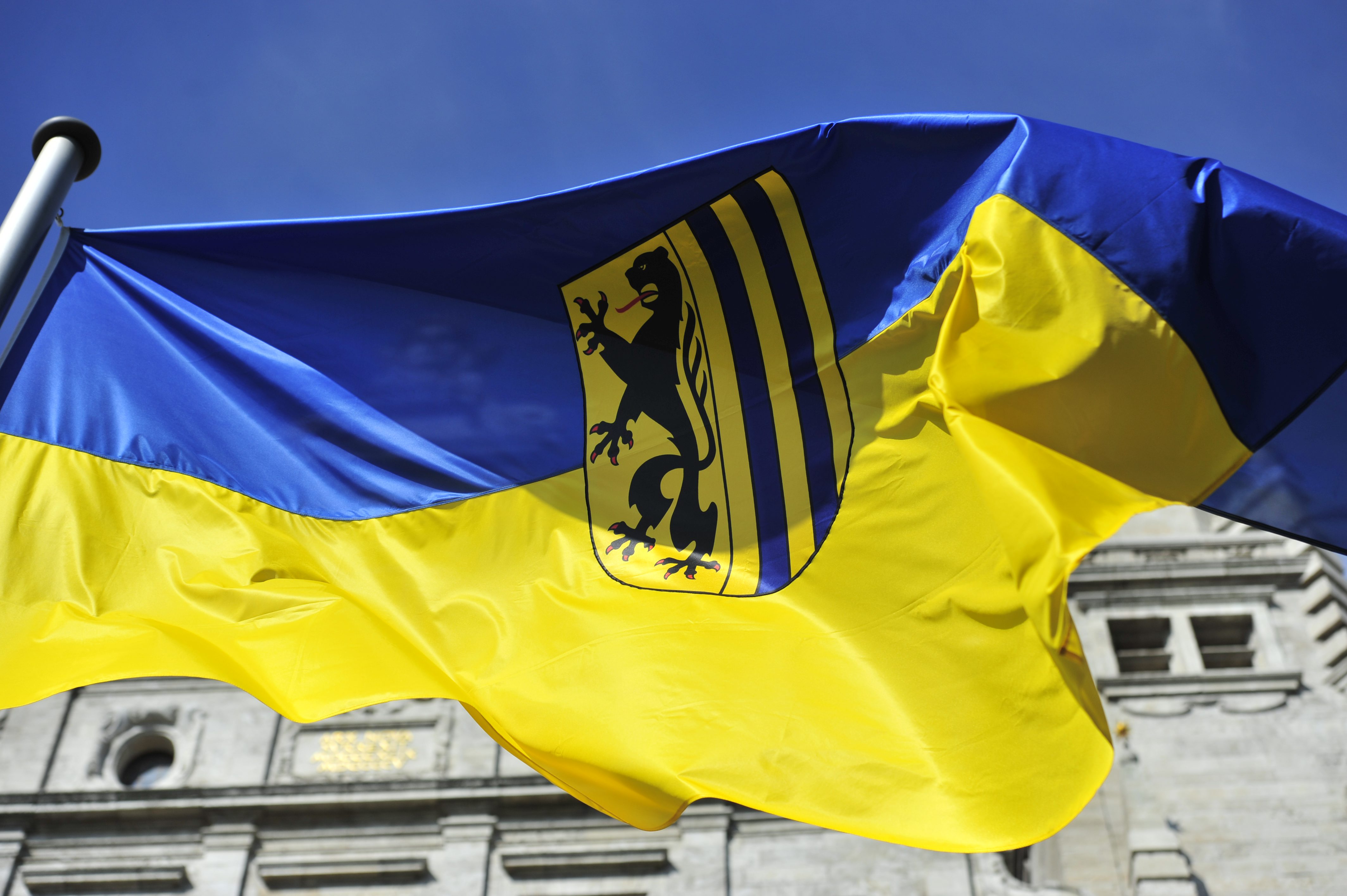
… at least for those who take the carnival seriously. Leila the Lioness, the mascot of the Leipzig Carnival, intends to secure the key to the town hall today at 11.11 am and thus symbolically take over the reins of office. The setting for this annual spectacle is the entrance to the New Town Hall.
The revellers cite historical reasons for taking the reins on 11
November of all days. For centuries, this day has been dedicated to
commemorating Saint Martin of Tours. St Martin’s Day, also known as
Martini, was once an occasion to eat and celebrate to one’s heart’s
content one last time before the pre-Christmas fasting period began
in many places. 
The actual carnival in spring also has its roots in the exuberant celebrations that took place before Lent. During these festivities, social hierarchies are turned on their heads through mockery and satire. Costumes and masks allow revellers to slip into different roles, mock authority figures and playfully suspend the usual order of things.
The fact that the carnival season is now officially opened at 11:11 am is also linked to the special significance of the number eleven: it goes beyond ten – the symbol of the divine commandments – and is therefore regarded as a symbol of disorder and excess. The actual street carnival then follows in the spring, immediately before the next period of Lent.
In Leipzig, Leila the Lioness embodies the temporary handover of power, which, of course, has no political or legal consequences: the city administration continues to handle official business even after the keys have been handed over. And, for all its silliness, that is perhaps just as well.

Bus diversion due to ‘Jingle Bells’
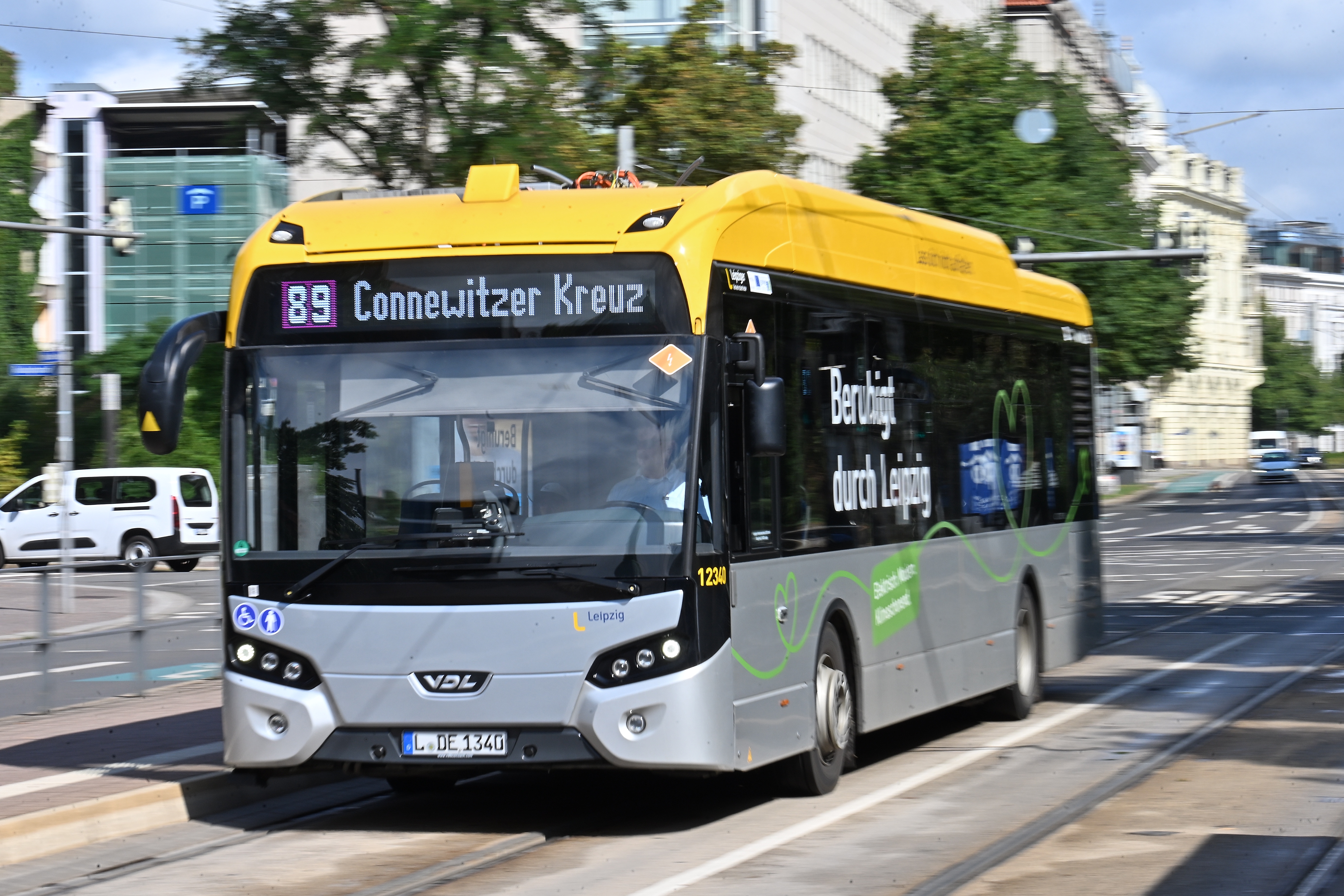
Its number is a reminder of the Year of the Peaceful Revolution. And, thanks to the Leipzig Christmas market, it’s purring along quite peacefully on its electric drive until the end of December, following a small but noteworthy diversion: bus route 89 is running on a modified route around the city centre.
Towards Connewitz, buses are being diverted from the Hauptbahnhof/Goethestraße stop via Augustusplatz and Wilhelm-Leuschner-Platz to the New Town Hall. Towards the Hauptbahnhof, the diversion runs from Thomaskirche via Goerdelerring. The regular stops in the city centre, including Reichsstraße and Markt, will not be served. The Thomaskirche stop is omitted on the route towards Connewitz.
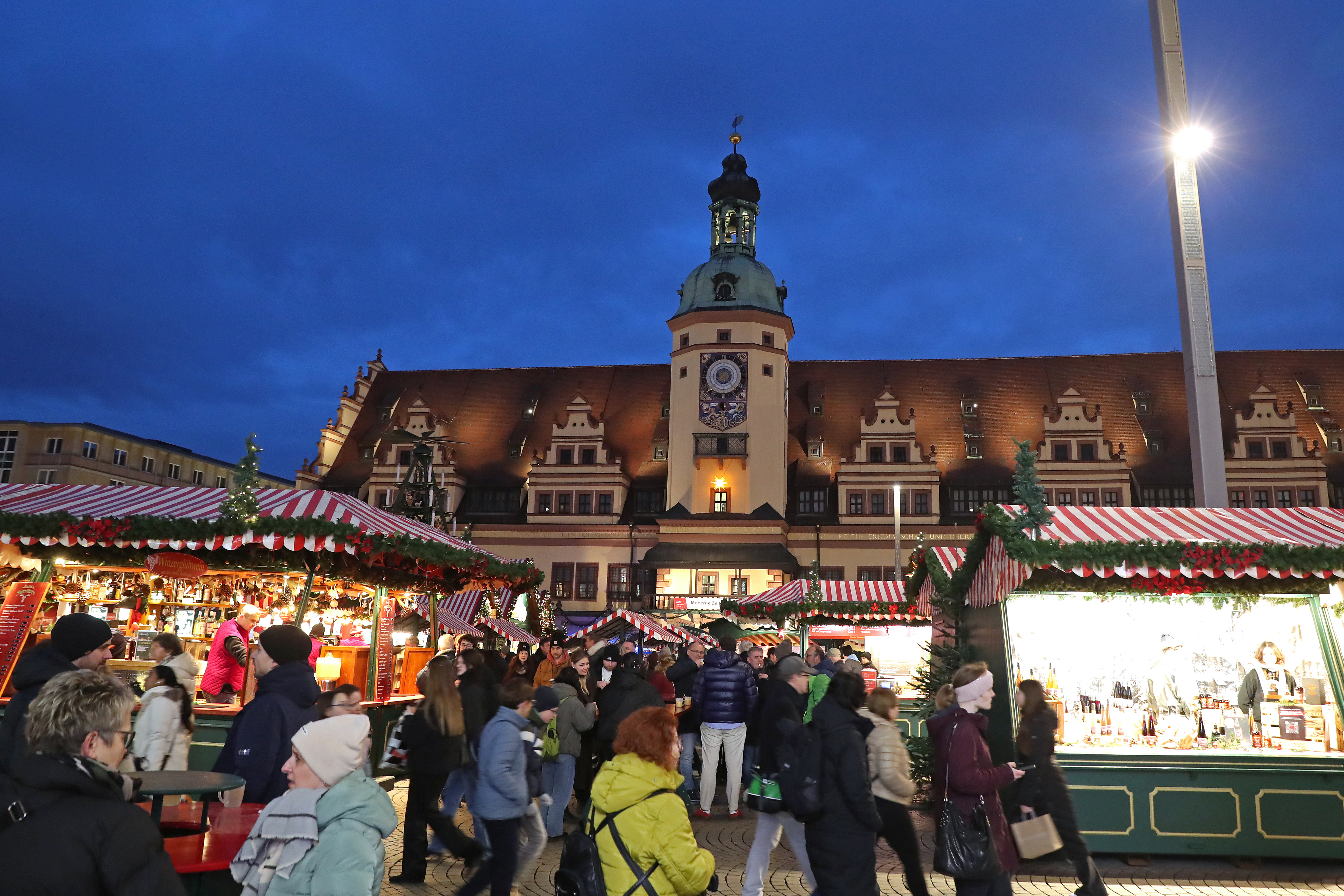
This is due to restrictions caused by the set-up and operation of the Christmas market, which begins on 24 November and runs until 23 December. However, a diversion will also be necessary during the Christmas market itself: in previous years, the LVB has routed bus line 89 via the city centre ring road throughout the entire Christmas market season.
No separate confirmation of the exact period from 24 November 2026 has been provided as yet. Further details regarding the December diversion will be provided in the coming days. Current services can be checked via the LVB timetable enquiry service and the LeipzigMOVE app.
Heading to church for a great atmosphere
‘Resisting climate change’ is not only a necessity but also the theme of a prayer for peace organised by Leipzig’s ‘Omas for Future’ today at 5 pm in St Nicholas’ Church. The service will explore the connection between peace, climate protection and social responsibility. According to the environmental initiative, it organises a peace prayer at this venue twice a year.
St Nicholas’ Church is closely linked to Leipzig’s history of democracy through the peace prayers and the Peaceful Revolution of 1989. The fact that today’s service is taking place outside the traditional Monday schedule is due to the Ecumenical Peace Decade. During this series of events, which runs from 8 to 18 November, the St Nicholas parish invites people to attend daily peace devotions. This year’s theme is ‘courageous resistance’.
The Peace Decade has been observed in East and West Germany since 1980 and stems from a Dutch initiative. It covers the ten days leading up to the Day of Repentance and Prayer and is dedicated to issues of peace, disarmament and justice.
In Leipzig, such daily peace services were held for the first time during the Peace Decade in 1981. In the GDR, the Peace Decade developed into an important forum for the independent peace movement. Under the slogan ‘Swords into Ploughshares’, young people and church groups in particular engaged critically with militarisation and nuclear armament.
The state authorities attempted to restrict these activities. The peace prayers at St Nicholas’ Church later became an important starting point for the protest movement that led to the Peaceful Revolution in 1989.

Preparation and anticipation go hand in hand
When the first spring sunshine makes hearts beat faster and awakens the hope of new life, it may well be that, beneath the Christmas trees, real little human babies will be lying in cosy baskets.
Expectant parents can find out today at Leipzig’s New Town Hall about support and counselling services available during pregnancy and after the birth. The information evening begins at 5 pm and takes place in the council chamber and the upper lobby. Information will be provided by various advice centres for pregnant women and families. The Family Information Office and the Maintenance and Registration Department will also be presenting their roles and support services.
Leipzig’s municipal libraries are taking part with a selection of resources on pregnancy, childbirth and family life. Visitors will thus have the opportunity to discover a range of counselling services in one place and find out about possible points of contact for various queries. A team from the University Hospital’s Obstetrics Department will also be present. In any case, the evening promises to be time well spent. Things will then get exciting all by themselves later on.
Leipzig’s last coffee-house poet, Andreas Reimann, turns 80
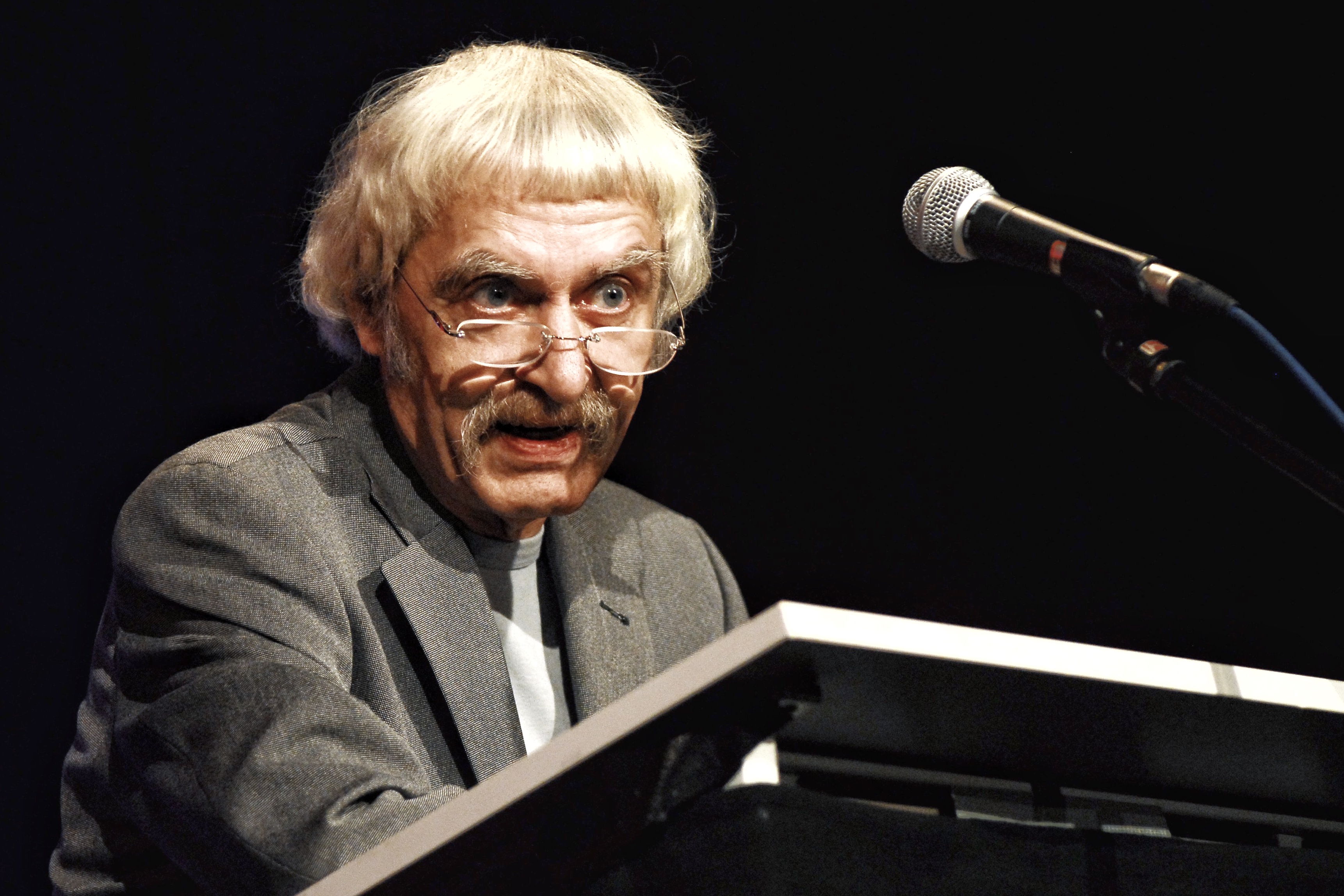
His verses, like his recitations, are works of art characterised by the utmost precision and tranquillity – Andreas Reimann is one of the most significant contemporary German-language poets. Today, the Leipzig poet turns 80. At 7 pm, he will be celebrated at the Haus des Buches (Gerichtsweg 28) with a tribute, two book launches, music and a reading by the man of the hour.
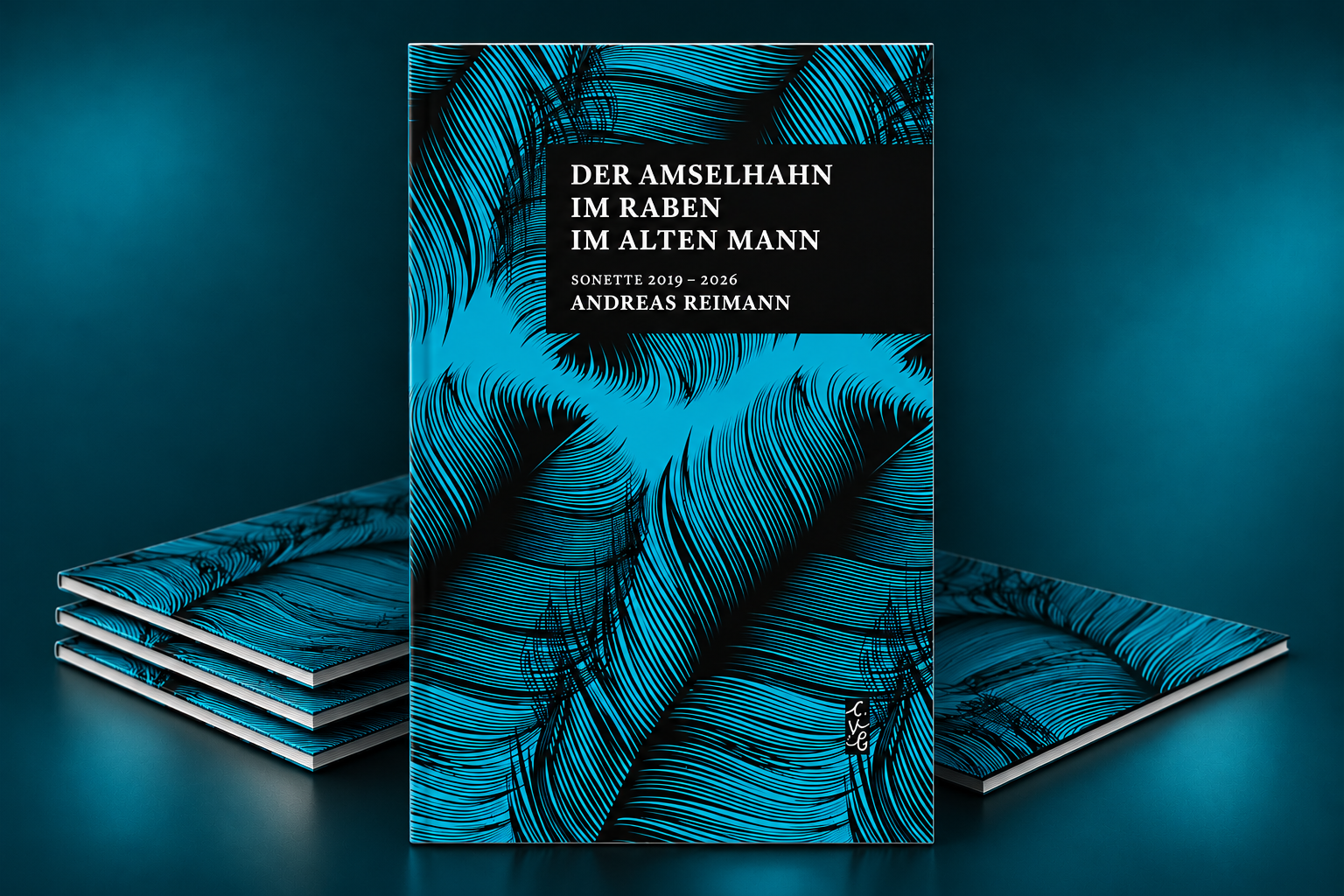
The following works will be presented: ‘die augen des chamäleons – vierzehn klassische oden’ (The Eyes of the Chameleon – Fourteen Classical Odes), Reimann’s first collection of odes with illustrations by Rolf Münzner, published by the Leipziger Bibliophilen Abend, and ‘Der Amselhahn im Raben im alten Mann. Neue Sonette’ (Connewitzer Verlagsbuchhandlung).
Literary scholar Peter Geist pays tribute to Reimann’s body of work, whilst Gregor Fuchshuber, Chairman of the Leipziger Bibliophilen Abend, introduces the odes. Carolin Masur and Martin Reik will perform poems set to music, accompanied by Maria König and Jens-Uwe Günther respectively. Reimann himself will read from his new publications.
The poet was born on 11 November 1946 in Leipzig. His grandfather was the writer and satirist Hans Reimann. His childhood was marked by loss. His father left for West Berlin in 1953, and his mother took her own life in 1954. In 1955, his father was found dead in West Berlin under unexplained circumstances. Andreas Reimann and his sister lived in a children’s home for a time before moving to Leipzig to live with their grandmother Thea in 1956. The writer and translator gave her grandson access to literature through her private library.
In 1957 he wrote his first poem; in 1961, his work began to appear in newspapers. After completing a typesetting apprenticeship (1963 to 1965), Reimann, at the suggestion of the poet Georg Maurer, began studying at the ‘Johannes R. Becher’ Literary Institute in Leipzig. His critical stance towards the SED’s cultural policy led to his expulsion from the institute in early 1966. The poetry collection *Kontradiktionen*, which had already been prepared, was banned. In the same year, he was conscripted into the army, from which he was discharged following a suicide attempt.
When Reimann protested against the suppression of the Prague Spring in 1968, he once again came under the scrutiny of the state authorities. Arrested and sentenced to two years in prison for “incitement endangering the state”, Reimann earned a living after his release as, amongst other things, a transport worker. He remained in the GDR and continued to write.
His first officially published collection of poems appeared in 1975, followed by a second in 1979. He was unable to publish any further books until the end of the GDR. This made his work for the theatre and music all the more important. From 1973 onwards, Reimann wrote chansons and song lyrics, including for Stephan Krawczyk, Bettina Wegner and the rock group Lift. Their repertoire also included the ballad ‘Sindbad’. His musical collaborators included, amongst others, the composers and performers Hubertus Schmidt, Jens-Uwe Günther, Susanne Grütz and Joachim Schäfer.
After 1990, further books were finally published, including ‘Das Sonettarium’ (1995), ‘Vom haltbaren Jonas’ (1999) and ‘Der trojanische Pegasus’ (2006). Since 2011, Connewitzer Verlagsbuchhandlung has been continuously publishing a collected works edition. In 2016, ‘Kontradiktionen’ was also published as part of this series, half a century after its initial publication was prevented.
Reimann’s life in Leipzig is also closely linked to the city’s coffee houses. Whilst he once enjoyed spending time at the Coffe-Baum, his former daily presence at Café Maître is still the subject of whispered conversation in literary and gastronomic circles today.
The evening is organised by the Literaturhaus Leipzig, the Andreas Reimann Society, the Leipziger Bibliophile Abend and the Connewitzer Verlagsbuchhandlung. At 6 pm, the foyer will host the opening of the photography exhibition ‘Lesen – Leben’ (‘Reading – Life’) by Carmen Laux, who documented life at the Literaturhaus over a period of seven years. The exhibition will then be on display from 12 November to 30 December.
Empfohlen auf LZ


So können Sie die Berichterstattung der Leipziger Zeitung unterstützen:


There is one comment