Dieser Artikel ist auch in deutscher Sprache verfügbar: Zum deutschen Artikel.
There is no question about it: in a democratic election, the anti-constitutional, nationalist, far-right AfD received 43.8 per cent of the vote – and this against a very high turnout of 78 per cent.
This means two things: the fact that the AfD became by far the strongest party in the state elections in Saxony-Anhalt does not make it a democratic party. The share of parties within the democratic spectrum has shrunk to just over 50 per cent in this election – a disastrous development.
The crucial point is this: the responsibility for the AfD’s high share of the vote lies first and foremost with the voters who cast their votes for the AfD – and did so of their own free will and in full knowledge of the AfD’s manifesto. We must finally stop treating voters as though they were ‘forced’ to vote for the AfD. No, AfD voters are perpetrators, not victims.
Furthermore, the AfD won the state elections not in spite of, but because of, its manifesto. It did not, therefore, win because the federal government is pursuing such poor policies and Chancellor Merz is so unpopular, but because 43.8 per cent of voters support cultural homogeneity, the exclusion of migrants, the erosion of fundamental democratic rights and the financial starvation of democratic initiatives, anti-church policies, the dismantling of public service media, the abolition of the euro and Germany’s withdrawal from the EU – and actually support all of this.
Only when we bear this in mind does the gravity of the election result become clear: just under half the population wants right-wing nationalist policies in Saxony-Anhalt (and those who want this in Saxony-Anhalt will also support it at federal level!). Following this election result, there is no reason for the AfD to make any concessions on its manifesto. That became very clear yesterday evening.
When the AfD’s lead candidate, Ulrich Siegmund, was asked how he intended to deal with citizens who had not voted for the AfD, he replied: Yes, the AfD wants to make policy for everyone and is therefore extending a hand of friendship – only to demand, in the very next breath, the dismantling of the public service media, because they allegedly engage only in propaganda against the AfD. This shows very clearly that the far-right wing of the AfD – and in particular its far-right front organisations – may feel emboldened to abolish and destroy the ‘system’, that is, the free and democratic basic order enshrined in the Basic Law.
And there is evidently a growing willingness amongst a significant section of the German population to help secure a majority for policies modelled on autocrats such as Vladimir Putin and Donald Trump, and business magnates such as Elon Musk – almost 100 years after the rise of the NSDAP. Their reign of terror began with the anger and frustration of people who hoped to gain recognition by belittling others, and ended with a Germany and a Europe lying in ruins and divided, as well as mountains of corpses in the concentration camps.
In many conversations (not only in Saxony-Anhalt), I have noticed that: At present, quite a few citizens are criticising socio-political conditions in a sweeping, sweeping manner: ‘Nothing’s happened for 30 years … everything has failed … the established parties have had enough time … they’ve let our country go to the dogs … now we’re taking our country back …’
If one tries to understand this attitude, one cannot avoid coming to one realisation: citizens long for a clearly structured ‘GDR 2.0’ with colourful façades, well-stocked supermarkets and smart Simson motorbikes. They hope that, through the AfD’s rigid policy of isolation and exclusion, everything foreign, burdensome, diverse and confusing can be kept at bay.
Now the question is: What lies ahead – in Saxony-Anhalt, in Germany, in Europe? Can the rise of far-right parties be halted? How can we now prevent the snowball effect that the AfD is deliberately fuelling? The CDU will never win an election again … we will emerge victorious from every election … or, to take Leipzig as an example: We are fielding Tino Chrupalla as our mayoral candidate to take Leipzig City Hall …
We need a clear signal from the public in the elections in Berlin and Mecklenburg-Western Pomerania: Germany will not be thrown to the wolves of the enemies of democracy and the far right. There is no ‘seizure of power’ on the horizon! What is urgently needed, however, is for the members and elected representatives of the democratic parties to build a new relationship of trust with the citizens and engage in direct, face-to-face dialogue with them.
Perhaps we should remember that in West Germany, it was precisely the SPD and the trade unions in the 1960s and 1970s that had their hands full keeping Nazi ideology – which was still haunting many minds and hearts – in check. This could only be achieved through political clarity, socially just policies and communication that resonated with the people.
At the same time, we must promote the following: democracy depends on every citizen getting involved in socio-political affairs and taking responsibility for the community – whilst upholding human dignity, which applies to every person who shares life with us. Even now, however, the AfD is erecting walls by deliberately and consciously drawing a distinction between those who adapt to ‘us’ (whoever that may be) and those who do not belong here.
German chauvinism is becoming the criterion for political education, cultural funding and social justice. This German-nationalist and ethno-nationalist ideology, which the AfD’s government programme in Saxony-Anhalt is dripping with, must keep proceedings to ban the AfD on the agenda! Everything now hinges on not giving in to the AfD and on defending and shaping democracy in a way that is humane and people-centred.
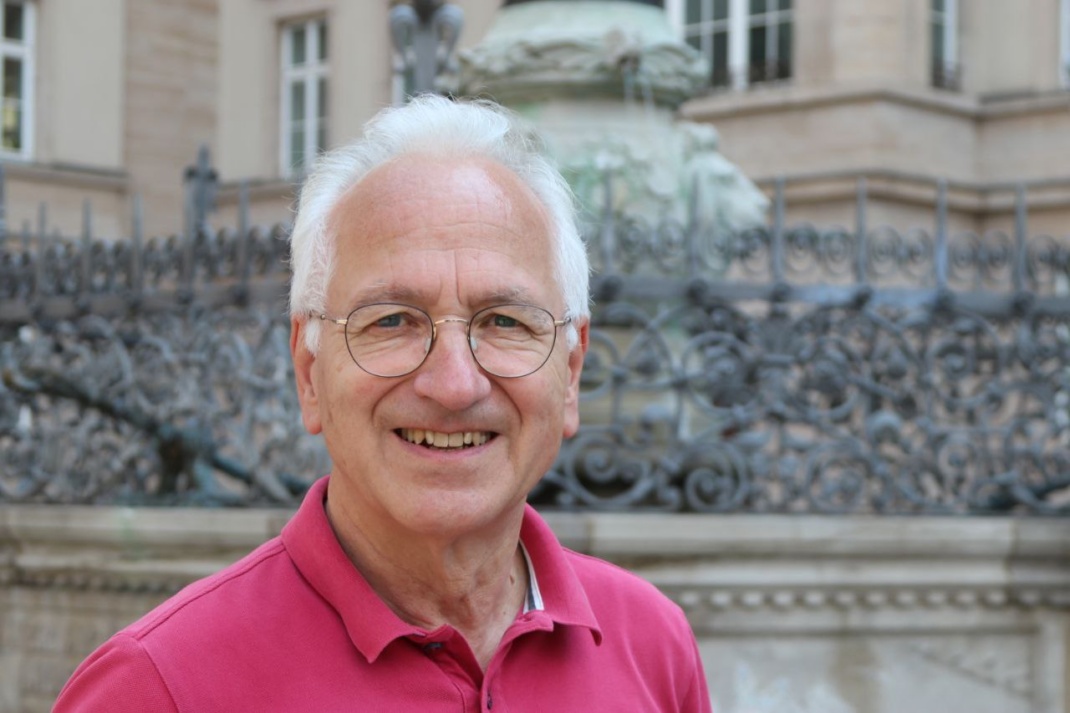
Christian Wolff, born on 14 November 1949 in Düsseldorf, was pastor of St Thomas’s Church in Leipzig from 1992 to 2014. Since 2014, Wolff, a long-standing member of the SPD, has been active as a blogger and adviser on matters relating to the church, culture and politics. He lives in Leipzig and is involved in many areas of public life. Visit the author’s blog: https://wolff-christian.de/
Empfohlen auf LZ


So können Sie die Berichterstattung der Leipziger Zeitung unterstützen:


There is one comment