
Dieser Artikel ist auch in deutscher Sprache verfügbar: Zum deutschen Artikel.
It’s easy to complain, but creating something usually takes longer. As a member of the LVB Citizens’ Advisory Board, coming up with good ideas is, at the very least, in your hands. Skilful hands are also needed for an exhibition at the Book and Writing Museum. There’s also a summer festival at the Museum of Fine Arts. A trial is beginning at the Regional Court that is causing consternation – but darkness is, after all, part and parcel of the light.
Get involved now as an LVB advisory board member
Apart from the recent total breakdown caused by swollen filler material in the track system (as reported by the LZ
), it’s simply part of the cityscape: the tram, affectionately known as ‘de Bimmel’ by the people of Leipzig. And a special committee offers passengers the opportunity to put forward suggestions, requests and constructive criticism directly to the LVB.
Until 16 October, residents of Leipzig can now apply to serve on the transport company’s Passenger Advisory Board. Twelve citizens will be elected to serve on a voluntary basis alongside the permanent members, representing the interests of passengers. Together with representatives from the LVB
, the members discuss fundamental issues relating to local public transport at meetings held approximately four times a year.
These include, amongst other things, improvements to the route network, ticket sales and ticket machines, as well as the facilities on trams and buses. In a public statement, Björn Schönichen, an elected member of the current advisory board, encourages active participation: “Anyone can actually get involved here. Leipzig is a large city with more than 600,000 inhabitants. Anyone who wants to help shape the ongoing development of our modern, young city has the opportunity to apply now. To listen to the arguments put forward by the LVB and the other members, but also to contribute their own opinions and ideas. Yes, you do need to be a bit patient, but that’s part and parcel of a democratic process.”
In addition to the elected citizens, the City Pupils’ Council, the University Students’ Council, the City’s Senior Citizens’ Advisory Board, the VCD Verkehrsclub Deutschland e.V., the Association for People with Disabilities e.V., the City’s Youth Parliament, the Allgemeine Deutsche Fahrrad-Club e.V., the City’s Advisory Council for People with Disabilities, the Association for the Blind and Visually Impaired e.V., the Mobile Disability Service Leipzig e.V., the City Association of Allotment Gardeners e.V. and the Leipzig Friends of Local Transport e.V. all send representatives to the committee.
To apply and thus play an active part in shaping the committee, please click HERE
.
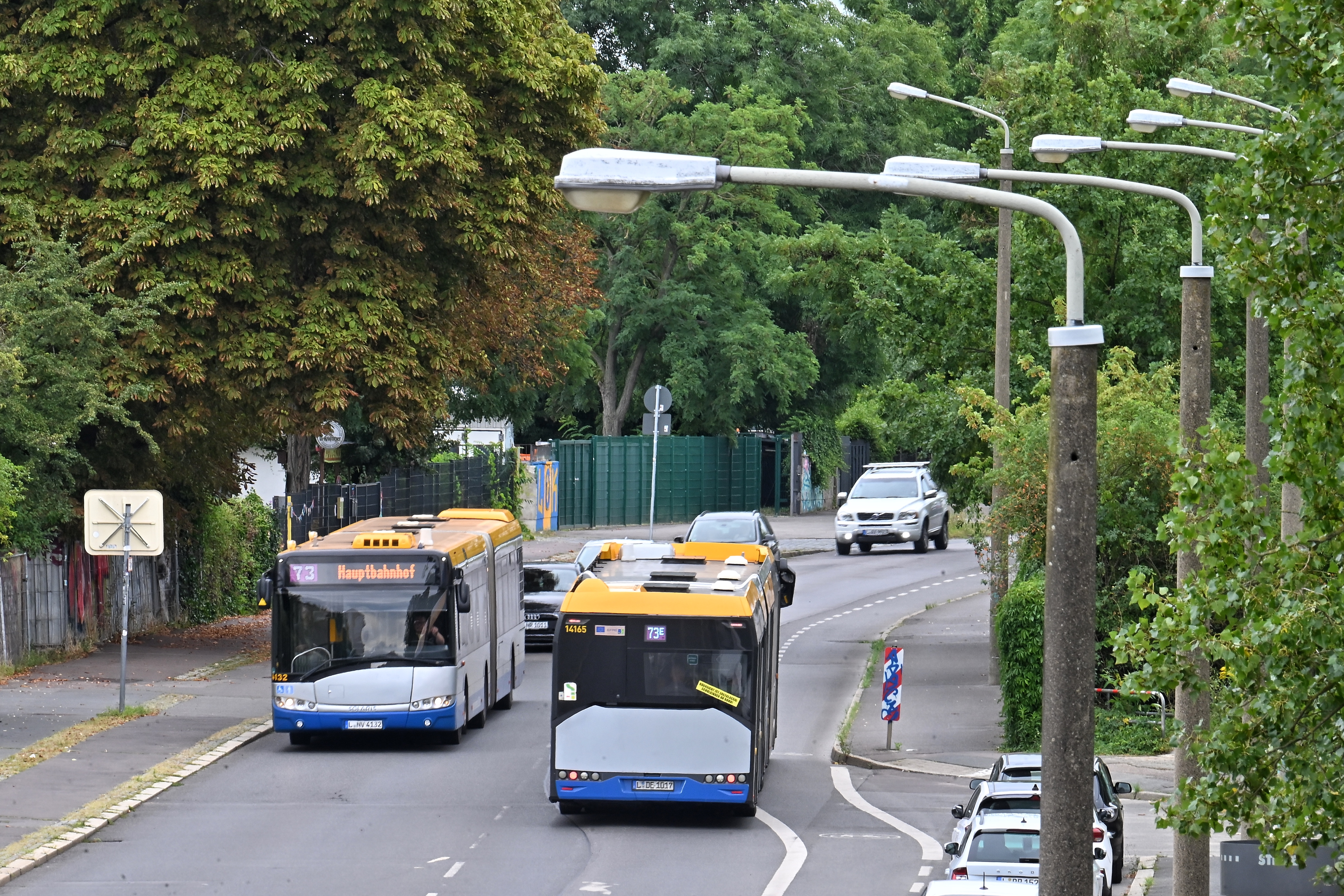
The LVB’s network also includes bus services. Photo: Benjamin Weinkauf
Trial over alleged infanticide
The trial of a 24-year-old woman begins today before the 1st Criminal Division of the Leipzig Regional Court. The Leipzig Public Prosecutor’s Office has charged her with manslaughter. According to the charges, on 29 April 2024, in her flat on Königsteinstraße in Leipzig, she is alleged to have shaken her son – born in September 2023 – so violently that the child suffered brain injuries and died the following day.
In addition to today’s opening hearing, further court sessions are scheduled for 21, 24 and 25 August, and 2 and 9 September 2026. Each session will begin at 9.00 am.
Should the Regional Court find the defendant guilty of manslaughter in the current proceedings, the Criminal Code generally provides for a prison sentence of at least five years. In particularly serious cases, the offence may also be punishable by life imprisonment.
The court will only determine the appropriate sentence – and whether this may be a less serious case – once the taking of evidence has been concluded and all the circumstances have been assessed in law. Our reporter Lucas Böhme is covering the trial.
A summer festival for art and artists
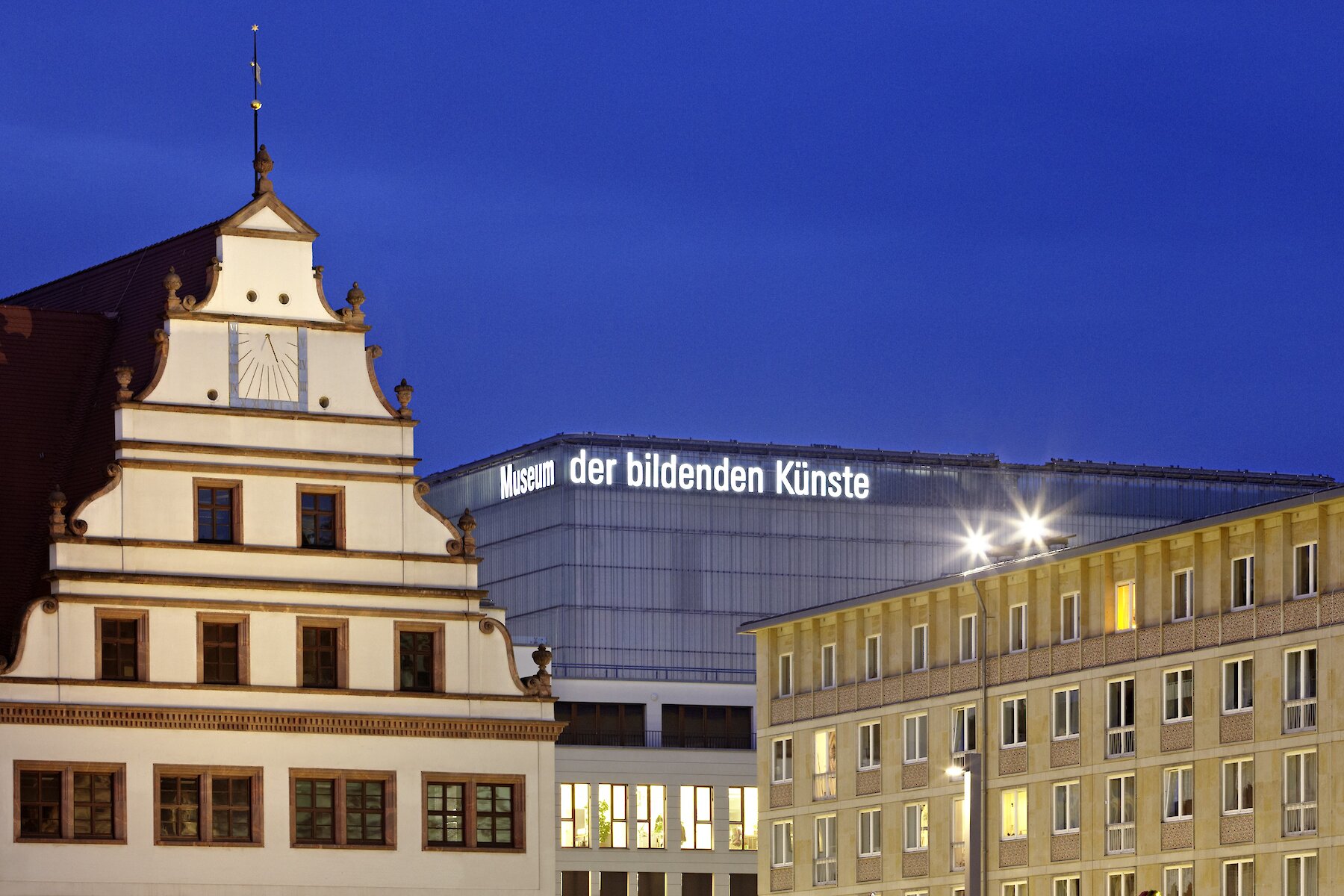
Today, the Leipzig Art Association (Leipziger Kunstverein) is hosting its summer festival at the Museum of Fine Arts in Leipzig. The event is entitled ‘LKV Summer Picnic with the SUM II Jazz Band’ and begins at 6.00 pm. The ground floor, Courtyard 3 and the southern outdoor area will be used. Admission is free; no registration is required.
The roots of the Leipzig Art Association date back to 1825. At that time, the publisher and bookseller Johann Ambrosius Barth championed its foundation, but did not receive the necessary approval from the Saxon court. The Leipzig Art Association’s first general meeting finally took place on 9 November 1837. Among the initiators were the entrepreneurs Carl Lampe, Wilhelm Ambrosius Barth, Heinrich Brockhaus, Gustav Harkort and Maximilian Freiherr Speck von Sternburg.
From the outset, the association’s aim was to create a municipal museum and make contemporary art accessible to the public. The Art Association was strengthened in November 1839 when the Leipzig Association of Art Lovers joined it. In the early 20th century, the association succeeded in bringing major exhibitions of modern art to Leipzig. Among the works exhibited were those by Max Liebermann (1907), the Expressionists (1918), Emil Nolde (1925), Lovis Corinth (1926) and Edvard Munch (1929).
With the destruction of the Museum of Fine Arts during the air raid on 4 December 1943, the Society lost its main base of operations. Two years later, it was formally banned by the Soviet military administration. One year after the fall of the Berlin Wall, on 9 November 1990, it was re-established. Its constitution draws on the historical tradition of civic engagement in the arts.
The founding members included, amongst others, the painter Werner Tübke, the art historians Rainer Behrends, Ernst Ulimann and Günter Meißner, and the graphic designer Karl-Georg Hirsch. With its annual summer festival, the Leipzig Art Association organises a unique event in the city’s cultural calendar, which goes beyond the regular museum programme and brings together members, art enthusiasts and key figures from Leipzig’s cultural scene.
A touch of Japan for nimble fingers
The German Book and Writing Museum at the German National Library in Leipzig is hosting a creative workshop today entitled ‘Japanese-style bookbinding’. This hands-on activity begins today at 4.00 pm in the permanent exhibition and is open to children aged 10 and over, teenagers and adults. Participation is free of charge; no registration is required.
Japanese binding is characterised by a decorative stitching pattern on the spine and the front and back covers. The thread is threaded around the entire cover – not just along the spine, but also along the top and bottom edges. To create the full pattern, the thread is sewn through the same holes several times.
To ensure the final knot is not visible later on, the work begins in the centre of the book. For the binding, the paper is folded in the middle and then laid on top of itself. The book cover can be made from cardboard or sturdy paper and can be further decorated as desired.
The history of this binding method dates back to the Chinese Tang Dynasty (618–907). At that time, scrolls were transformed into a book-like form using thread stitching. Through the influence of Buddhism, the technique later spread to Japan, where it was further developed and adapted to local requirements.
Whilst the earliest Japanese books still bore clear parallels to Chinese thread stitching, distinct forms of bookbinding emerged over time. Among the best known are the Fukuro-Toji (pouch binding) and the Yamato-Toji (block stitching), which had a lasting influence on the development of Japanese book art.
The event at the German National Library lasts approximately 90 minutes. Visitors should note that one- or two-euro coins are required to lock bags and rucksacks in the lockers. The event rooms are wheelchair accessible.

So können Sie die Berichterstattung der Leipziger Zeitung unterstützen:





There is one comment