Dieser Artikel ist auch in deutscher Sprache verfügbar: Zum deutschen Artikel.
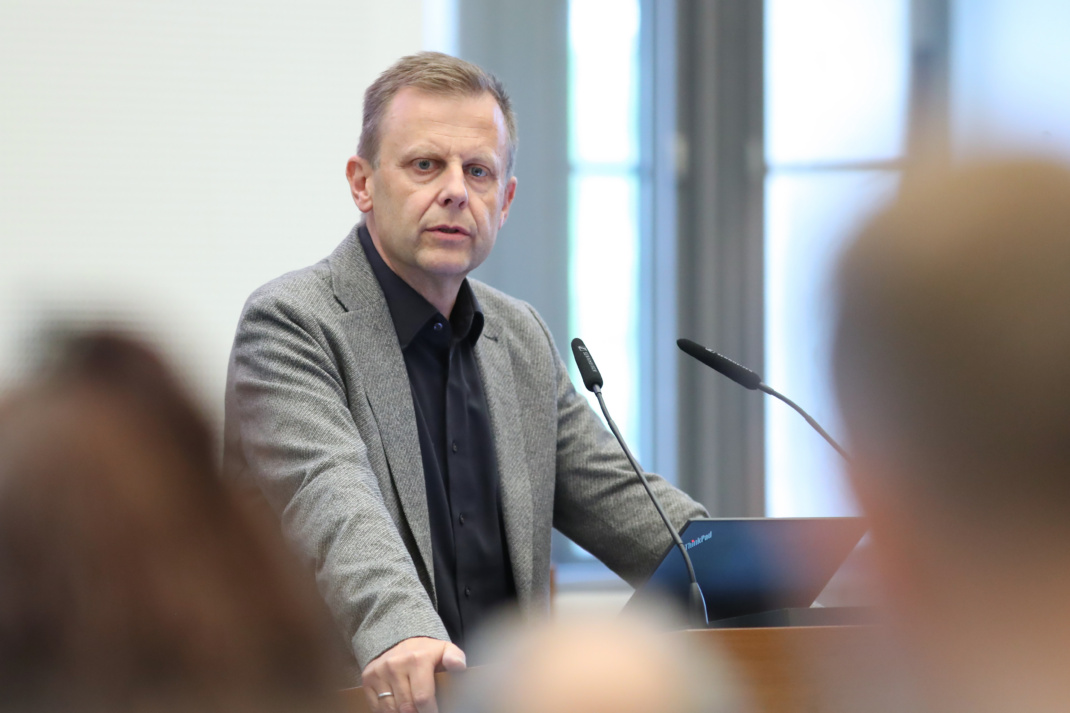
Torsten Bonew, the city’s finance councillor, had to bring this item forward as a matter of urgency at the council meeting on 1 July, as it got right to the heart of the matter – the financial situation of the City of Leipzig. It is catastrophic. The 2025/2026 budget has already made this abundantly clear. The city is sinking ever deeper into debt and can no longer pay its running costs without drawing on its overdraft facilities. This is why Torsten Bonew, the Finance Councillor, proposed in his motion to increase the limit on the city’s overdraft facilities from 600 to 800 million euros.
“The maximum amount for cash advances under the City of Leipzig’s 2026 Budget Regulations for the 2026 financial year is 600 million euros. As at 31 December 2025, the outstanding cash credit balance already stood at 482 million euros. According to current forecasts, the outstanding cash credit balance is set to rise to over 600 million euros by the end of July 2026. Looking further ahead, a cash overdraft volume of over EUR 800 million is anticipated by 31 December 2026 in order to meet the City of Leipzig’s payment obligations,” Bonew’s proposal outlined the problem.
“To ensure the City of Leipzig’s solvency, the maximum amount for cash advances under the City of Leipzig’s budgetary regulations for the 2026 financial year must be increased by EUR 200 million from EUR 600 million to EUR 800 million. As the SMI decree of 21 July 2025 is being invoked, no supplementary by-law is required to increase the maximum amount of cash advances under the approved 2026 Budgetary By-laws. A resolution by the City Council of Leipzig and approval by the supervisory authority are therefore sufficient.”
But this decree from the Saxon Ministry of the Interior (SMI) has a catch: it is time-limited. When it expires, the fun will be over. Then Leipzig will no longer be able to increase its cash advances either. For the 2027/2028 two-year budget, Torsten Bonew expects the cash advance to rise to 1.1 billion euros by the end.
The myth of unrestrained spending
Yet this has nothing to do with Leipzig spending too much money or making too many consumer expenditures, as CDU city councillor Michael Weickert claimed in the debate on 1 July. It is a structural problem that we have been writing about here for over a year.
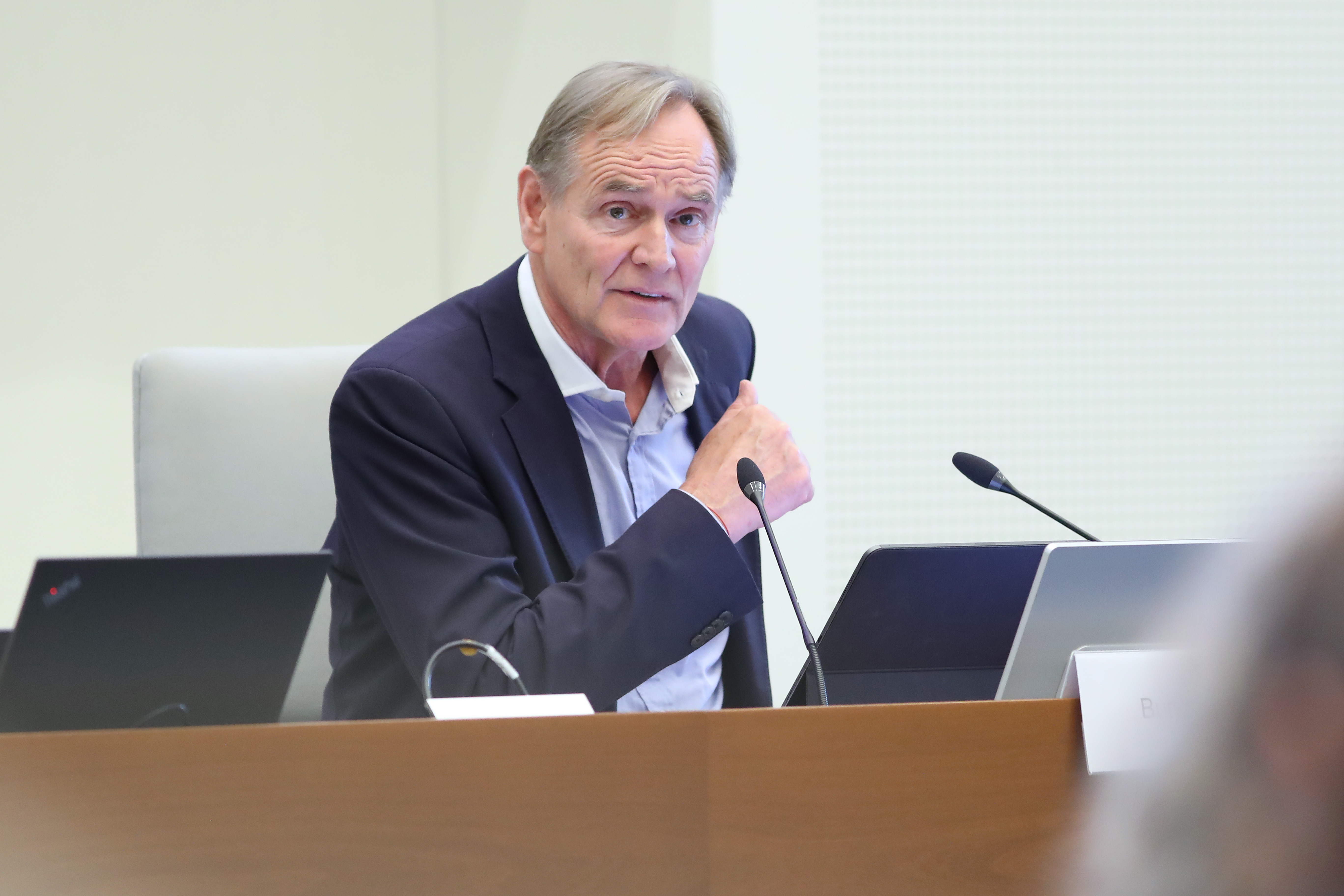
For the fact that Leipzig – as Mayor Burkhard Jung emphasised – has an “annual structural deficit of 300 million euros” is down to the mandatory tasks assigned by the federal and state governments, which the federal government in particular fails to fund adequately. On the contrary: for years, the federal government has been dressing up its own balance sheet at the expense of local authorities (and is still racking up billions in debt).
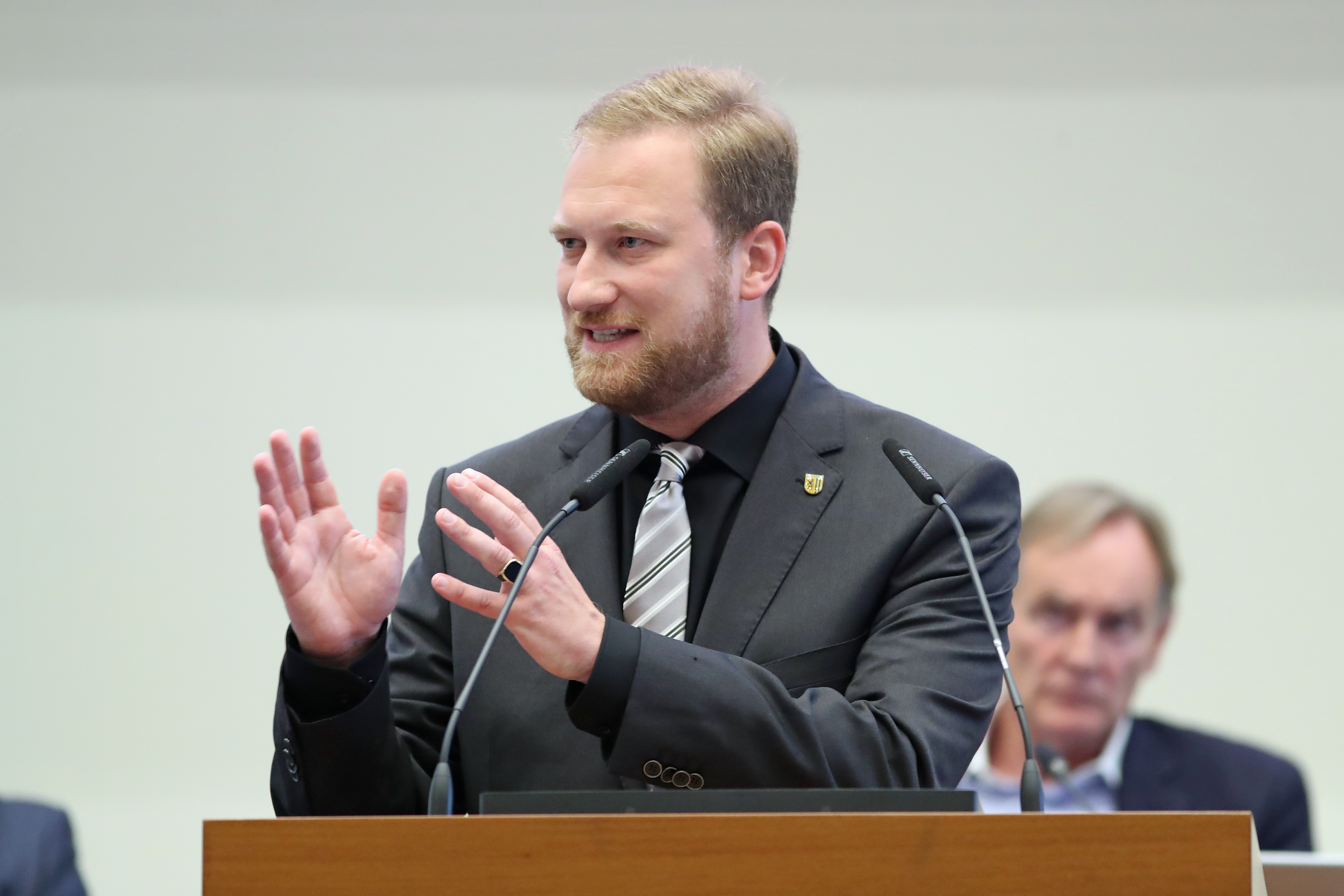
And the Left Party group on the city council has been persistently asking for the past year just how much this amounts to. Whilst in 2015 Leipzig had to pay an additional 461 million euros to carry out the federal government’s statutory duties, by 2024 this figure had risen to 945 million euros. These figures were once again brought up for discussion on 1 July by Green Party city councillor Sylvia Herbst-Weckel.
Such a sum would blow any budget. And this is not just the case in Leipzig, as Burkhard Jung noted: thousands of local authorities are deep in debt. By 2026, they will have incurred 30 billion euros in new debt solely as a result of the mandatory tasks transferred to them.
Who can’t do the maths here?
This made the speeches by the AfD city councillors on 1 July all the more embarrassing, as they suggested to the audience that this massive deficit could be plugged simply by making cuts to Leipzig’s budget. And their ‘austerity proposals’ (which were primarily directed against climate protection and democracy projects) would have solved the problem. Which is utter nonsense, as Burkhard Jung pointed out. Even if Leipzig were to scrap all its voluntary initiatives, the city would still not be able to get out of the deficit.
BSW city councillor Eric Recke also faced a backlash after he simply blurted out that defence spending at federal level and the increased energy costs resulting from the sanctions against Russia were to blame for Leipzig’s deficit. It was not only SPD city councillor Christina März who gave him a proper dressing-down.
A solution is needed at federal level by 2029
And Finance Mayor Torsten Bonew also made one thing clear: if the federal government does not take action by 2029 and provide adequate funding for local authorities, Leipzig will find itself unable to adopt a budget that is in any way still approvable.
Burkhard Jung also addressed the issue at the end, emphasising that even with intensive cost-cutting efforts, Leipzig cannot balance the structural deficit of 300 million euros a year. The administration will shortly be presenting the city councillors with a series of cost-cutting proposals that could save the city 100 million euros. But Jung had his reservations as to whether the political groups would go along with this (particularly with regard to nursery fees).
Burkhard Jung sees the only real solution as the federal and state governments finally taking the principle of ‘Konnexität’ seriously (again) and actually paying for all the mandatory tasks they impose on local authorities. He also once again clearly called for emergency aid from the federal government for local authorities to alleviate their current financial problems.
The CDU parliamentary group had drafted an amendment to the city’s proposal, calling on the administration to explore further financial leeway. This motion largely aligns with the administration’s current approach. It subsequently secured the necessary majorities.
And, with the exception of the AfD parliamentary group, the majority of the council also approved the proposal from the finance department by 49 votes to 11, meaning the city once again has financial leeway for the coming months. The 800 million euros in cash advances could last until the next biennial budget is drawn up, which Torsten Bonew is due to present this autumn. But then – according to Torsten Bonew – further cash advances will have to be discussed again. There will be no other way to draw up the 2027/2028 two-year budget.
Empfohlen auf LZ


So können Sie die Berichterstattung der Leipziger Zeitung unterstützen:





There is one comment