Dieser Artikel ist auch in deutscher Sprache verfügbar: Zum deutschen Artikel.
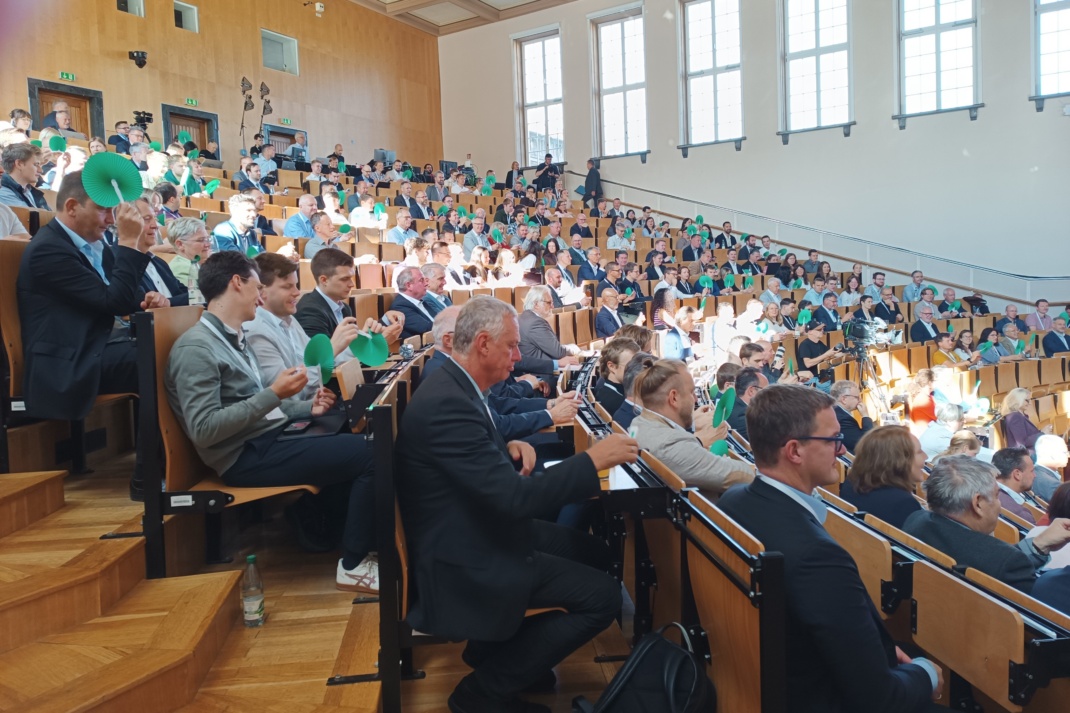
On 30 September and 1 October 2026, the East German Energy Forum (ODEF) took place in Leipzig for the fifteenth time. No, it was not a ‘green’ event; it was organized by the Association of Business Organizations in Eastern Germany and Berlin, under the patronage of the Federal Ministry for Economic Affairs and Energy (BMWE). One could also say that Katherina Reiche was the patron of the forum.
The following day, 2 October 2026, marked the end of the ‘Wind, Solar and Transformation Industries’ division within this ministry, which was headed by the patron of the ODEF. Table.Briefings writes on this: The ministry justifies the abolition on the grounds of ‘current industrial policy priorities’. Furthermore, this was intended to implement the ministry’s cost-cutting commitments.
What exactly are these “industrial policy priorities”, and which industry is being referred to here? The Mittelstand – not to be confused with the Mittelstand and Economic Union or the Association of Family Entrepreneurs – that is, small and medium-sized enterprises (SMEs) – is presumably not what is meant here.
Some of these entrepreneurs, joined by representatives from the worlds of science, politics, and the energy sector, met at the ODEF. There, up to 500 people discussed sustainable energy policy. It goes without saying that SMEs have already, to a not inconsiderable extent, established business models in the field of the energy transition. We will report on this later.
This was also evident from the fact that the energy transition – that is, renewable energies – was not fundamentally called into question by the participants at the ODEF. The focus was on the question ‘How do we go about it?’, a question which the ministry led by Katherina Reiche is tasked with answering.
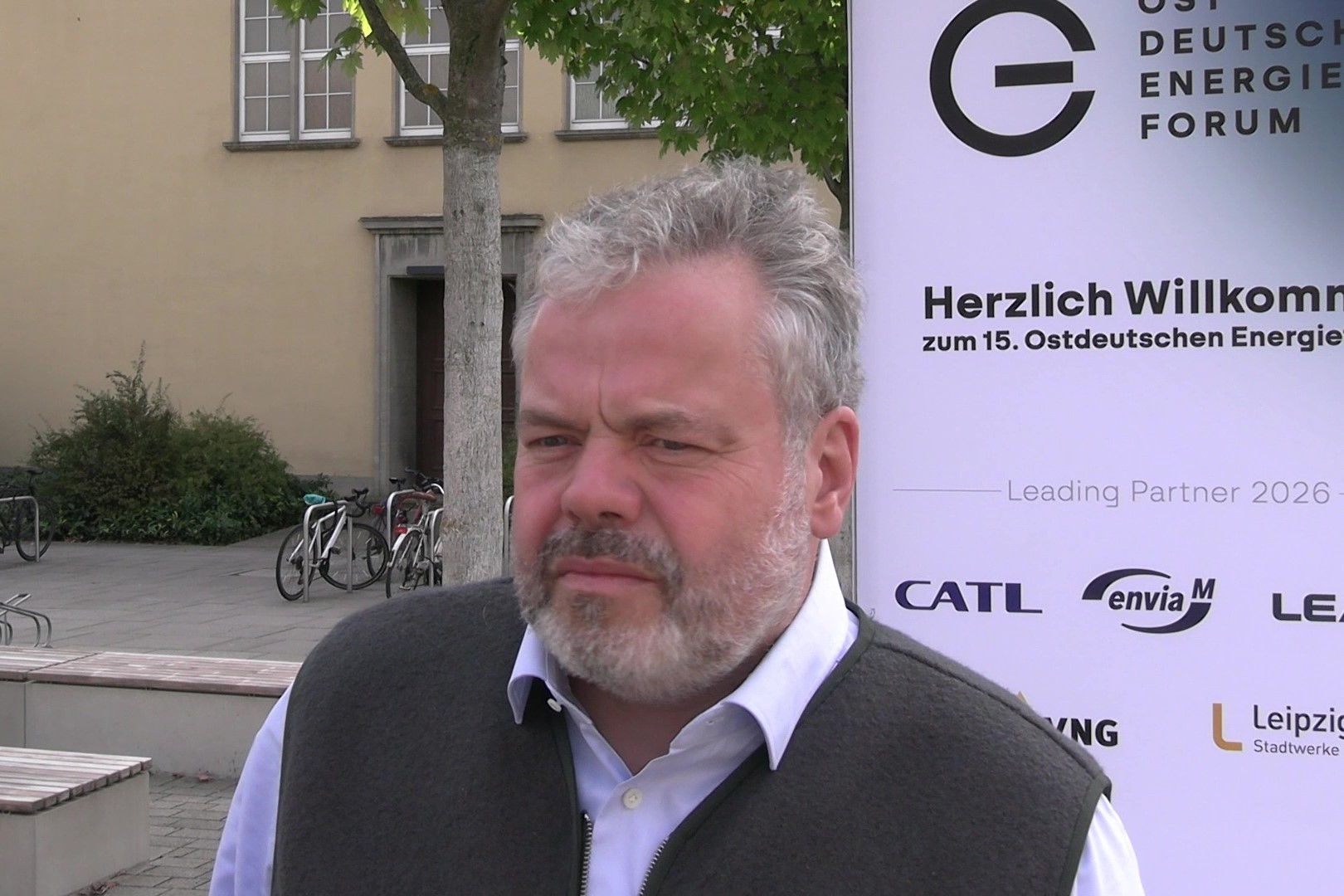
The interview with Dietrich Enk, conducted on 1 October and from which we quote below, was not carried out in the context of Katherina Reiche’s economic policy. However, in our view, it expresses quite clearly what entrepreneurs expect from politicians.
If you look at the list of speakers at the ODEF, you will search in vain for representatives of the patron. One of the organizers, Dietrich Enk, President of the Saxony Entrepreneurs’ Association (Unternehmerverband Sachsen e.V.), did not think this was such a bad thing. He told us in an interview: “The big names in politics haven’t turned up this year – the ones who always tend to paint everything with a broad brush and treat everything as if to say: ‘I’ll just take that on board’. Instead, what we have here is a genuinely substantive discussion, one that is truly characterized by the fact that we ourselves are focusing on the opportunities available to small and medium-sized enterprises and to entrepreneurship.”
The “big politicians” – that is, those responsible for the small and medium-sized enterprises present here – are not missed, because they merely “take everything on board”. That does not sound like a sign of trust in them, or perhaps in the work of the Minister for Economic Affairs.
When asked about energy costs and their rises, Dietrich Enk says: “The general cost structure is, of course, truly brutal. We’re seeing increases of up to fourfold in some cases in the energy and water sectors. That’s simply a problem. We need prospects here; we need certainty. Whether or not we can pass these costs on, we have to deal with them. The costs are what they are. So, we can’t just say that everything was better in the past – that doesn’t help us at all. Instead, we have to accept this; even a 10 per cent tax cut wouldn’t help in any way.”
From Dietrich Enk’s words, one can conclude that many East German entrepreneurs want prospects and certainty, and as he goes on to explain: “I think the key here is really to look at the bigger picture: Do we want a free market economy? Do we want to continue to enable self-employment, or should everything take place solely in state-owned enterprises or within a planned economy? Then we simply have to have a look at all the issues that are already on the social agenda but are being addressed far too hesitantly – or not at all – at federal level. And then we’ll also see where we end up in terms of costs.”
Conclusion: Anyone who attended the ODEF experienced a discussion that was diametrically opposed to the political debate within the government. It wasn’t about a rollback in energy policy; it was about the “How do we shape the energy transition?” If the patron, the very next day, disbands the “Wind, Solar and Transformation Industries” unit – which is of vital importance to the energy transition – then she is also working against small and medium-sized enterprises and their future.
Empfohlen auf LZ


So können Sie die Berichterstattung der Leipziger Zeitung unterstützen:


There is one comment