Programmers are now at work on the city’s cleaning services, and the recycling centre in the south-west has announced its closure. The State Parliament is voting on an affordable regional ticket for the whole of Bavaria, the City History Museum is presenting new research findings on the photographic archive of the Mittelmann studio – and at the Town Hall today there are tips and workshops on training and work for migrant women.
City cleaning services to take a break
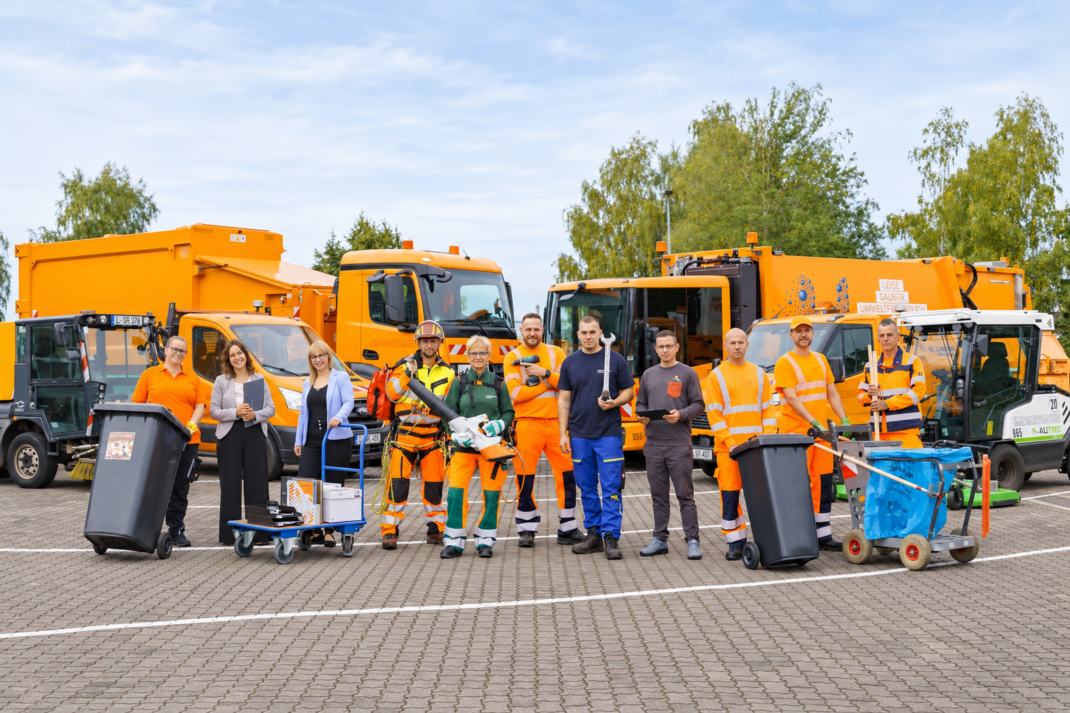
Due to the migration of its central administration and billing system, Leipzig’s municipal cleaning service will be unable to provide several services, or will only be able to offer them on a limited basis, from today up to and including Sunday. The municipal enterprise is updating its software, which is required, amongst other things, for processing orders and invoices.
This particularly affects bookings for bulky waste and electronic waste collections, the bin collection service and the processing of applications. Information regarding missed bin collections will also not be available during the upgrade. For this reason, the main ticket office in the administration building at Geithainer Straße 60 will remain closed for the rest of the week. Afterwards, it will be open as usual from Monday to Thursday, 8 am to 12 noon and 1 pm to 3 pm, and on Fridays from 8 am to 12 noon.
New collection dates for bulky waste and end-of-life electrical appliances cannot be arranged during these four days. There may be delays in the collection service regarding the acceptance and processing of requests. The same applies to applications submitted. However, according to the published information, regular refuse collection will not be suspended as a matter of principle. From Monday, 9 November, all services are expected to be available again without restriction.
Final clear-out in the south-west
The recycling centre at Dieskaustraße 133 in Leipzig will close on 30 November 2026. This is due to the lease coming to an end. Until then, the recycling centre will remain open on Mondays, Tuesdays, Wednesdays and Fridays from 10.00 am to 1.15 pm and from 2.00 pm to 6.00 pm, and on Thursdays until 7.00 pm. After that, the site will be cleared.
The remaining 14 recycling centres in Leipzig will then be available as alternatives. The sites at Gärtnerstraße 36, Krakauer Straße 2 and Knautnaundorfer Straße 231 are particularly close by, each about a ten-minute drive away. Opening hours at these centres will be extended. At the Krakauer Straße site, the midday break will be discontinued in future, whilst the collection point on Knautnaundorfer Straße will remain open throughout December and will not go into its winter break until January.
In the long term, a new recycling centre in Großzschocher is set to improve waste management in south-west Leipzig. The facility, which includes an integrated hazardous waste collection point, will form part of a new site, the construction of which began in February 2026.
“We are aware that the closure of a familiar recycling centre will mean a change for residents in south-west Leipzig. That is why we are providing information well in advance about the closure and the available alternatives. At the same time, we are working to further develop the infrastructure in the long term and adapt it to the city’s growing needs,” explains Elke Bröcker, Commercial Operations Manager at Stadtreinigung.
Information on all collection points and their opening hours can be found ONLINE HERE.

New findings on Jewish photographic treasure trove
The Leipzig Museum of City History is presenting new research findings on the Mittelmann Photo Archive today at 5 pm. The opening event showcases the expansion of the special exhibition “Snapshot: The Mittelmann Photo Archive” under the title “Contrasts. Perspectives”. The expanded exhibition will be open to the public from tomorrow.
“Just under 6,000 visitors have seen the exhibition in the first five months,” museum spokesperson Katja Etzold told the LZ. “We are delighted with this great response, and it confirms our decision to give the subject even more space with the extension of the exhibition.”
New insights relate in particular to Eugen Leon Mittelmann (1906–1986), the son of the Jewish photographer Abram Mittelmann. As early as 1925, he was experimenting with photographic techniques and producing collages, montages and portraits of artists. In 1933, he fled to France to escape the Nazis. Further archive discoveries document his father’s professional career and the persecution of the family. Abram Mittelmann had founded his photographic studio in 1904 at what was then Löhrs Platz 2 and had moved to Peterssteinweg 15 in 1909.
His business became a well-known destination in Leipzig for portrait photography. The surviving photographs depict people from various social groups and document urban life in the first half of the 20th century. After 1933, Mittelmann was subjected to anti-Semitic persecution and was imprisoned on several occasions. In 1938, he was forced to give up his business. On 4 September 1942, he was shot dead during a raid in Brussels.
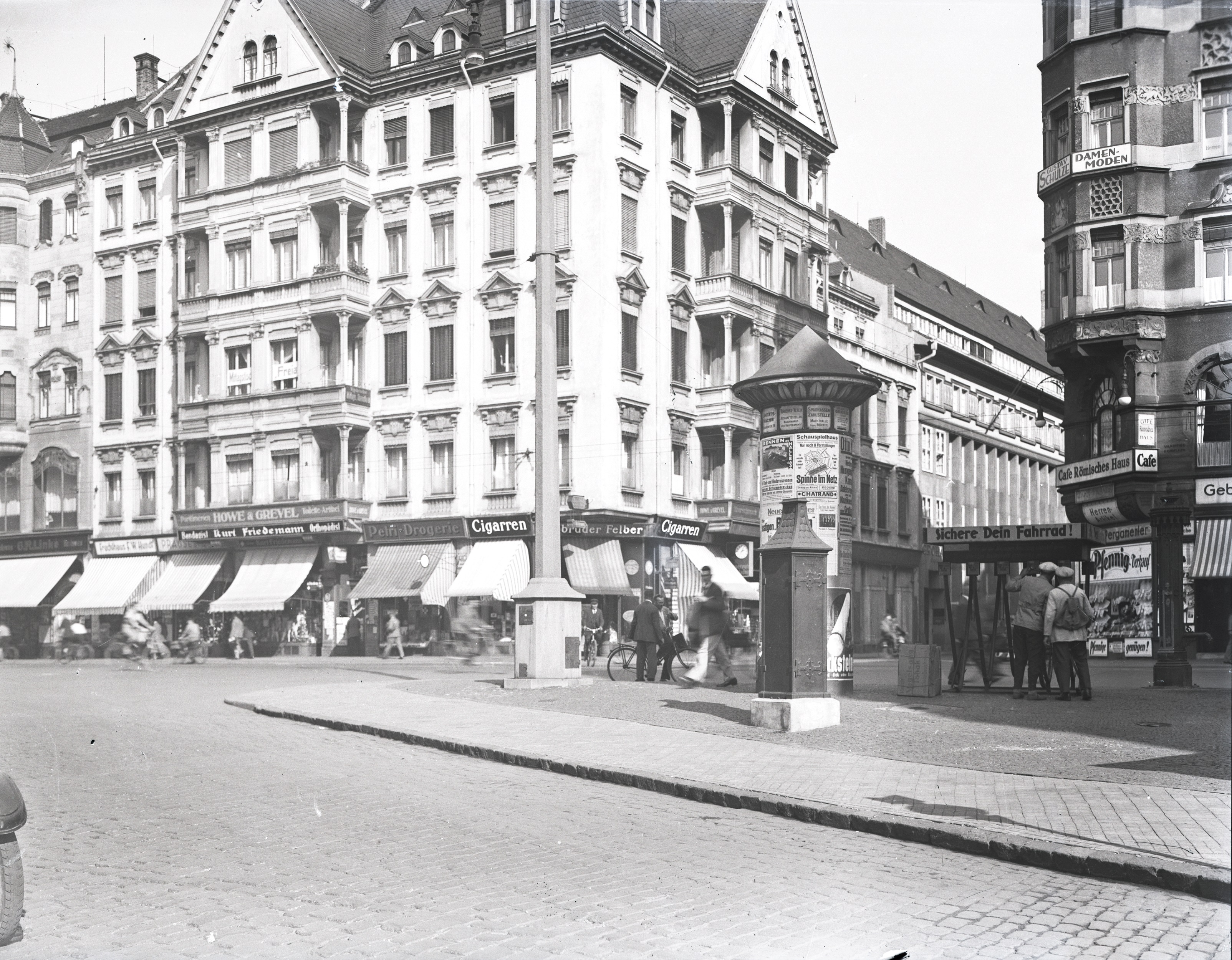
They were neighbours. The house at Peterssteinweg 15. Photo: City History Museum
A large part of his photographic estate was only rediscovered in 1988 in an attic at Peterssteinweg 15 (as reported by the LZ
). The collection, comprising more than 2,000 glass negatives, was handed over to the Leipzig Citizens’ Movement Archive in 2022, which holds it in trust on behalf of the French heirs. More than 2,200 photographs are now available for digital research HERE ONLINE
. Many of the people pictured have been identified, but numerous life stories remain unclear.
The City History Museum, the Leipzig Citizens’ Movement Archive
and the Ariowitsch House
are among those involved in the academic analysis of the collection. Contributions are scheduled for today’s opening by curator Dr Johanna Sänger, Achim Beier from the Leipzig Citizens’ Movement Archive, co-curator Esther Kaack, Küf Kaufmann from the Jewish Community of Leipzig, and museum director Dr Anselm Hartinger.
The expanded exhibition is scheduled to run until 4 April 2027. The Museum of City History
in Böttchergäßchen is open from 10 am to 6 pm on Tuesdays to Sundays and on public holidays. Standard admission is 8 euros; concessions are 4 euros. Children and young people under the age of 18 are admitted free of charge. An evening ticket for the final hour of opening costs 4 euros; on the first Wednesday of the month, admission is 3 euros. On the third Thursday of every month, admission is free from 2 pm to 6 pm. Admission to today’s opening is free.
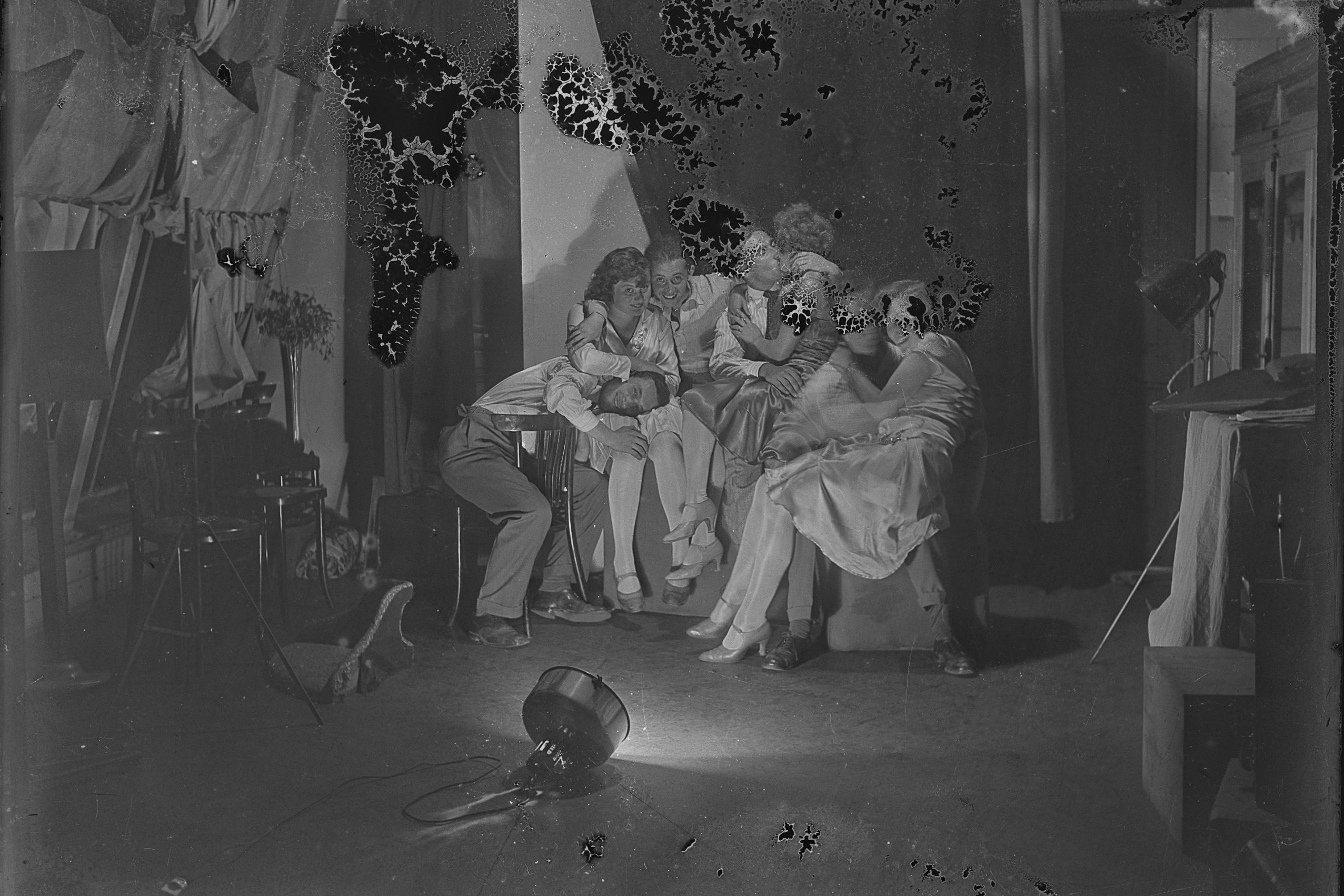
The only surviving interior view of the studio. Leon Mittelmann with friends (before 1933). Storage and the passage of time have left their mark. Photo: Leipzig Museum of Local History/Mittelmann Photo Archive
State Parliament to vote on new Mobi-Ticket
The Saxon State Parliament is today deciding on a motion by the Left Party faction to introduce a state-wide, discounted mobility ticket. The proposal (Parliamentary Paper 8/7458) aims to make the use of public transport more affordable for people on low incomes, as well as for children and young people.
The proposal is for a state-wide ticket for children and young people at a monthly price of 15 euros, which would replace the existing ‘Bildungsticket’. According to the parliamentary group’s proposals, people on low incomes or with no income of their own would pay 25 euros per month. By way of comparison, the Left Party parliamentary group points to the price of the Deutschlandticket, which will be 63 euros in 2026.
The proposers justify their initiative by highlighting the link between affordable mobility and social participation. Such an offer could also provide financial relief in future for passengers in Leipzig and in the Saxon part of the Central German Transport Association (MDV). However, the prices mentioned are, as yet, merely proposals put forward by the Left Party parliamentary group. Even if the State Parliament were to approve the proposal, this would not mean that the discounted tickets would be available immediately. Further steps would be required to finalise the details and implement the scheme.
Today, too, anyone interested can follow the parliamentary debate from the visitors’ gallery of the Saxon State Parliament (Bernhard-von-Lindenau-Platz 1 in Dresden). No tickets are required, but a form of photo ID is necessary. There are up to 150 seats available in the gallery, including those reserved for visitor groups and the media. Anyone who does not wish to attend the session in person can watch the live broadcast with subtitles from 10.00 am on the Saxon State Parliament’s website at www.landtag.sachsen.de.

Job opportunities for migrant women
Under the title ‘Women at Work’, the City of Leipzig, together with partner organisations, is hosting an information day today for women with a migrant background. The event will take place from 10 am to 2 pm in the Upper Foyer of the New Town Hall (Martin-Luther-Ring 4–6). The event is aimed at women of all ages, regardless of their previous professional qualifications. They can find out about employment opportunities, training pathways and further professional development, and make contact with advisory and support services.
The day will begin with an opening ceremony from 10.00 am to 11.20 am, followed by a panel discussion. Afterwards, a number of workshops will provide practical knowledge to help participants enter and progress in their careers. Topics will include labour law issues, setting up your own business, and the use of artificial intelligence in job applications. In addition, more than 20 organisations and integration projects will present their work and provide information on available support.
Through this information day, the city and its partners aim to facilitate access to the Leipzig labour market for women with a migrant background and to highlight career prospects. Attendance is free of charge.
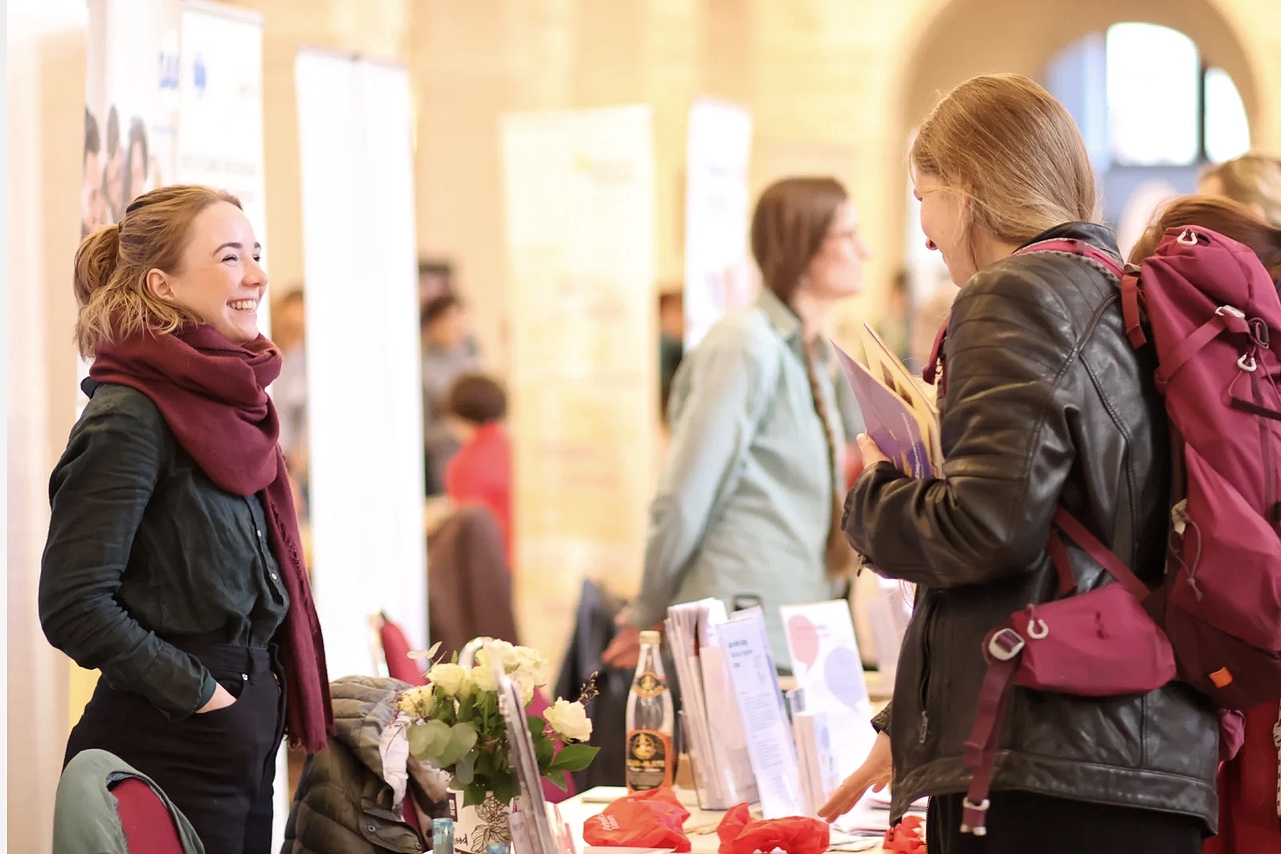
A scene from the “Women at Work” information day 2024. Photo: Ghadir Hajomar/City of Leipzig
So können Sie die Berichterstattung der Leipziger Zeitung unterstützen:




There is one comment