
Dieser Artikel ist auch in deutscher Sprache verfügbar: Zum deutschen Artikel.
It’s enough to make you neigh with laughter! The Scheibenholz racecourse is turning into a huge comedy club today. This year’s summer theatre season kicks off this evening at the ANKER socio-cultural centre, proving that teachers are sometimes right when they believe in their pupils – in this case, a female pupil. Saxony’s food banks still have a chance of securing funding today – and a care home for the elderly is gradually bringing a bit of cultural heritage to the city.
Funding for food bank volunteers
It is sad that they have to exist at all. But the fact that they do is certainly welcome and provides everyday help for many people: the ‘food banks’. These are distribution points for food to those in need, which has previously been provided by retailers, manufacturers and other partners. The Free State supports this initiative; the application deadline ends today.
Organisations can submit their documents to the Sächsische Aufbaubank (SAB). Applications must be made exclusively online via email, HERE to the relevant SAB mailbox; no in-person appointment is required. The State of Saxony is making a total of 400,000 euros available for the funding programme.
Support is available for investments in, amongst other things, vehicles and logistics, premises, energy efficiency, health and safety at work, and measures to ensure compliance with hygiene and other regulations. Grants of between 2,500 and 30,000 euros are available per project. There are currently 44 food banks operating in Saxony, which distribute surplus food to people on low incomes.
According to the latest figures, the Leipzig Food Bank has around 25,000 clients. Around 6,000 people make use of its food distribution services within a week. The aim of the food banks is to save food that is still edible from being destroyed, whilst at the same time supporting people in difficult financial situations.
The Leipzig Food Bank points out that it relies on the support of numerous sponsors and many businesses from the retail and commercial sectors to be able to sustain its work in the long term. The funding, for which applications are still being accepted, is intended to help maintain the food banks’ necessary infrastructure and enable investment in logistics, equipment and premises.

Forced marriage in Leipzig-Möckern
Relationship status: complicated. Because Lucky isn’t lucky at all. Premiere for the new summer theatre at ANKER in Leipzig! Today, the production “Offline verknallt” celebrates its world premiere at 8 pm in the courtyard of the socio-cultural centre at Renftstraße 1 in Möckern. Doors open at 7 pm. Directed by Marco Runge, the production is a joint venture between the director and ANKER Leipzig, and will return to the stage several times until the end of August.
Following the first performances today and tomorrow, further dates will take place from 22 to 26 July, from 29 to 31 July, and from 19 to 23 August and from 26 to 30 August. The story centres on Princess Lucky, who is to be married against her will and defies her family’s plans. The play combines fairy-tale elements with a tongue-in-cheek look at love and relationships in an increasingly digital world. The cast includes Elena Maria Pia Lorenzon, Lili Marleen Huth and Michael Rousavy.
An interesting fact: Lili is the daughter of KIKA legend Alex Huth, who himself spent several years as a presenter on the ANKER stage in the Möckern district. However, she doesn’t owe the role to her father’s legacy, but to the fact that director Marco Runge was once her teacher and said to her a long time ago: “If you give it your all, you’ll become a proper actress one day.” Full circle.
The ANKER is one of the established cultural centres in the north of Leipzig and regularly hosts theatre, concert and cultural events. Tickets for the summer theatre are available from the box office from 28.20 euros. Advance bookings can be made online via EVENTIM. You can get there by taking tram lines 10 or 11 to the Möckernscher Markt stop. Should the weather be unfavourable, the performance will be moved indoors at short notice.

Cultural heritage in Leipzig too – but only with two ‘p’s
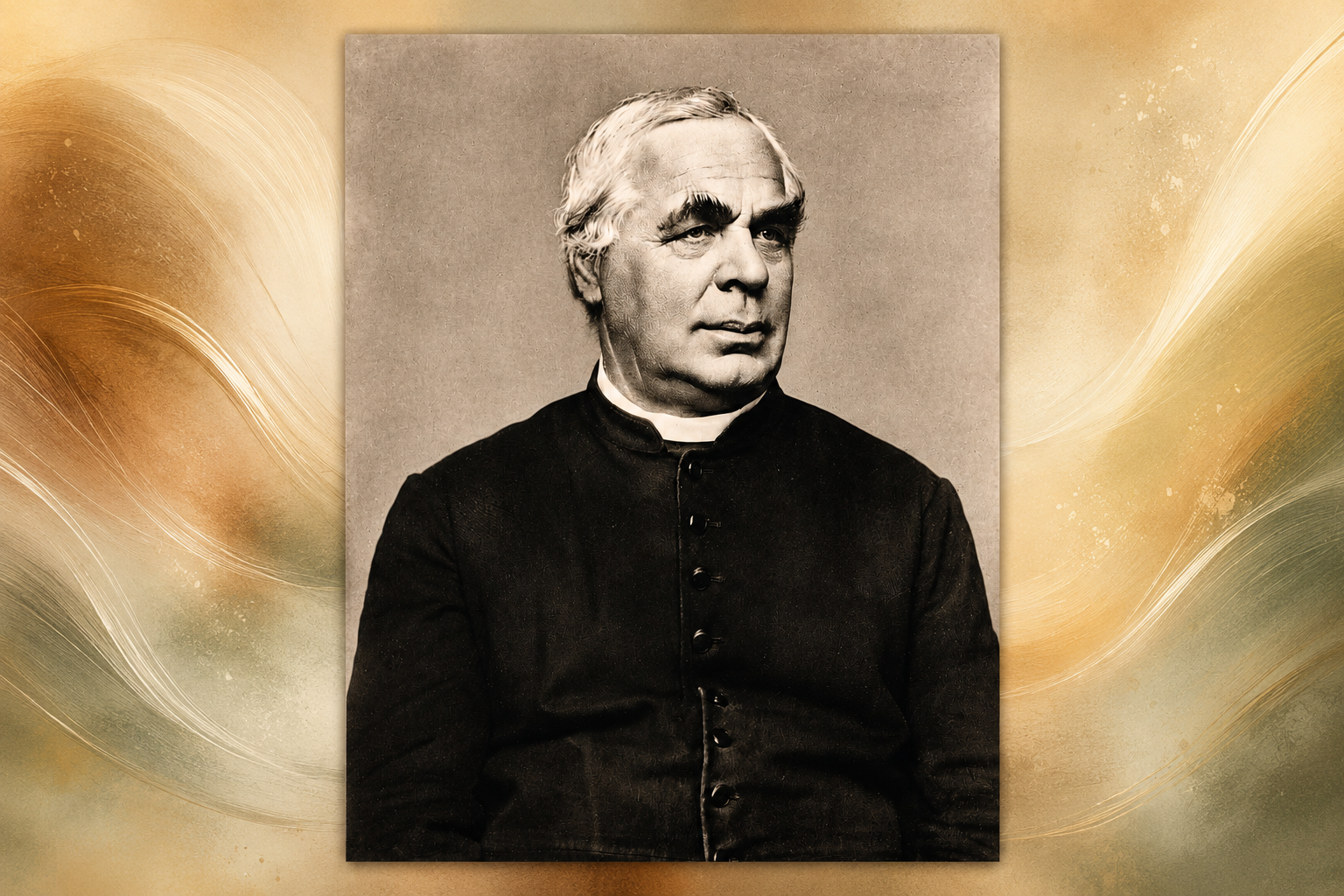
A small step on a stair, but a giant leap for health. It was the priest and healing expert Sebastian Kneipp who encouraged people in pain to climb stairs. For, as Kneipp realised, this promotes venous function and the sense of balance.
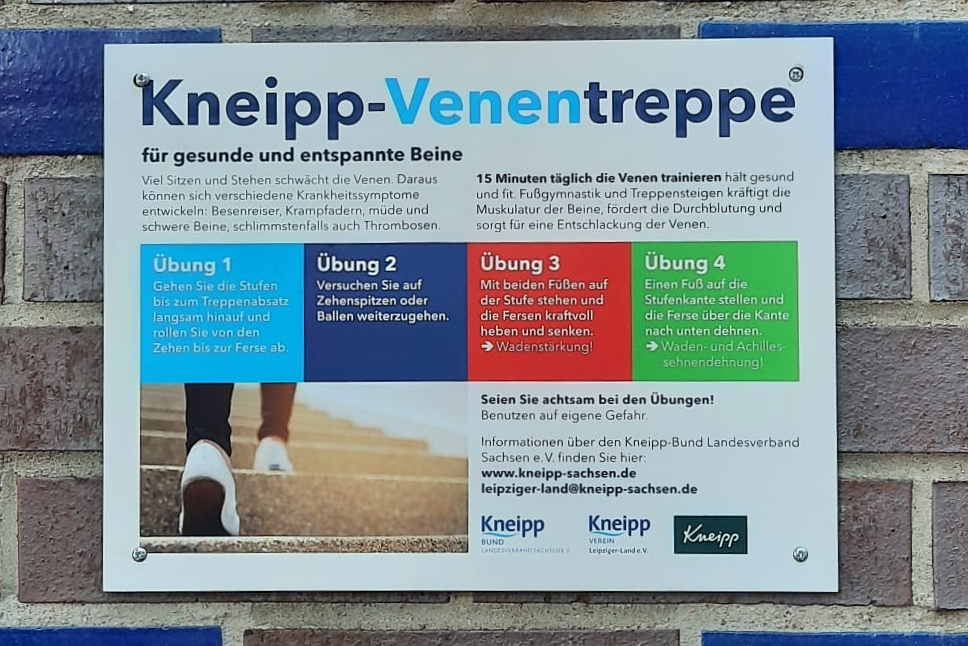
Following the opening of Saxony’s first Kneipp venous staircases a month ago in the spa town of Bad Lausick, Leipzig is now also getting its first facility of this kind. At the “Cura SeniorenCentrum Angelika-Stift” at 82 Bornaische Straße, the motto since this morning has been to keep moving. The fact that the facility is rather small is down to a special feature: unlike traditional Kneipp water treading pools or barefoot paths, this relatively new concept focuses on targeted heel and ball-of-the-foot exercises on just a few steps. And so it fits perfectly into small spaces. Furthermore, the Leipzig ‘Venstreppe’ is not a staircase in a public space, but connects the public area with the senior citizens’ centre.
Following the inauguration, visitors are invited to join in the ‘wetting’ ritual in the Kneipp water-treading pool in the Angelika-Stift’s inner garden. This has also been open to the general public for several months now – surrounded by arm-baths, a barefoot path and herb gardens. Among those present will be Petra Billwitz, chair of the Kneipp Association of Leipzig and the Surrounding Area (Kneipp-Verein Leipzig und Umland e.V.), and Peter Wolff, who has been travelling throughout Germany for the past 25 years as ‘Pastor Sebastian Kneipp’.
The Kneipp movement is based on the five pillars of water, exercise, medicinal plants, nutrition and a healthy lifestyle. Facilities such as care homes for the elderly or nurseries can obtain Kneipp certification if these principles are implemented in their day-to-day operations. ‘Kneipp therapy’ has been part of Germany’s Intangible Cultural Heritage for twelve years.
The horse racing track is a bit of a laughing stock these days
In the mid-1990s, there was a rather charming idea to convert the interior of the Scheibenholz into a golf course – and even to include the sport in the school curriculum, following the Scandinavian model. However, the potential investor galloped off. Whether the project’s failure was down to him or the city – nobody wants to know the details any more.
From today, the racecourse will prove that it is capable of more than just hosting equestrian events. With ‘Phat Cat Comedy XXL’, one of the biggest open-air comedy shows is making its debut this summer as part of the Leipzig Film Nights at the historic venue on Rennbahnweg. The event starts at 8 pm, with doors opening as early as 6.30 pm. Anyone wishing to secure good seats and avoid queues at the entrances should therefore arrive as early as possible.
There is an admission charge. Depending on the ticket outlet, seat category and any service charges, tickets currently cost between around 35 and 55 euros. Whether tickets will still be available at the box office on the day of the event depends on advance sales figures. It’s best to check in advance! Several well-known comedians will be taking to the stage, including Björn von Morgenstern, Maxi Gstettenbauer, Maria Clara Groppler, Roger G and Florentine Osche.

So können Sie die Berichterstattung der Leipziger Zeitung unterstützen:





There is one comment