Dieser Artikel ist auch in deutscher Sprache verfügbar: Zum deutschen Artikel.
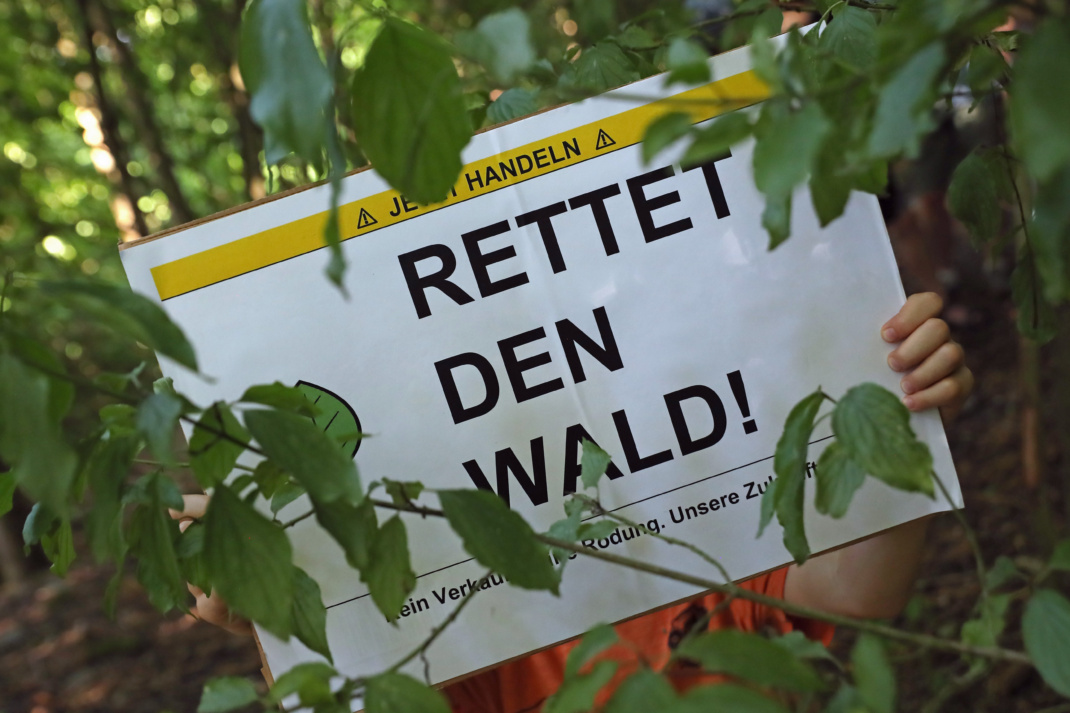
The city’s proposal to clear the Capa-Wäldchen as a compromise to meet the land requirements of the Kleinmesse and RB Leipzig has met with strong opposition and a lack of understanding amongst the people of Leipzig. The Bündnis 90 / Die Grünen group on the Leipzig City Council also firmly rejects these plans. It has now tabled an amendment in response.
In a recent question tabled in the City Council, the group highlights numerous inconsistencies inherent in the proposal to clear the woodland. A response is expected at the council meeting on 2 September 2026. A petition calling for the rejection of the proposal, including the sale and clearing plans, is also on the agenda for that meeting. According to the Petitions Committee’s proposal, it is to be appended to the proposal as supporting material for consideration.
The Alliance 90/The Greens parliamentary group has tabled an amendment calling on the Lord Mayor to withdraw the proposal to sell the Capa Forest immediately and to advocate for a fresh search for a site for the Kleinmesse.
“The fact that the administration is taking a step back and intends to revise the proposal is a good sign,” says Tobias Peter, leader of the Green Party parliamentary group.
“To reconcile the Kleinmesse, RB and Capawald, all options must be put on the table. We do not believe there is no alternative to the current location and scale of the Kleinmesse. Even today, the Kleinmesse no longer occupies the entire area of the existing fairground. It can easily be scaled down at its current location. We also consider the Alte Messe, with its well-connected and already sealed-off areas of between 15,000 and 20,000 m², to be a potentially suitable alternative. The city must examine this matter in detail once again and reconsider its criteria. The use of existing sports facilities in the surrounding area for RB must also be thoroughly assessed. The preservation of the forest must be the top priority!”
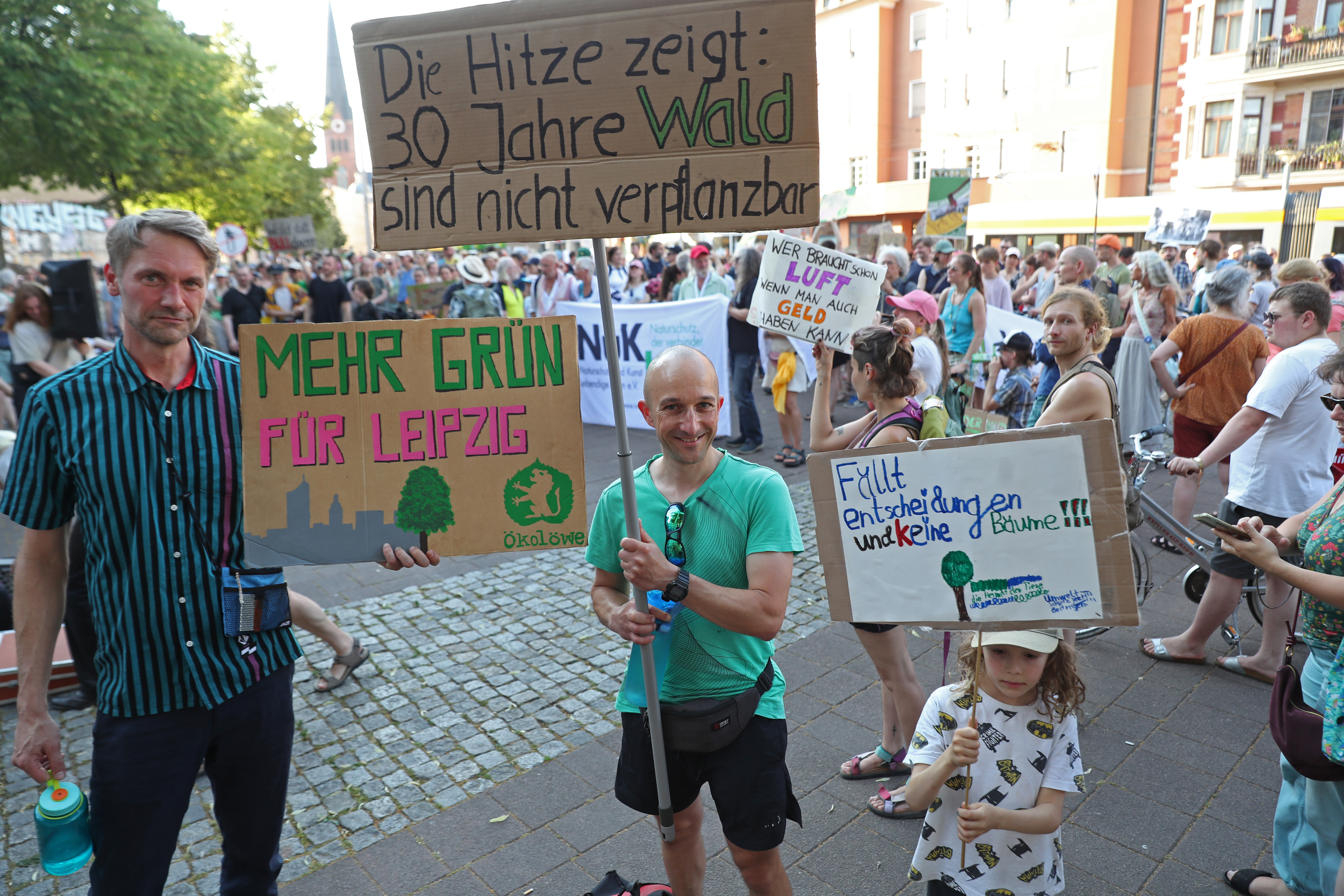
The clearing plans run counter to all the city’s climate targets
And the Greens make this quite clear in their amendment: “However, this as yet unsuccessful search for an alternative site cannot under any circumstances lead to the conclusion that we should seriously consider clearing 6 hectares of woodland in 2026! Numerous city council resolutions speak against this: the INSEK target to strengthen the green corridor between the northern and southern floodplain forests, the climate emergency, measures to adapt to climate change, the biotope network concept, the target of increasing forest cover, net-zero land sealing, the ‘sponge city’ principle…
This summer’s heatwave has once again brought home to us just how much we need urban green spaces. And we need more of them, not fewer. What’s more, the woodland lies at the narrowest point of the floodplain forest. This is precisely where there is now only a very narrow green corridor remaining. It provides a migration corridor for many animals, such as the wildcat. For birds, this patch of woodland is a vital habitat: 38 bird species have been recorded there, including 23 breeding species.
Leipzig is grappling with climate change and extreme summer heat. We are fighting for every tree, every patch of shade, every opportunity to remove paving, every chance to cool the city. We are striving to preserve and rewet the Leipzig floodplain forest. The clearing of the Capa Wood must be off-limits to all those in positions of responsibility in this city. Designating it as a protected area is urgently needed!”
We can do without aerial fireworks
“The issue of noise also needs to be fundamentally re-examined,” adds Anne Vollerthun, Green Party spokesperson for animal welfare and public order, and city councillor for the Alt-West constituency.
“If, for example, we were to do without the aerial fireworks at the end of the Kleinmesse, use quieter fairground rides with modern noise-reduction technology, or slightly adjust the opening hours, we could reduce noise levels for the surrounding residential areas. The question must surely be: how could the Kleinmesse be held at a different location? We need the forest for many reasons – especially as the Capi is situated precisely at the narrowest point of the floodplain forest, where the network of habitats is already severely compromised. The floodplain forest needs our protection more than ever – the very idea of clearing it is completely absurd!”
Whilst many political groups initially supported the administration’s plans, some are now striking a slightly different note, according to the Greens’ interpretation of the current debate in the city council. This shows that the protest has already made an impact and gives hope that the tide can still be turned!
The Capa Wood
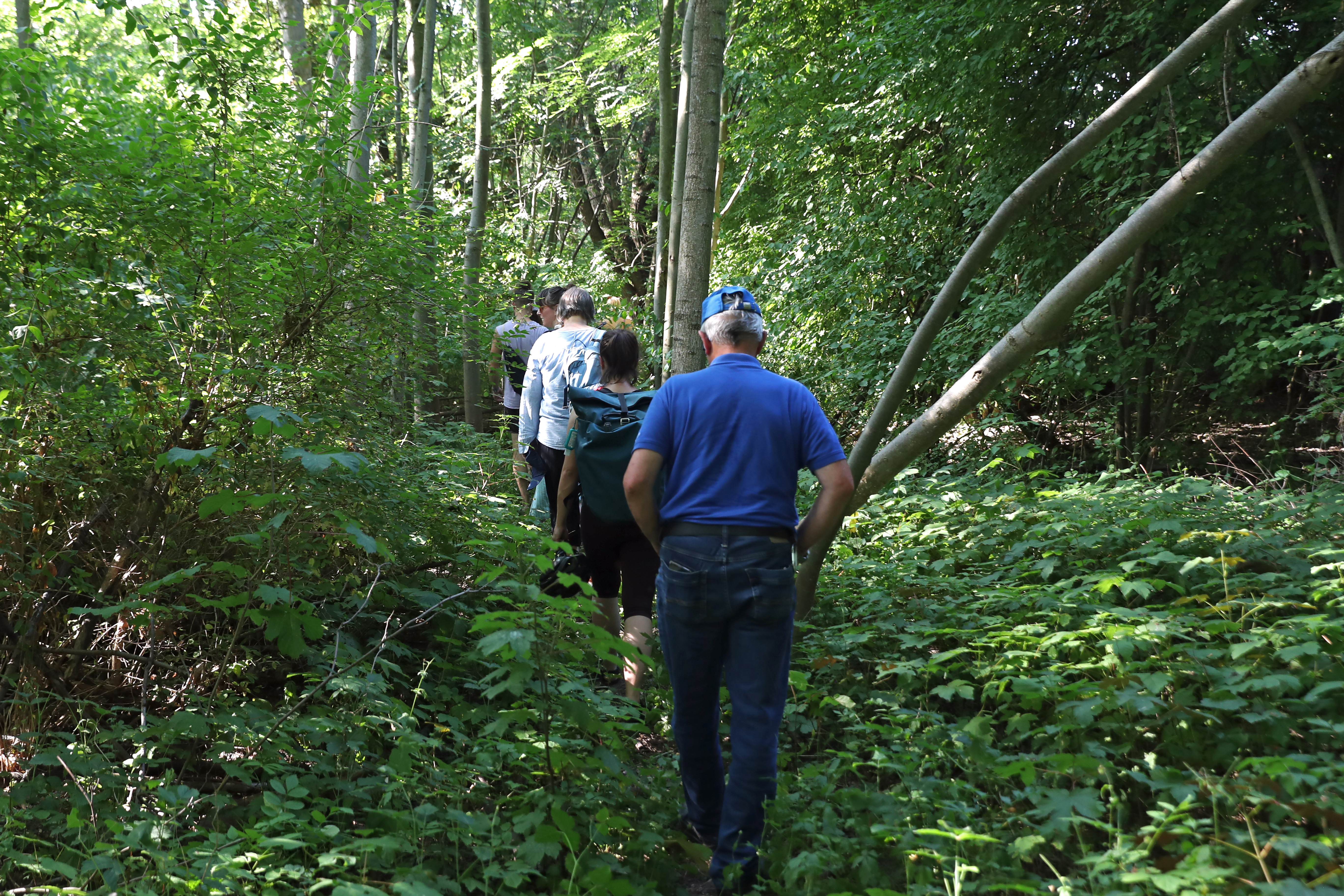
The woodland area, now often referred to as the Capawald or Capi, was reforested from 1998 onwards and was a compensatory measure for development plans Nos. 238 and E-224. Appendix 1 of the proposal states: ‘As originally intended, the area has now become significant for species and biotope conservation.’
The City of Leipzig’s Biotope Network Concept shows that the area threatened by clearance lies precisely on the boundary where the core area complexes of the biotope network between the northern and southern floodplain woodlands are interrupted (see Appendix 3 of the Biotope Network Concept). It is therefore difficult to understand how, against this background, a proposal for clearing can be put forward. Its compatibility with many other decisions taken by the City of Leipzig must also be called into question.
It is clear from document VIII-DS-02491 and its Annex 1 that local compensation for any clearing is not possible, as reforestation covering at least 7.5 to 12.5 hectares would be required. At the same time, it is suggested that a terrestrial wildlife corridor on the western bank of the Elster basin – ‘provided it does not already exist’ – could be ‘of outstanding benefit’ to the network of habitats. However, there appears to be no space available for this at all.
Empfohlen auf LZ


So können Sie die Berichterstattung der Leipziger Zeitung unterstützen:





There is one comment