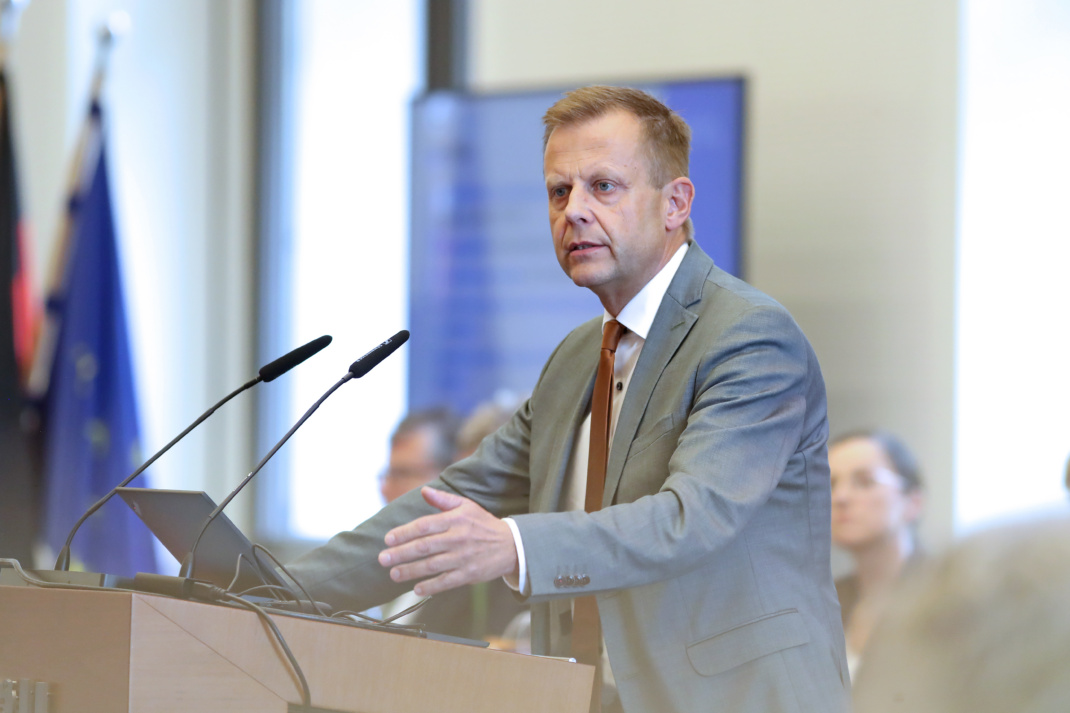
Anyone wishing to view the full presentation of the draft for Leipzig’s 2027/2028 two-year budget for themselves can now do so. Torsten Bonew, the councillor responsible for finance, Mayor Burkhard Jung and Ulrich Hörning, the mayor responsible for administration, to the presentation of this budget package – which has truly been forged through sweat and tears – at the council meeting on 2 September. Despite savings plans running into millions and a modest contribution from the Free State, the package cannot be balanced without incurring new debt. The City Council is due to approve this budget on 17 December.
A budget which, admittedly, is already full of unreasonable demands, as the impact of services transferred by the federal government – for which it provides no full funding – is becoming increasingly acute. The federal government makes the laws, but pays for only a fraction of the services thereby provided.
And this has not just been the case since Chancellor Friedrich Merz took office, nor since Olaf Scholz. It is the result of Angela Merkel’s various years in government, which were already causing massive financial burdens across all German local authorities by the end of the 2010s. In Leipzig too.
It wasn’t just the industrious FDP city councillor Sven Morlok who repeatedly warned: Leipzig’s budget is spiralling out of control.
But a city like Leipzig cannot mitigate such a trend through austerity measures alone. The city aims to save 100 million euros across both financial years – by cutting services and reducing staff numbers. That is a lot of money.
But Leipzig’s room for manoeuvre is not much greater than that, whilst the deficit caused by statutory obligations is well over 300 million euros. In fact, it is much higher still, as the additional costs for these statutory obligations are likely to be in the region of 1 billion euros. Torsten Bonew intends to present the relevant statistics in the autumn.
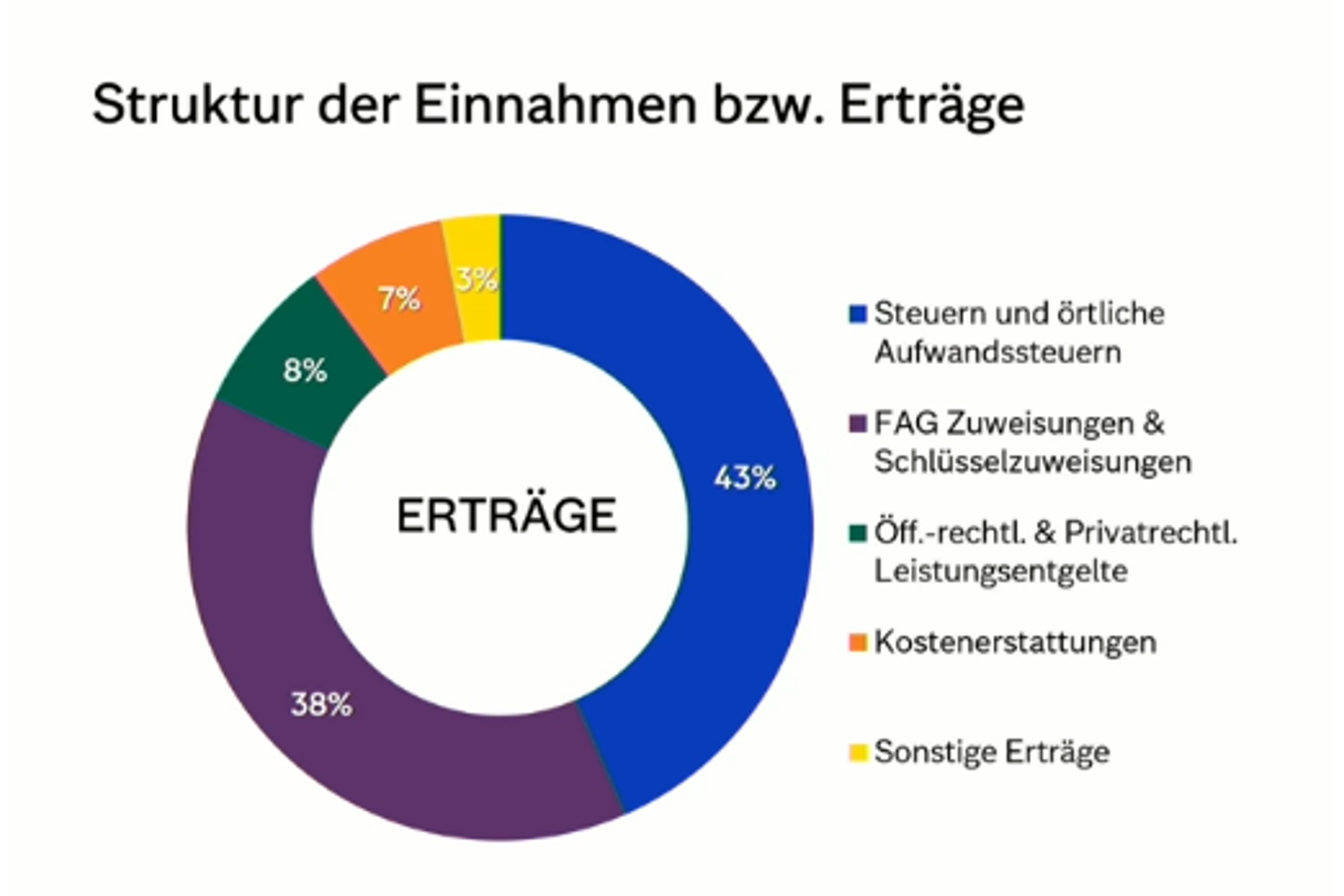
And this sum easily eats into the city’s own revenue, which currently stands at around 900 million euros. Torsten Bonew would like it to be more. If the city could cover even half of its budget through its own revenue, he would be able to sleep more soundly. After all, the budgets for 2027 and 2028 each amount to 3 billion euros.
A complaint lodged a year ago with the Federal Constitutional Court
But it is not only Leipzig that is suffering from the federal government’s strange attitude of simply failing to provide adequate funding for the statutory duties it has created by law. Many towns in the west are also suffering – and have been since the late 2010s. It was in 2019 that the town of Pirmasens and the district of Kaiserslautern lodged a complaint with the Federal Constitutional Court.
The case was directed “against the failure of the state of Rhineland-Palatinate to provide for adequate municipal funding in the State Financial Equalisation Act”. A decision on the matter was actually due to be made as early as 2025. Now it may happen as late as 2026, Mayor Burkhard Jung explained on Wednesday, 2 September, at the council meeting.
The crux of the matter is this: it is the State of Rhineland-Palatinate that is the focus here, not (yet) the federal government – the actual cause of the financial imbalance, which has long since been dragging the states into the downward spiral as well, now that they are having to foot the bill for the federal government’s refusal to pay.
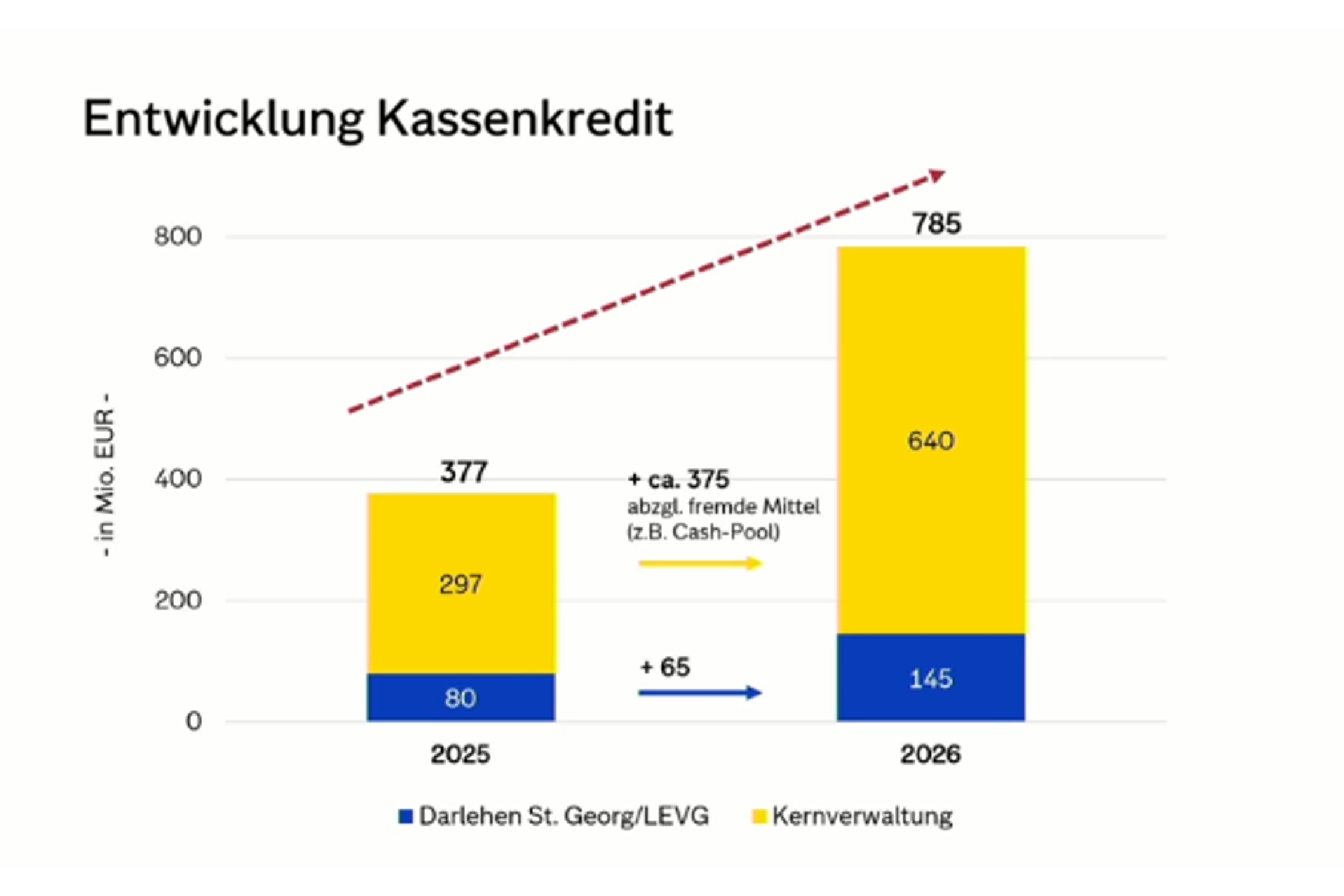
Would it help if Pirmasens and the district of Kaiserslautern were proved right? After all, the figures presented by Torsten Bonew on Wednesday show just how quickly Leipzig is now sliding deeper and deeper into debt. And this is not due to the planned investments – which have already been scaled back and spread out – but because of the cost overruns associated with entirely routine administrative tasks. According to Bonew, Leipzig cannot take out long-term investment loans to cover these additional expenses, but must instead take out cash loans at a current interest rate of 2.5 per cent.
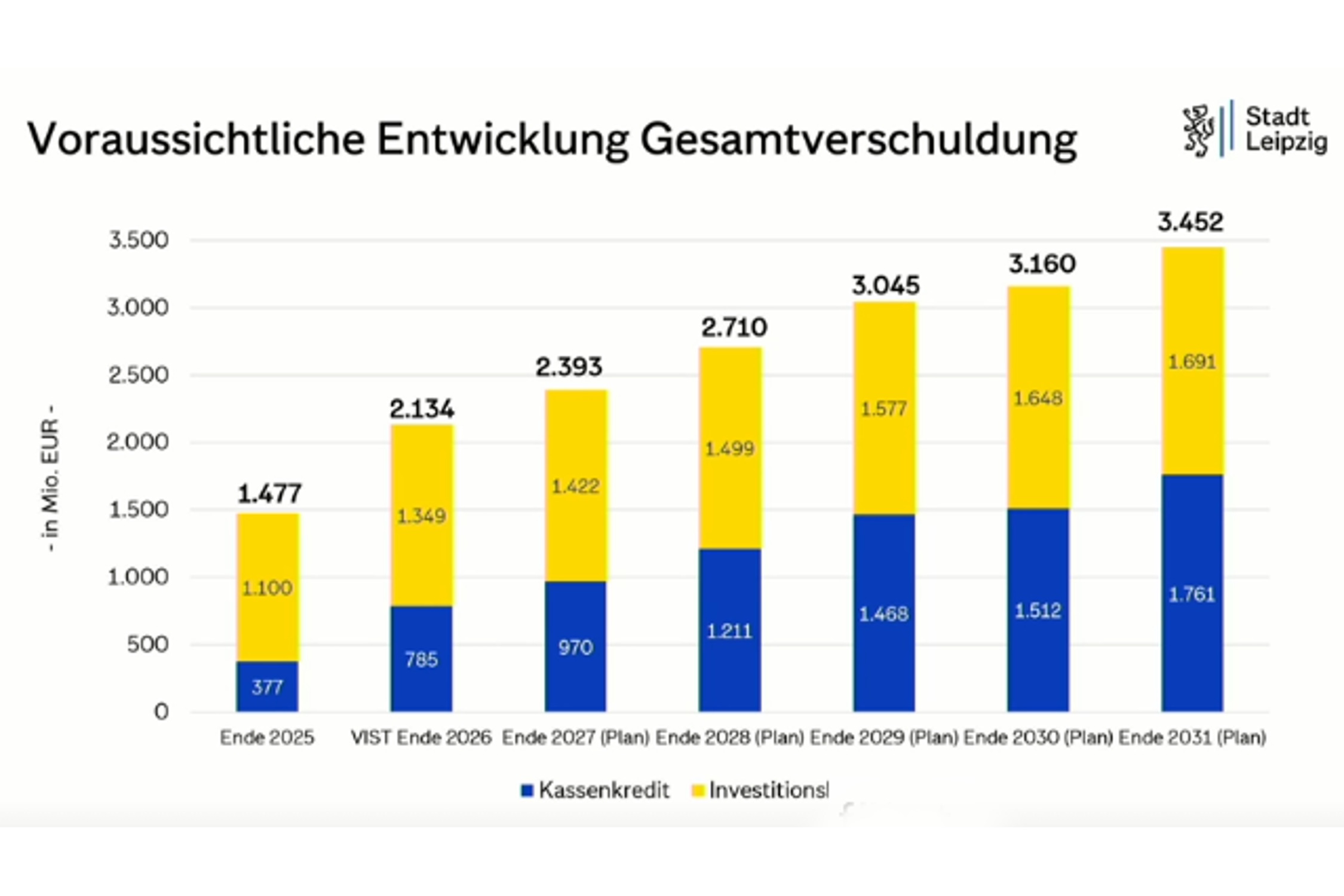
In the first instance, this is causing a rapid surge in overdraft facilities – from 2025 to 2026 alone, this represented an increase from 377 to 785 million euros. Secondly, the city’s interest payments alone are rising rapidly and will more than double from 33 to 79 million euros by 2028. And thirdly, this will drive Leipzig’s debt to levels it has not reached since 1990. From 1.47 billion euros at the end of 2025, it will rise to 2.1 billion in 2026 alone and, according to the plan, to 2.7 billion euros by 2028.
High time for reform
It is only logical that Torsten Bonew clearly called for a reform of local government funding on Wednesday. Without this reform, which would restore to local authorities the funding they need to fulfil their duties, local authorities will be plunging into insolvency one after the other in the coming years. This is devastating for democracy.
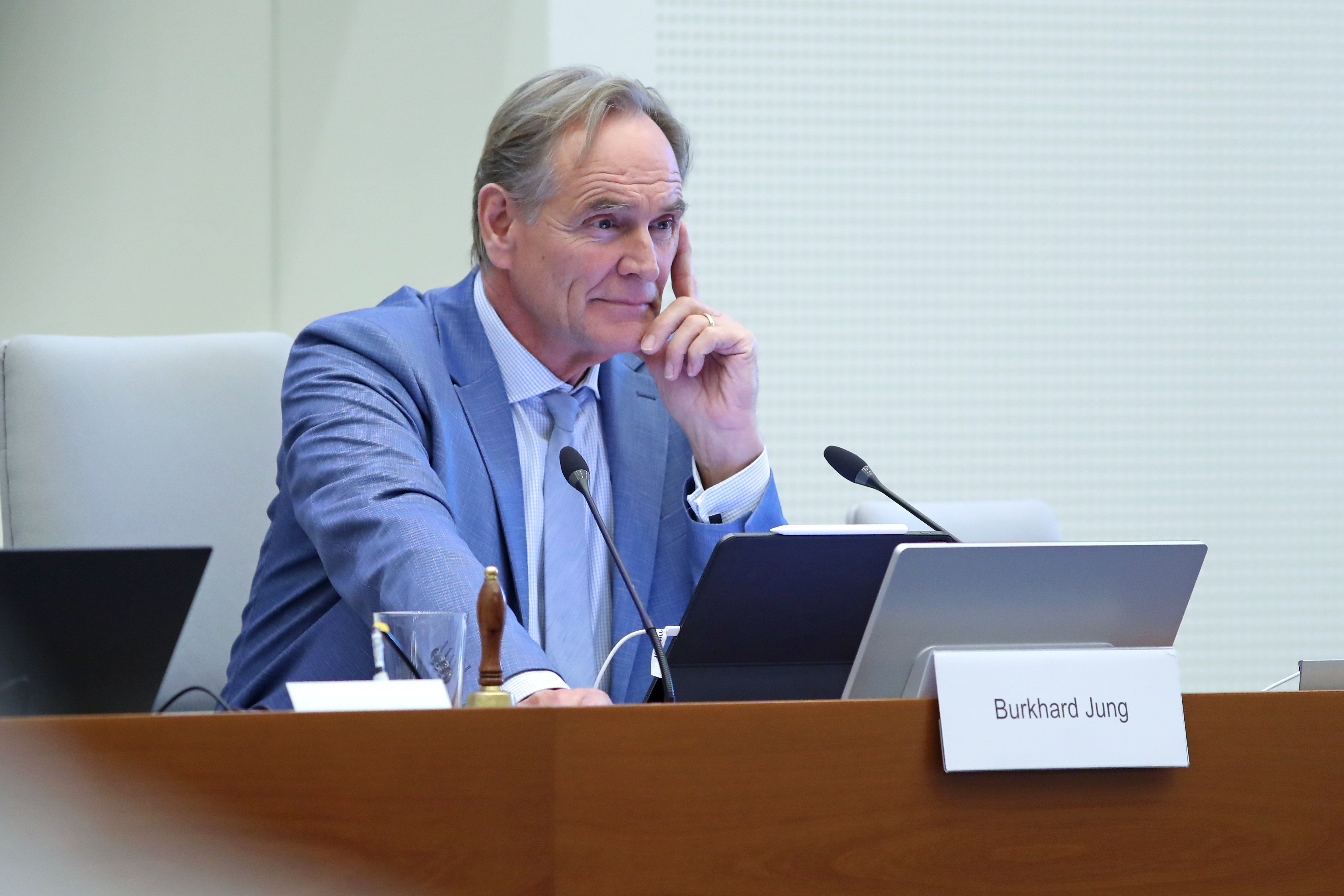
Burkhard Jung also emphasised once again on Wednesday that the federal government does indeed have a duty to provide local authorities with the financial security they need to carry out all their responsibilities. During the council meeting, he read out the important second paragraph of Article 28 of the Basic Law, which states: “The guarantee of self-government also encompasses the foundations of financial autonomy; these foundations include a source of revenue based on economic capacity to which local authorities with the right to set tax rates are entitled.”
In Leipzig, this source of revenue is the trade tax, which, however, yields only 500 million euros annually. And, of course, it cannot replace what the federal government – under successive administrations – has increasingly shifted onto the local authorities’ shoulders without providing adequate funding.
Empfohlen auf LZ


So können Sie die Berichterstattung der Leipziger Zeitung unterstützen:




There is one comment