Dieser Artikel ist auch in deutscher Sprache verfügbar: Zum deutschen Artikel.
CDU city councillor Dr Sabine Heymann spoke of a “somewhat shameful memory that tugs at the heartstrings” at the council meeting on 2 September: The topic was the memorial to the victims of tyranny at Leipzig’s Südfriedhof – a special place, yet one that has long been relegated to an undignified existence on the edge of the cemetery. A design is now to be finalised by mid-2027 to commemorate the victims of the popular uprising in the GDR on 17 June 1953.
In her speech, Dr Sabine Heymann once again advocated for the motion that her CDU parliamentary group had tabled jointly with the SPD and Green Party parliamentary groups: Accordingly, the city administration should immediately submit to the city council its proposal for a “memorial and/or information feature” between the North Gate and the former “Socialist Grove of Honour” in the South Cemetery. The underlying impatience was likely also due to the fact that, as early as 2018, the city had commissioned an office for open-space planning to incorporate a memorial site.
A design for a memorial site had already existed for years
According to the city administration’s position statement (VSP), a design for a memorial site had already been available for more than three years. The applicants were apparently unaware of this. However: “Should it prove to be a worthy proposal, it must be implemented by 17 June 2028. Otherwise, the administration, together with the council, will draw up a design for a memorial site in the aforementioned area, which must also be implemented by 17 June 2028”, according to the position of the CDU, SPD and the Greens.
After all, this concerns nothing less than 17 June 1953: At that time, protests and strikes had broken out across the fledgling GDR, which the regime of that state – so keen to market itself as a ‘better Germany’ – brutally crushed with massive military support from Moscow. Leipzig was a centre of the unrest, which, according to current knowledge, claimed almost a hundred injured – and nine dead – in this district alone. The youngest victim was 15-year-old Paul Ochsenbauer. In the aftermath, there were arrests and show trials.
A profound trauma – for the perpetrators too
It therefore seems strange that the memorial site, which also commemorates 17 June, lies neglected not far from the Urnengarten Nord in the South Cemetery – overgrown, marginalised and difficult to reach.
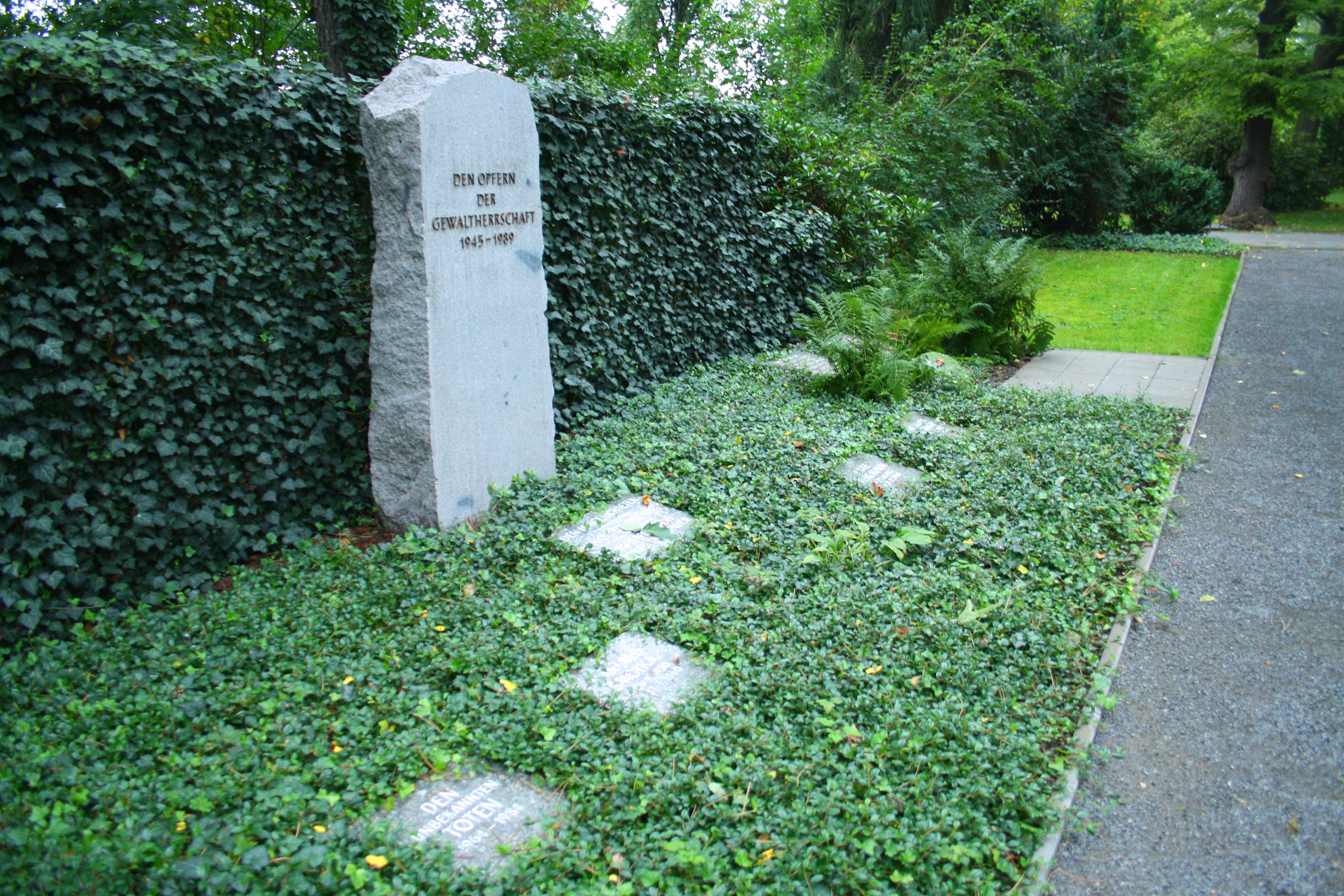
The memorial to the victims of tyranny 1945–1989 at the Südfriedhof. Photo: Ralf Julke
City Councillor Dr Heymann received support from Pia Heine (SPD), who pointed out that 17 June 1953 was also a lifelong trauma for those on the perpetrators’ side: Erich Mielke, Minister for State Security in the GDR, whose agency had been unable to prevent the uprising, was still expressing concern as late as 31 August 1989, asking whether “tomorrow 17 June will break out”.
A keen sense of the nature of power, not untypical of the SED leadership, whose rule had been saved 36 years earlier only by Soviet military intervention.
“Particularly in times of increasing romanticisation and a new wave of ‘Ostalgisation’, it is more important than ever to pay appropriate and visible tribute to the fates of those people who courageously stood up to the dictatorship back then,” said Heine.
“That would be too much historical dialectic for my liking”
Jörg Kühne (AfD) criticised the “shameful inaction” of the past and indicated that his parliamentary group would be very happy to support the motion. Speaking on behalf of the BSW parliamentary group, Ralf Pannowitsch then went further, criticising, amongst other things, a “one-dimensional culture of remembrance”, whilst noting that the Grünau anniversary was an encouraging attempt to move beyond it.
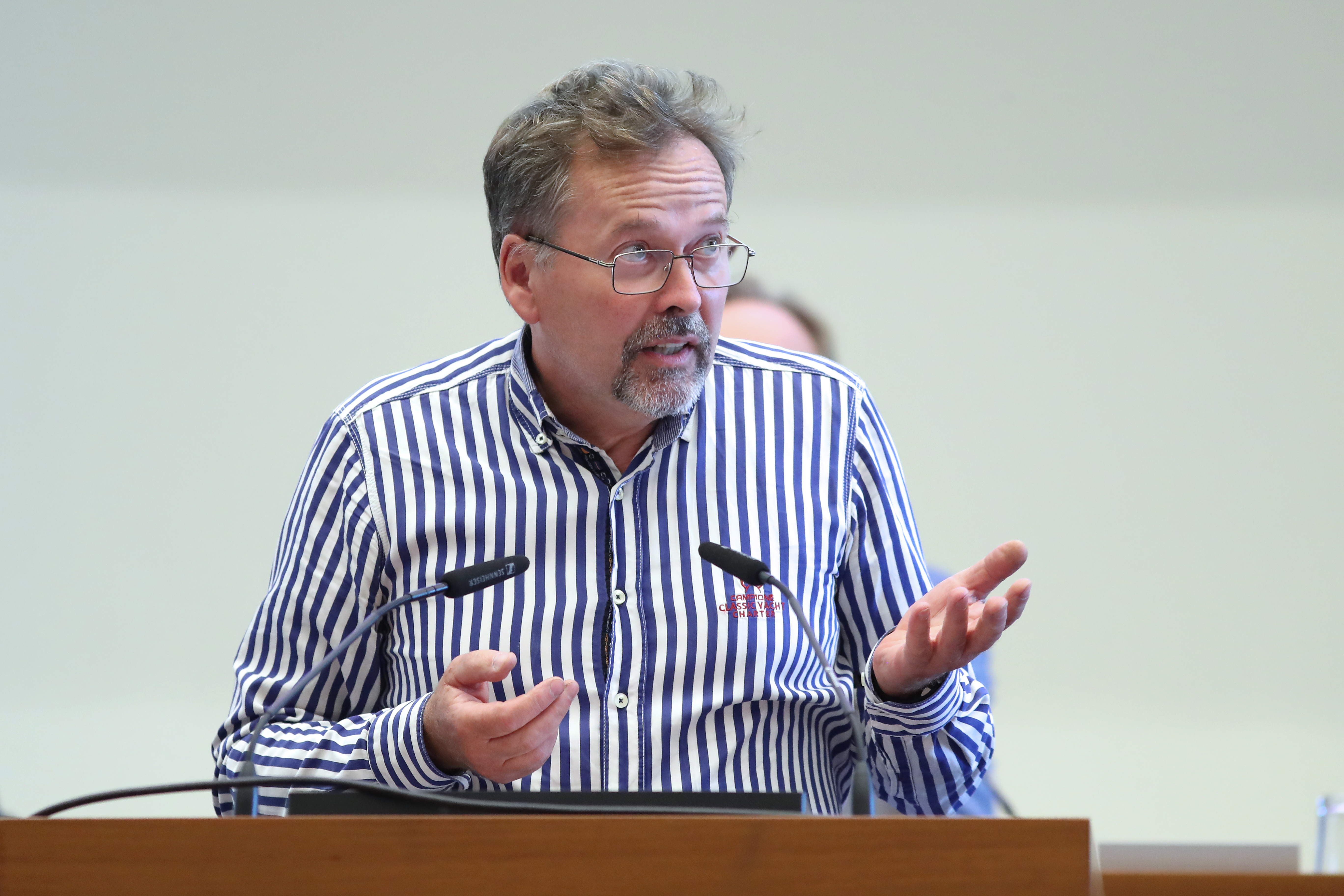
He rejected the reinterment of remains at the Südfriedhof along the main axis, because that might mean victims of 17 June would be buried near a communist opponent of the Nazis who had survived the concentration camp and, as an SED official, had cheered the shooting of demonstrators on 17 June 1953: “I’m sorry, but that would be too much historical dialectic for me.” Let the dead rest in peace, maintain the graves and grounds, provide information signs and install a separate commemorative plaque along the main axis, said Pannowitsch, who nevertheless spoke in favour of supporting the motion.
This is not about reburials – but very much about money
Keynote speaker Dr Heymann then felt compelled to take the floor once more and made it clear that this was not about reburials, but about a visible memorial site. In response to an interjection from Heiko Rosenthal (Die Linke), the councillor responsible for public order, who pointed out that no budgetary funds had been earmarked, she countered that fundraising was also a possibility. However, she added, the city must take the lead in determining where the memorial site could be located.
The motion, tabled at the request of the Left Party group, was then rejected by 12 votes to 49 (with three abstentions). The revised version of the original motion, however, passed comfortably by 51 votes to 1 (with twelve abstentions). Included is a note in the minutes, suggested by Thomas Kumbernuß (Independent Group/Die PARTEI): it should be examined whether, for a new memorial site at the Südfriedhof, the perhaps more prominent entrance area on Prager Straße might also be an option. This would help to avert any potential conflict with the other memorials and the deceased.
According to the resolution, a design is now to be drawn up and approved by 17 June 2027. It is then due to be completed one year later, on the 75th anniversary of the People’s Uprising.
Empfohlen auf LZ


So können Sie die Berichterstattung der Leipziger Zeitung unterstützen:




There is one comment