
Dieser Artikel ist auch in deutscher Sprache verfügbar: Zum deutschen Artikel.
A steel giant is rising – though it cannot be seen doing so. A pop giant, on the other hand, is set to fill the Parkbühne for two evenings. Less welcome are the price rises for public transport and at the local music school. Before the summer break, the Capa-Haus is hosting one more exhibition today. And because law enforcement never takes a break, a suspected dog abuser is due to appear in court tomorrow.
Public transport gives fare rises no respite
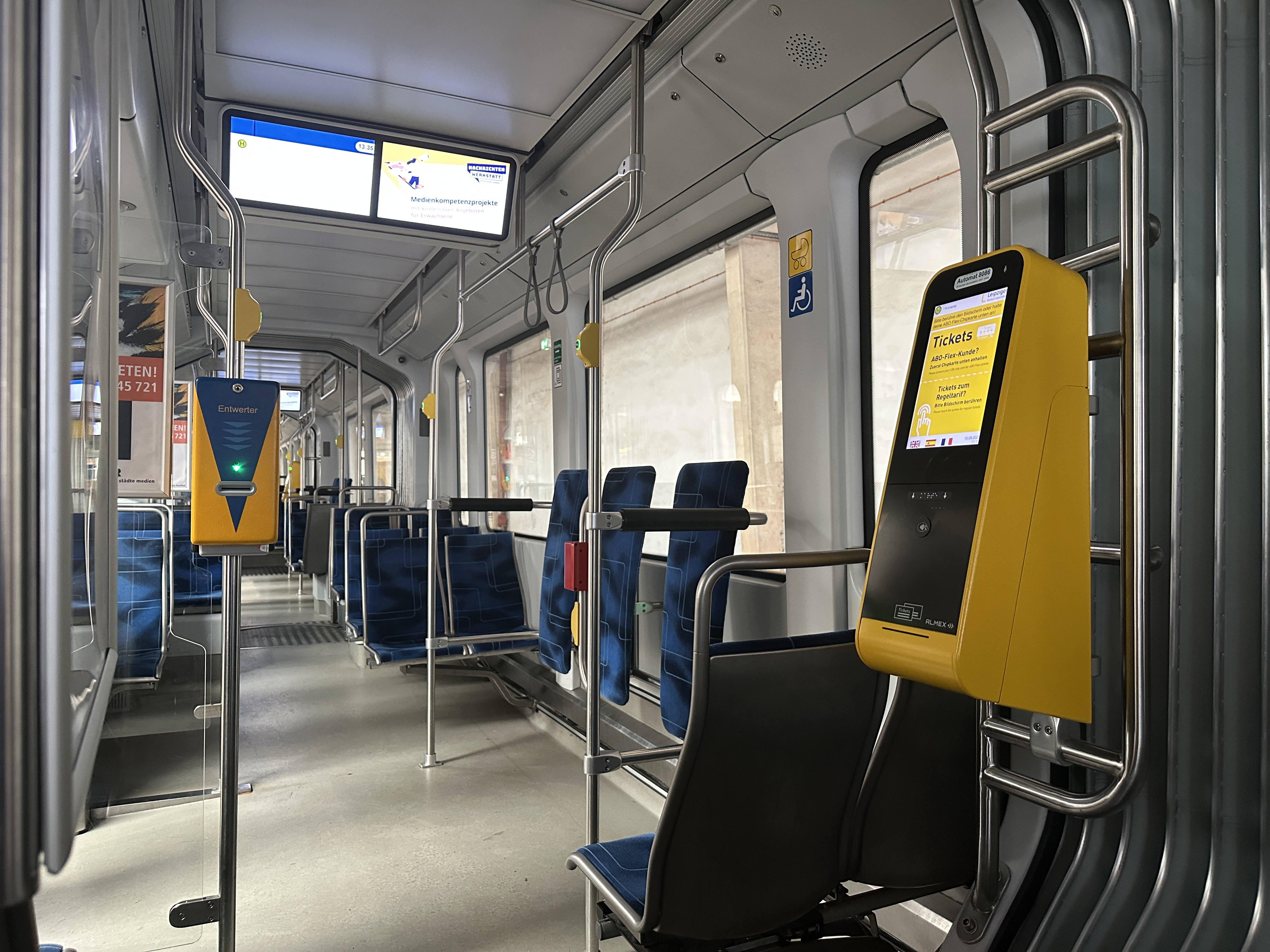
Few things are as predictable as the annual summer fare increase on public transport. From Saturday, 1 August, new fares will come into force across the entire Central German Transport Association (MDV). The increase will affect not only the Leipzig Transport Authority (LVB), but also S-Bahn services, regional trains and all other transport operators within the network.
According to the MDV, the price rise is due to increased costs for staff, energy, fuel, materials and external services. At the same time, the fare system is being simplified by removing or standardising individual ticket options.
In Leipzig, a single journey will cost 3.80 euros in future, up from 3.60 euros; the short-distance fare will rise from 2.40 to 2.50 euros; and a single journey for children will increase from 1.60 to 1.70 euros. The 24-hour Plus ticket for one person will increase from €9.70 to €10.00, and for two people from €14.80 to €15.20. The weekly pass will now cost 40.40 euros instead of 37.30 euros. The monthly pass will rise from 109.90 to 119.90 euros.
According to the MDV, fares in Leipzig are rising by an average of 5.0 per cent, in Halle by 3.2 per cent and in the districts covered by the transport association by an average of 5.56 per cent. Important for many passengers: tickets already purchased at the previous fare will remain valid until 31 December 2026. This applies, amongst other things, to single-journey tickets, short-distance tickets, 4-journey tickets and other tickets already purchased, meaning that existing tickets do not need to be exchanged or used up at short notice.
There are also changes to the range of tickets on offer: The 24-Hour Ticket Plus will in future be offered uniformly across the entire network and allows up to three children to travel free of charge. Several special variants are being discontinued; furthermore, the 4-trip ticket is being phased out in many regions of the MDV and will remain available only on a few city transport services.
The Deutschlandticket, however, remains unchanged. It continues to cost 63 euros per month, as the price is set at national level and is independent of the MDV fare structure. The education ticket for school pupils also still costs 15 euros per month and therefore remains stable in price for the time being.
An overview of the entire MDV network map, including all details on fare zones, bicycle transport and so on, is available HERE ONLINE as a PDF to download and print.
Music comes at a price
It’s not just buses and trams that are getting more expensive – Bach is too. Fees at the “Johann Sebastian Bach” municipal music school are set to rise at the end of the month, affecting the 2026/27 academic year. For example, the cost of weekly one-to-one lessons (45 minutes) for pupils aged 18 and under will rise from the current €862.20 per year to €984.
However, it is not just the lesson fees that are being adjusted; the fee structure itself is also being fundamentally overhauled. In future, more differentiated rates will apply to pupils and adults. At the same time, family, multi-subject, pensioner and voluntary work discounts will be introduced or extended.
The existing social discounts, such as those for holders of the Leipzig Pass, as well as sibling discounts, will remain in place. Another new feature is a one-off registration fee of 15 euros for new tuition contracts. Furthermore, the fee regulations now set out new rules governing the use of instruments, refunds and the handling of cancelled lessons.
The music school justifies the adjustment on the grounds that fees have remained unchanged since 1 January 2018 and that the significant rise in costs since then has made a revision necessary. At the same time, it points out that musical education should remain accessible to as many people as possible thanks to the expanded discounts.
Around 7,800 pupils attend lessons at the music school in their spare time. It was founded in 1951 as a folk music school and has borne the name ‘Johann Sebastian Bach’ since 1985. The ‘dance music’ course, among others, has produced some now quite prominent alumni. These include, for example, the musical composer and ‘Prinzen’ singer Tobias Künzel, and the popular TV sports presenter Michael Drevenstedt.
A detailed fee schedule covering all departments, exceptions, tuition fees and equipment hire charges is available ONLINE HERE as a comprehensive overview.
A music historian once attributed the following statement to Beethoven: “One must not measure the value of something useful by its cost.” Although this is said to have referred to a book, good literature is, after all, not really far removed from good music.
A giant takes flight
The steel colossus of Sellerhausen – weighing 800 tonnes, it lies, like the skeleton of an oversized grey whale, in the blazing sun between the residential buildings on Wurzner Straße and the ‘Freundschaft’ allotment garden. Right in the middle of the major construction site for a key railway junction serving east-west and north-south routes on both the regional and national networks.
For a year now, gardeners and, above all, local residents have bravely put up with the noise from the building site. Today, they are being rewarded for this nerve-wracking period with a special spectacle: from midday, DB InfraGO AG will be moving the pre-assembled steel truss bridge to its final location east of the Leipzig-Sellerhausen station, near Wurzener Straße, using a self-propelled heavy-duty vehicle.
The new bridge is being constructed as a steel truss structure with a composite steel deck and, unlike its predecessor, requires no central supports between the tracks below. The superstructure was largely assembled alongside its future location. The first prefabricated girder arrived back in April, followed in June by night-time heavy-load transports carrying further components.
A ‘Self-Propelled Modular Transporter’ is being used for today’s hoisting operation. The vehicle, consisting of several self-propelled and computer-controlled axle modules, can handle extreme loads, lift them hydraulically and move them with high precision. It drives under the pre-assembled superstructure, takes hold of it and then lowers the bridge onto the prepared supports.
This technique allows the particularly critical part of the work to be completed within a limited time window. This avoids a lengthy assembly process directly above the busy railway lines and the associated prolonged closures. The new junction structure is scheduled to come into service at the end of 2026, with remaining work to follow by early 2027.
Unfortunately, for enthusiasts and fans of this sort of specialist work, the construction site is poorly situated. The truly perfect view is reserved for those who suffered most from the noise of the construction site last year. However, in response to an enquiry from LZ, Deutsche Bahn announced that it would publish drone footage of the spectacular operation once the steel colossus has been installed.
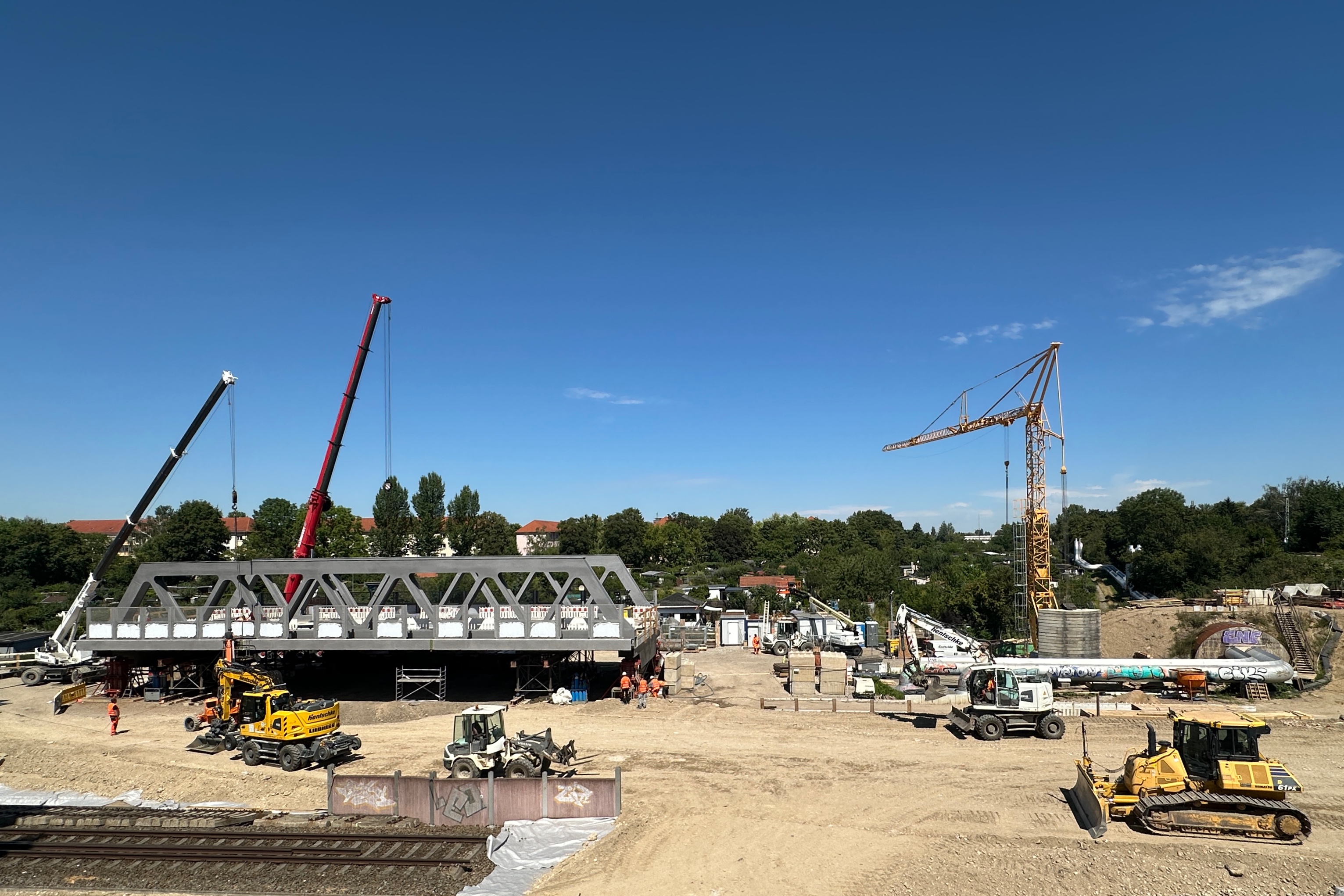
Precision work! Specialised technology is set to install the structure with pinpoint accuracy today. Photo: Benjamin Weinkauf
Cruel to animals: Defendant accused of animal cruelty
The trial of a 44-year-old man, whom the prosecution accuses of an offence under the Animal Welfare Act, began today at 9 am at Leipzig Magistrates’ Court. According to the prosecution, he is alleged to have abused a Chihuahua so brutally last year that, according to court records, the animal’s eyeballs had to be removed.
In the event of a conviction, the Criminal Code provides for a fine or a prison sentence of up to three years.
Chihuahuas are also popular with celebrities. Hotel heiress Paris Hilton, with her dog Tinkerbell, helped popularise the cult of the ‘handbag dogs’. But even hardened figures from the entertainment industry have discovered a love for these lively little dogs. Scandal-prone rocker Ozzy Osbourne (‘Black Sabbath’) showcased his Chihuahuas in a family documentary about himself and his family. Our reporter Lucas Böhme is following the trial.

Matthias Reim: a double act
Laughed at by some, adored by others – in some ways, he’s a bit like the Chihuahuas. And despite the mockery, they also share enduring success! With an anniversary tour, Matthias Reim is looking back on the start of his musical career.
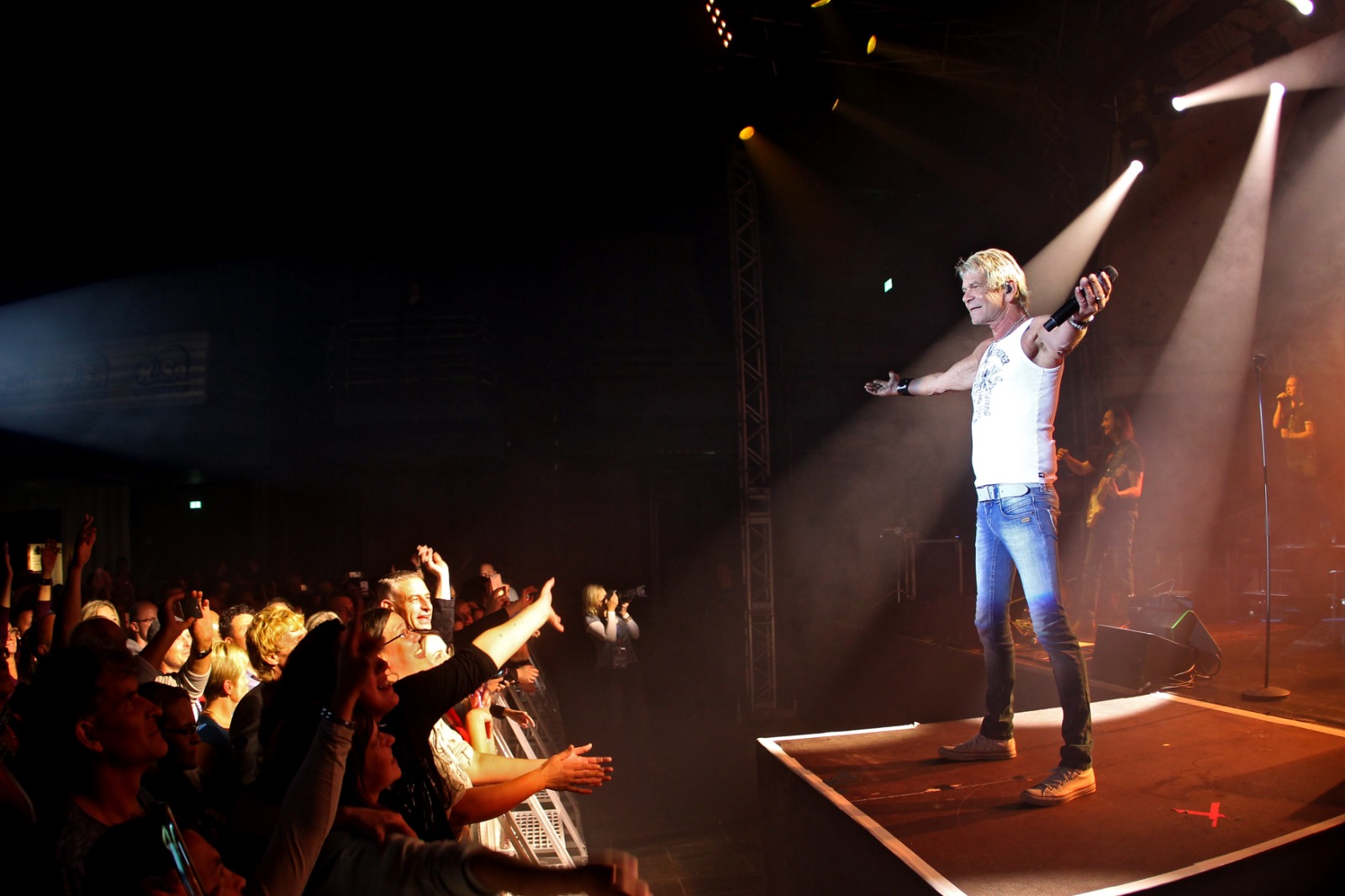
On Saturday and Sunday, you can make up your own mind about this when the musician takes to the Parkbühne stage in Clara Zetkin Park at 7.30 pm on both nights. The occasion marks 35 years since the release of his debut album and the hit ‘Verdammt, ich lieb’ dich’. The album has sold more than 1.5 million copies since its release.
In early 1990, Schlager star Bernhard Brink arranged for Reim to be recorded by the then TV presenter Wim Thoelke (“Der grosse Preis”). Both believed in the young man, and in April 1990 he appeared in front of a television camera for the first time.

The singer will now perform his debut album in its entirety, in the original track-listing order. The programme is rounded off with a selection of his best-known songs from the 35 years that followed. Matthias Reim thus invites his audience to a concert evening featuring the defining songs of his musical career.
Reim, too, had to learn the hard way that success is not a gift that falls from the sky. Apparently overwhelmed by the hype surrounding “Verdammt, ich lieb’ dich”, he granted his manager at the time power of attorney and later accused him of overspending the profits on investments. Following bankruptcy and several bouts of illness, the Hessian-born singer has been successfully performing on stage again for several years now, even giving two consecutive concerts in Leipzig.
There are a few remaining tickets available at the box office. But the ‘Wiesenhören’ outside the concert venue has long since become a popular event in its own right. Important for everyone making themselves comfortable there: “Bloody hell, I’ll clear it up!” If you bring packaging with you, you take it back with you. Because the next morning, families want to play on the meadows with their children again.
Last chance at the Capa-Haus
He studied law in Leipzig, fell in love with 35mm photography and eventually with Lieselotte, with whom he discovered street photography whilst in exile in Paris, having fled the Nazis. In France, he also met Gerda Taro, a war correspondent and Robert Capa’s partner. This at least brings things full circle: for today, the Capa-Haus in Leipzig is the only place where works by Fred Stein – who was drawn to the Spanish Civil War as a photographer – can be seen.
The exhibition is dedicated to the outbreak of this war 90 years ago and highlights its consequences through photographs of refugee children, as well as portraits that Fred Stein took of Taro during his exile in Paris. The exhibition forms part of the joint project ‘Fred Stein // Focus on People’, organised by the City History Museum in collaboration with the German Exile Archive 1933–1945 at the German National Library as part of the themed year ‘TACHELES 2026 – Year of Jewish Culture in Saxony’.
Today’s exhibition day (11 am to 4 pm) marks the end of this special exhibition, which links historical events with current issues in the culture of remembrance. The Capa House will then remain closed to visitors throughout August.
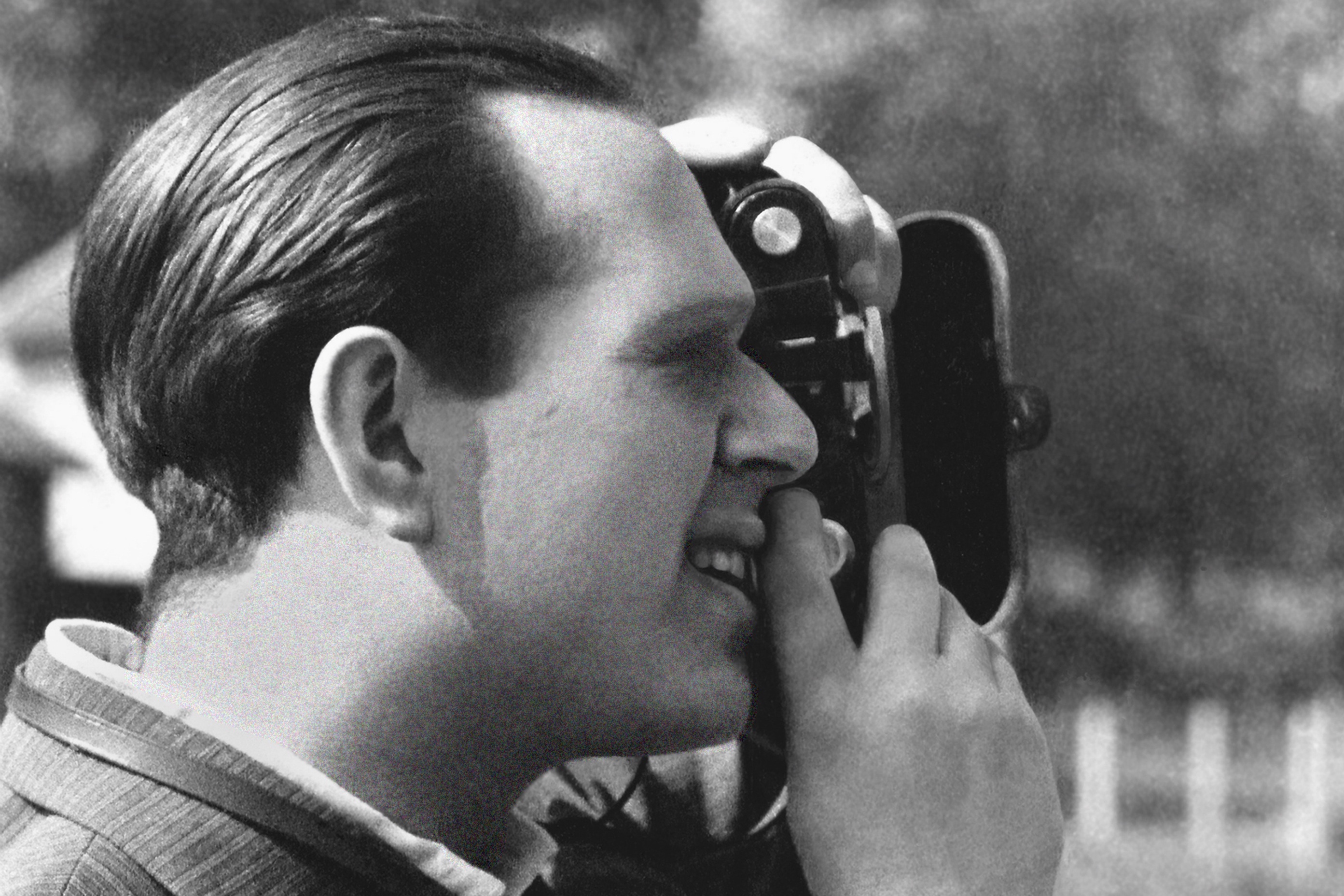
Fred Stein in 1935 with his Leica, the wedding present for him and Lieselotte. Photo: Fred Stein Archive
Empfohlen auf LZ


So können Sie die Berichterstattung der Leipziger Zeitung unterstützen:


There is one comment