Dieser Artikel ist auch in deutscher Sprache verfügbar: Zum deutschen Artikel.
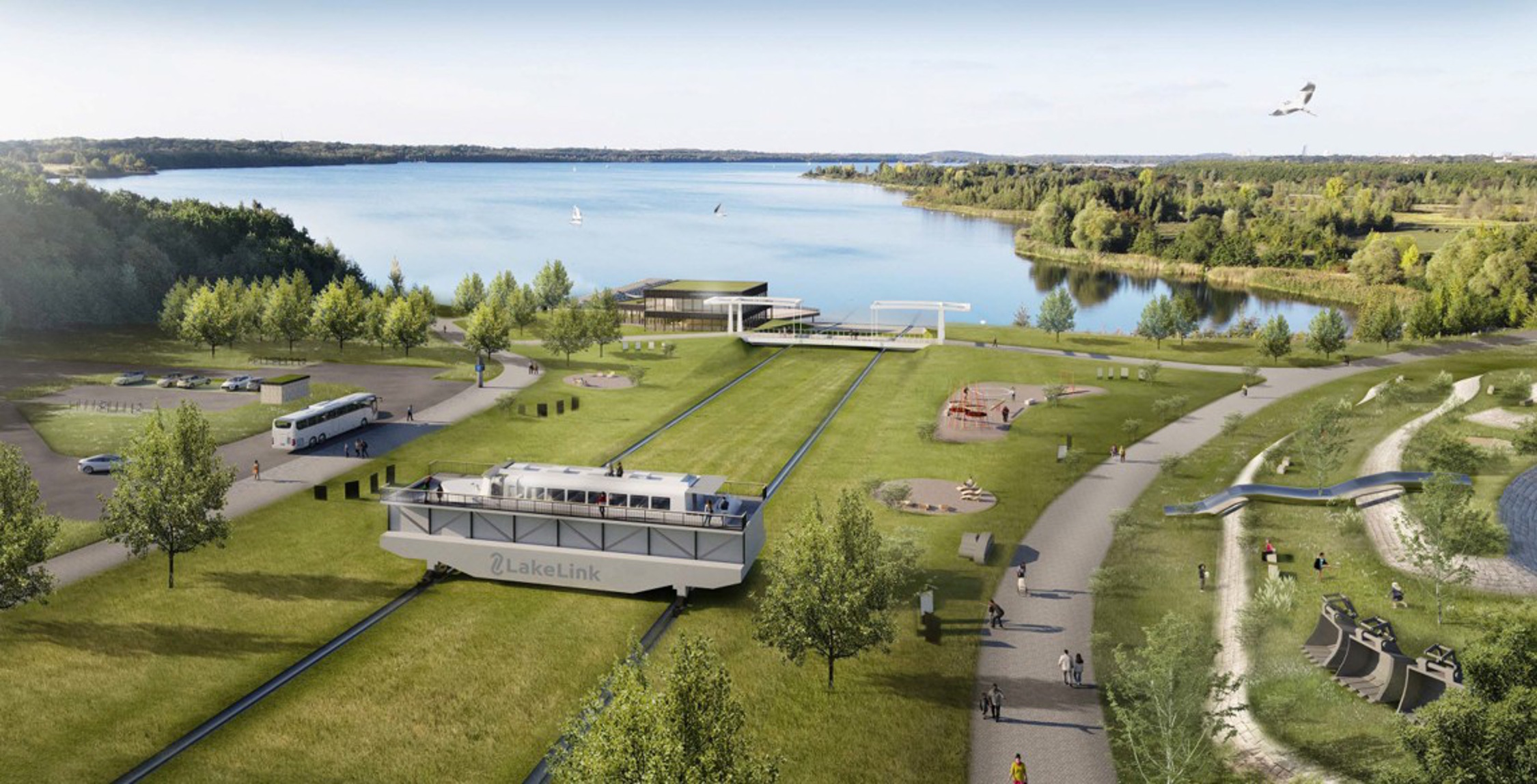
With the planned boat route between Lake Cospuden and Lake Zwenkau, the Leipzig Neuseenland region could be facing its next major nature conservation debate. Plans for the Harth Canal have been shelved for cost reasons; a feasibility study now favours a boat railway. Yes, you read that correctly: in future, a railway is to transport boats overland between the two lakes. With investment costs currently standing at around 93 million euros, the project is one of the largest infrastructure schemes currently under discussion in the Leipzig Neuseenland.
However, key issues relating to nature conservation law will be addressed in subsequent approval procedures – even the project organisers anticipate conflicts.
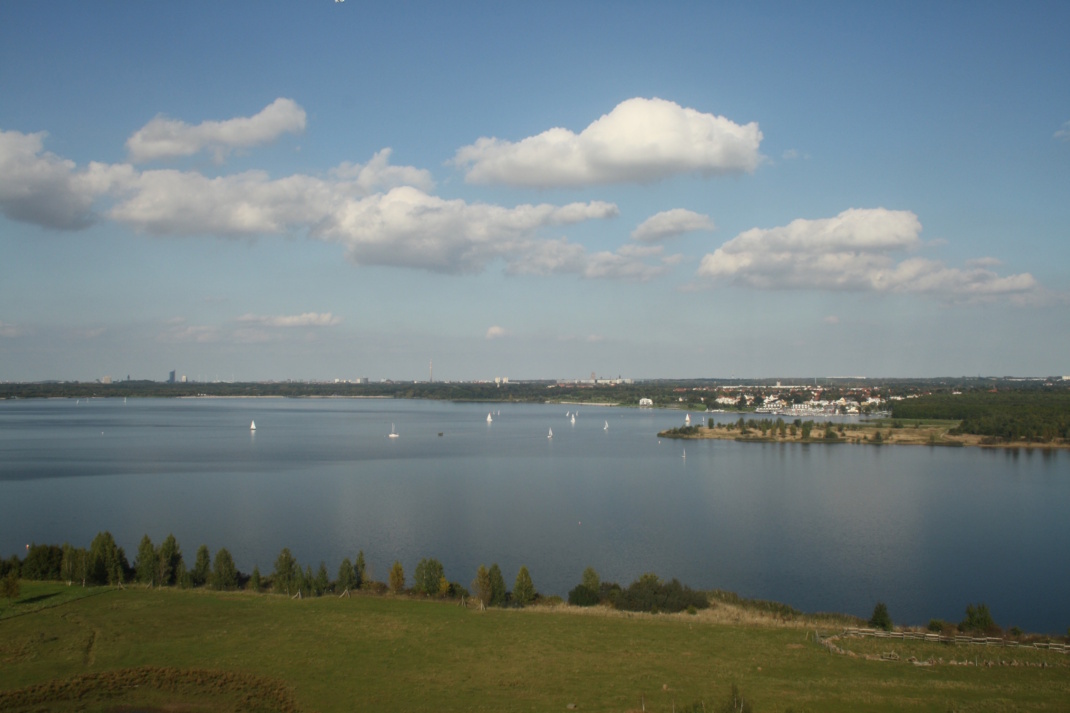
As recently as December 2025, the Saxony State Directorate explicitly designated the southern tip of Lake Cospuden as a permanently protected water area. It will remain exempt from shipping in future “for reasons of nature and species conservation”. LDS President Béla Bélafi spoke of “precisely defined protected areas” intended to strengthen nature and waterway conservation. Almost at the same time, the feasibility study on the boat passage concluded that this very area would have to be navigated through to create a waterway link between Lake Cospuden and Lake Zwenkau.
Waterway railway versus nature conservation
The feasibility study itself highlights the conflict of objectives: navigation around the southern tip is currently not possible for nature conservation reasons, yet it is an essential prerequisite for a waterway link. The actual environmental, species and regulatory assessments are not due to take place until the next planning stage.
The head of the Leipzig Green Ring’s office is well aware of this conflict. When asked how the current regulations would be compatible with the plans for a ship railway, Christian Dietz says: “At the moment, we are still at the feasibility study stage; the further approval procedures are only just getting under way, so we are not there yet.”
When asked whether the plans had already been coordinated with environmental organisations, he replies: “Discussions are, of course, ongoing.” And when asked whether this might not trigger a significant conflict, he replied: “That is certainly correct.”
When it was pointed out that this might potentially undermine the State Directorate’s statements regarding permanently designated protected areas, he declined to commit himself: “I cannot judge that.”
The southern tip is of particular importance due to its largely undisturbed areas of reed beds and siltation zones; it serves as a refuge, resting place and feeding ground for waterbirds and is one of the most ecologically sensitive areas of Lake Cospuden. Such undisturbed stretches of shoreline are particularly rare on Lake Cospuden, which is otherwise heavily used.
400,000 additional visitors
The actual impact is likely to stem less from the water railway itself than from the tourist infrastructure that, according to the feasibility study’s assumptions, is set to be developed. The report anticipates around 400,000 additional visitors per year. Between April and October, this would correspond to an average of around 2,700 visitors per day, and on peak days as many as 10,000 day visitors. Facilities planned for this purpose include piers, waiting areas, catering outlets, an information and exhibition centre, car parks and other tourist infrastructure.
According to the feasibility study, around 1,500 parking spaces would be required during peak periods. The land requirement is estimated at around 30,000 square metres – for car parking alone. That is equivalent to more than four football pitches.
Environmental organisations once again not consulted?
Whether, and to what extent, this is compatible with existing nature conservation and species protection requirements remains to be seen in the forthcoming planning permission procedures. The nature conservation authorities and environmental organisations are likely to play a central role in these proceedings. Despite enquiries, no statement was currently available from NABU, BUND and Grüne Liga.
The feasibility study in question has already cost €250,000. The Neue Harth Special-Purpose Association has already earmarked €1.3 million for the next stages of preliminary planning (LP 1 and LP 2 HOAI). The total project is currently estimated at €93 million.
An independent expert assessment to verify the assumptions of the feasibility study is nowhere to be found. Nor is there any public consultation to gauge acceptance amongst the local population. However, these are other points of contention regarding the substance of this mega-project that also need to be discussed.
In view of the numerous current conflicts in the Leipzig Neuseenland region – ranging from motorboat regulations and new tourism developments to regional rail (RB) requirements – the nature conservation authorities and environmental organisations are currently facing an exceptionally high number of complex proceedings.
Empfohlen auf LZ


So können Sie die Berichterstattung der Leipziger Zeitung unterstützen:




There is one comment