Dieser Artikel ist auch in deutscher Sprache verfügbar: Zum deutschen Artikel.
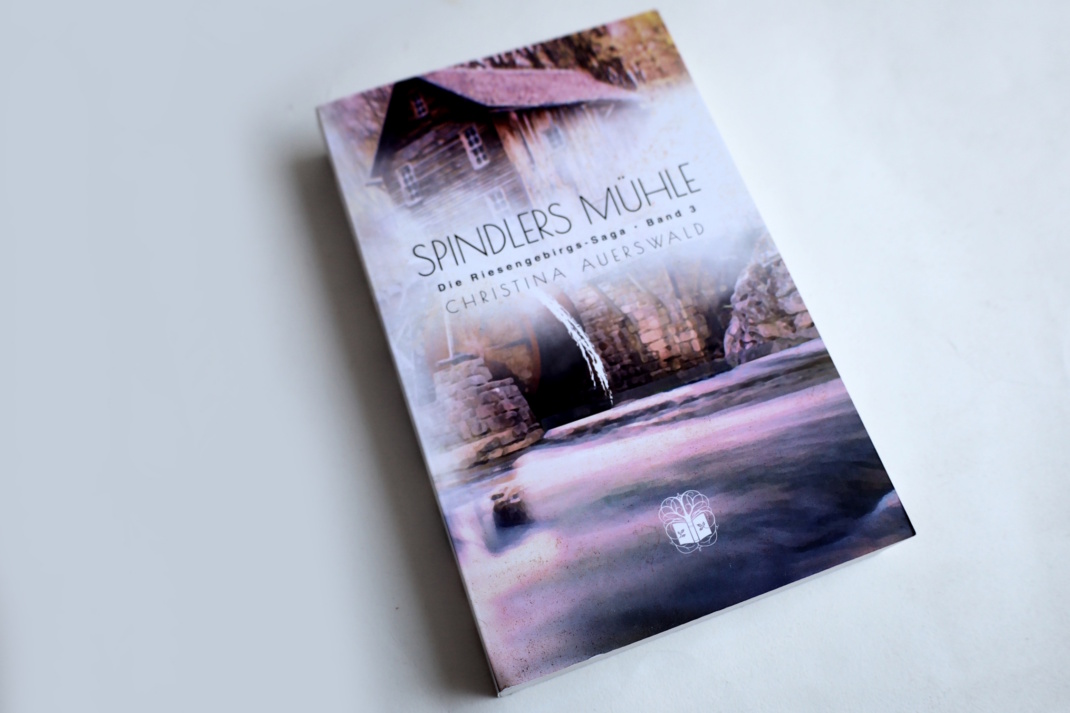
‘The Krkonoše Saga’ is the name given by Leipzig-based author Christina Auerswald to her series of novels about young people who grew up in the Krkonoše Mountains before the First World War, lived through the war and – like Kurt – became entangled in a web of bloody deeds. Acts that threw not only the life of Kurt Oertel off course – whom readers first encounter in this third volume of the series as a vagrant. He is on the run. He has two murders on his conscience. He has no idea that, whilst on the run, he will still be given a chance.
Christina Auerswald tells a story of entanglement, guilt and atonement. Set against a backdrop that forms part of the family history not only for her own family. Yet, unlike the first and second generations of displaced people, the younger generation can look back on the homeland of their grandparents and great-grandparents with a certain calmness and wistfulness.
And, like Christina Auerswald, they can paint a vivid picture of life there with great attention to detail. A life that does not necessarily have anything to do with the idylls often suggested in ‘homeland novels’, which imply that everything used to be more beautiful, better and more harmonious. But it never was.
And in this third volume, Auerswald plunges straight into the year 1929, which began seemingly peacefully but ultimately ended with the greatest stock market crash of all time. And which would thus also become the prelude to the Nazis’ triumphant rise. Auerswald touches on both themes in this book, which gradually develops into a short crime thriller. For it is not only Kurt who is entangled in the knots of his past. Helene and Victoria, stranded in distant Chile, also live with the shadows of their past.
The main character, almost eleven years old
But the real protagonist of this story is the almost eleven-year-old Anna, Helene’s daughter, highly gifted and far too clever for her age. She, too, plays a role in Kurt’s life; after all, she is the daughter of his deceased friend. He wants to know what has become of her. He has seized his own chance to regain control of his life, even if it leads him into a circle of people which the reader already suspects will very soon spell disaster.
For in the gymnastics association, he not only discovers a strength that is unfamiliar even to him. In the spirit of Friedrich Ludwig Jahn, the gymnastics associations emerging in the Sudetenland also convey the ideas of Germanness once proclaimed by Jahn – ideas that were subsequently exploited to the full by German nationalists.
One cannot help but pause for thought when Kurt talks about this. What has he got himself into now? Didn’t he want to tip the scales of his life in the right direction? But that is simply how history unfolds. It is full of traps for our emotions and ideologies that take hold of our minds without us realising how disastrous they are or where they will lead us. After all, we’re living right in the midst of such a time again, when millions of people allow themselves to be seduced by such figments of the imagination. Beyond the reach of any reasonable argument.
And in fact, Kurt’s attempt to get close to Anna also threatens to fail. At the very latest when Helene realises who the new farmhand is at her neighbour and friend Josefine’s house – Josefine herself is in the midst of a family tragedy, having brought a drunkard, a lazybones and a brawler into her home in the form of the farmer Pepi. And as Christina Auerswald depicts these circumstances with great precision and in rich detail, one soon realises that she is also concerned with the image of the family and of women during that era. Which was not a good time for women.
Sometimes we need vivid stories like this so that today’s readers, too, can get a sense of just how rigid patriarchal structures were even 100 years ago. And how women’s lives depended on the goodwill of their husbands. And on the outdated notions of past centuries, which kept women from pursuing higher education, made them dependent on men, and forced even experienced nurses like Helene out of their profession if they married or, heaven forbid, had a child out of wedlock.
When adults act irrationally
Auerswald vividly describes the poverty in which her heroines lived. A poverty that was actually set to determine Anna’s future too, as she dreams of one day becoming a doctor. Yet her mother would not even be able to afford her fees for the Lyceum.
And whilst Helene sees in this self-assured child above all defiance and her own apparent failure as a mother, it is not only Anna’s teacher who recognises and nurtures her talent. Kurt and Jiří Kučera, another old acquaintance from Helene’s youth, are also astounded by the self-confidence and intelligence of the girl, who does not let the adults get away with their life’s lies and excuses.
Essentially, it is her story that Christina Auerswald tells here from shifting perspectives – from Spindelmühl (where Kurt lives in an old mill) brilliantly to Mohren, where Helene and Josefine live, Prague and Chile. Anna cannot bear the illogical behaviour of the adults.
And she herself repeatedly takes the initiative whenever she realises that the adults in her life have once again acted irrationally. Which inevitably happens, at the very latest, when love comes into play, with all its exuberant and devastating emotions. For nothing can hurt her as much as the suspicion that the person she loves has lied, has something to hide, or is even playing a dirty game.
Prejudices and misunderstandings
And whilst these confusing
and desperate feelings lead Anna’s mother, Helene, to once again act completely against her own better judgement, Anna, in her unyielding manner, calls the adults to account, forcing them to come clean and act rationally. After all, this is all too familiar to us as readers, even if the heroes of novels like to portray themselves as having their lives under control in a clever and sensible way. But most people don’t.
Most people – and this certainly applies to the characters in Auerswald’s novel too – are stuck in false compromises, reacting illogically and feeling overwhelmed. And they often carry recriminations and misunderstandings through their lives without even considering the possibility that their assumptions might be wrong. Naturally, this stems from a deep-seated fear of being disappointed and rejected once again.
Every novel also reflects the era in which it was written. And what Auerswald imbues her male and female characters with is, quite unmistakably, the bewilderment of a present in which people increasingly mistrust one another, but also increasingly live with the feeling that they can no longer trust their own lives and their own feelings.
They are completely overwhelmed by this. And so they act as abruptly and illogically as Helene. Who is, in fact, not only an accomplished nurse, but also a desirable woman. It’s just that she hasn’t allowed herself to see this since the death of her first lover, the father of her daughter.
Underestimated children
That, too, shapes our lives: we carry those old stories with us. And we believe that our mistrust is confirmed time and again as we go through life. Who else has such a clever daughter as this Anna, who wants nothing to do with these old stories, but observes very closely how the adults around her behave? In reality, you’re bound to come across such clever children. And – if you’re stuck in old-fashioned parenting models – you’ll feel overwhelmed, just as Helene often does with Anna.
But at the same time, as you read this, you get the feeling that this is actually a problem of our own time – the problem of a society geared towards utility and profit, in which children are, in fact, despised and, more often than not, ignored. Merely a cost factor in an unfeeling equation in which the word ‘future’ no longer features at all. If today’s Annas grow up in the ‘wrong’ family, they too will have no chance of passing their school-leaving exams, going to university or pursuing their true career aspirations. And thus, no chance of a truly self-determined life.
Is that taking things too far? Not at all. It simply cannot be otherwise: the authors bring themselves into their stories, even when these are set 100 years ago in the Krkonoše Mountains, told with great authenticity as regards Helene’s living conditions, poverty and meagre household.
But the 100 years in between have also changed our view of life and interpersonal relationships. So much so that, looking back, it is shocking to realise how German society at that time could have succumbed to the primitive madness of the Nazis. A society that, after all, drew on the old patriarchal ideas that took shape in the 19th century – and not just in the work of Friedrich Ludwig Jahn.
Yet in this novel, the consequences still lie in the future. Just as does the fulfilment of Anna’s greatest wish, which, thanks to her fearlessness, ultimately succeeds in tying up all the loose ends and preventing some adults from making the wrong decisions for their lives.
Christina Auerswald, *Spindler’s Mill: The Giant Mountains Saga, Volume 3*, Oeverbos Verlag, Leipzig 2026, 21 euros.
Empfohlen auf LZ


So können Sie die Berichterstattung der Leipziger Zeitung unterstützen:





There is one comment