Dieser Artikel ist auch in deutscher Sprache verfügbar: Zum deutschen Artikel.
Water levels at historically low levels, not only in German rivers such as the ‘Father Rhine’, At the start of July 2026, the topsoil at a depth of 20–30 cm in most regions of Germany is showing dry to very dry conditions, and the amendment to the EEG is set to raise the ‘corn cap’. How does this all fit together?
Let’s look at the first two claims. The low river levels should not have gone unnoticed by anyone; all the media are showing ‘spectacular images’. On 1 August 2026, *Der Spiegel* reported that the water level of the Rhine in Cologne had reached a historic low of 67 centimetres; by way of comparison, a standard bath is 45 centimetres deep. So, near Cologne, the Rhine is ‘22 centimetres above the edge of a standard bath’ – that really isn’t much.
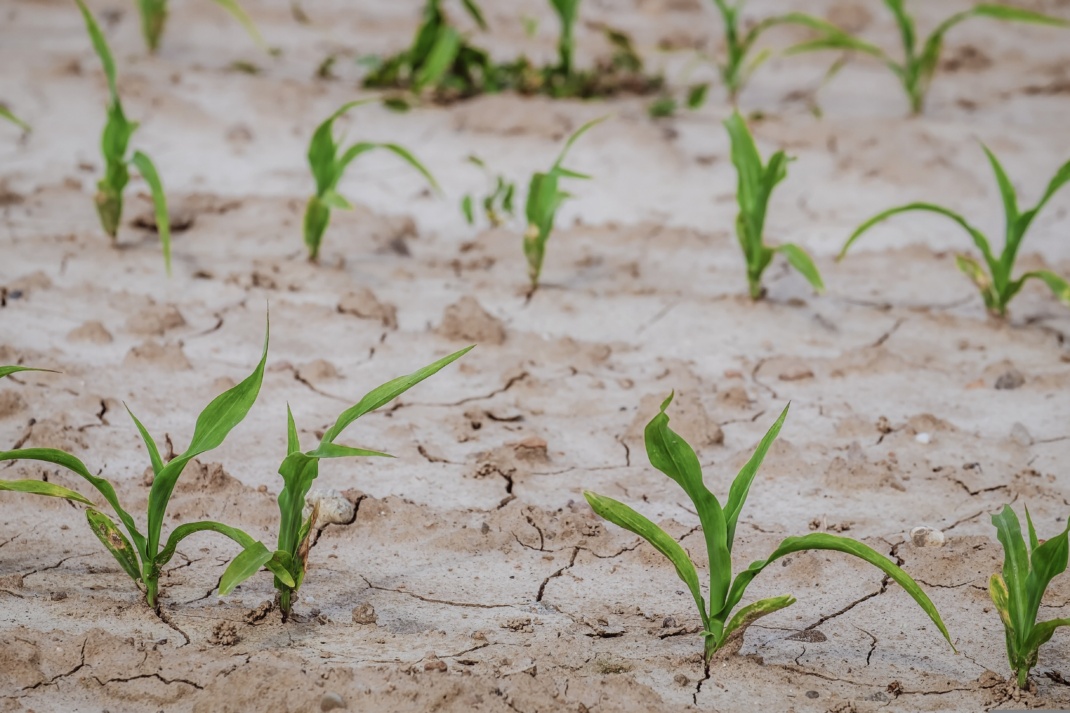
Soil moisture – that is, claim number two, ‘It’s too dry’ – depends on rainfall. Here, the German Weather Service reports the following for spring 2026: ‘In spring 2026, around 126 litres per square metre (l/m²) of rainfall fell nationwide. This meant the season reached only around 68 per cent of the long-term average for the reference period 1961 to 1990 (186 l/m²); compared with 1991 to 2020 (171 l/m²), the figure was around 74 per cent. April was particularly dry, with precipitation amounting to just over half of the expected total.”
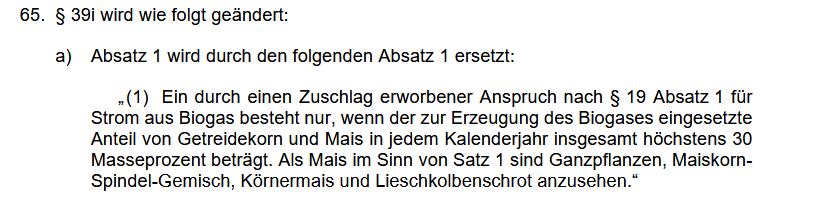
Let us now turn to Claim 3. Under the EEG 2027, which was approved by the Cabinet on 29 July, the ‘maize cap’ is being raised from the previous 25 per cent to 30 per cent. This is set out in Section 39i, paragraph 1, which now reads: “A claim acquired through a surcharge under Section 19(1) for electricity from biogas shall only exist if the proportion of cereal grain and maize used to produce the biogas does not exceed a total of 30 per cent by mass in any calendar year. For the purposes of the first sentence, ‘maize’ shall be deemed to include whole plants, a mixture of maize grain and cobs, grain maize and ground maize cobs.” Section 19 governs the plant operator’s entitlement to payment from the grid operator. In plain language, the amendment means that more maize, as defined above, may be used and the electricity generated from this biogas will still be remunerated.
Is a 5 per cent increase in maize a problem?
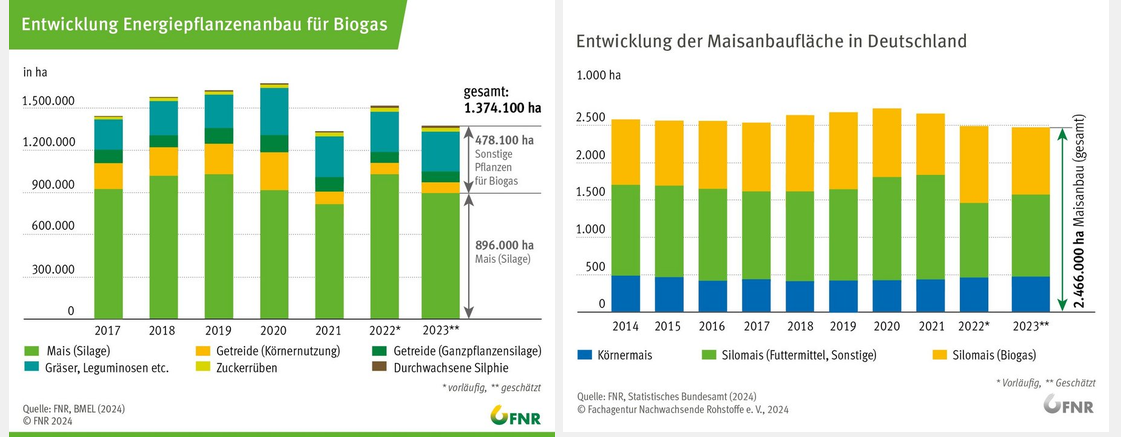
Let’s take a look. In 2023, maize for biogas was grown on 896,000 hectares; the total area under ‘energy crops’ – for biogas production alone – stood at 1,374,100 hectares. Given that Germany has 18 million hectares of agricultural land, this may not sound like much; however, the total agricultural area also includes land used for fruit and wine growing, fodder crops, livestock farming, and the cultivation of bread cereals and other foodstuffs. If the proportion of maize used in biogas plants were to increase by five per cent, the area required would rise by around 44,800 hectares. Perhaps the land use could be reduced through the use of genetic engineering or similar methods, but that is mere speculation.
However, this five per cent is not the actual problem; the ‘maize cap’ is merely used for illustrative purposes.
The ‘bio-staircase’ in the GModG
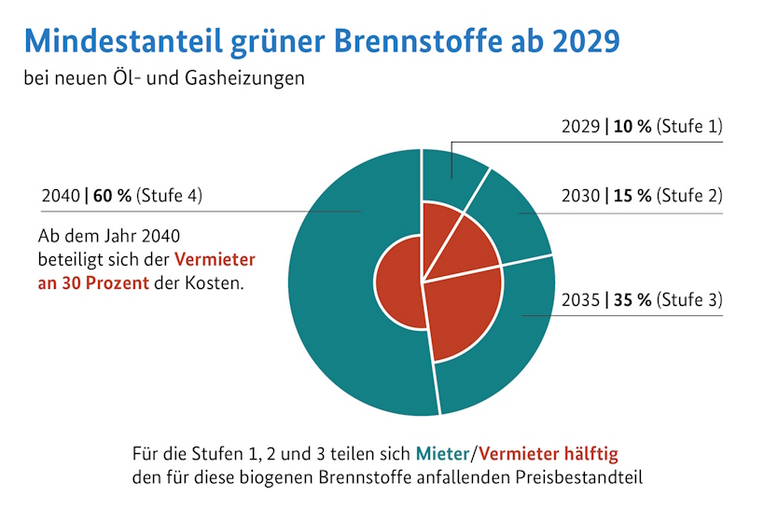
According to the aspirations of our Minister for Economic Affairs and all supporters of the Building Modernisation Act (GmodG), the energy supply – whether electricity or heating – is to become climate-friendly by means of a ‘bio-staircase’. The name ‘bio’ says it all: this is about ‘carbon-neutral fuels’ and ‘biofuels’. This, in turn, means a higher proportion of ‘energy crops’ among agricultural products, in terms of both land use and water consumption. This won’t stop at the five per cent seen with maize; we’re talking about much higher figures.
Conclusion: This government is currently trying to give the impression of pursuing climate-friendly policies with biogas and the ‘Bio-Treppe’. However, in doing so, it is planning to consume resources in the form of land that does not grow back and water that is becoming increasingly scarce, which renders this policy completely absurd. All of this is happening solely for fossil-fuel-driven ideological reasons, according to which the profits of the fossil fuel industry are more important than an intact natural environment and the survival of all species, including humankind.
One further point regarding river water levels. Naturally, the navigation channels are deeper than the Cologne water level mentioned at the outset. But even there, the water depth is insufficient for fully laden river vessels. However, the demand for further deepening of the Rhine’s navigation channel is completely pointless. Let’s use the bath tub analogy again: you need around 130 litres of water for a full bath. If you only have 80 litres, buying a deeper bath tub won’t help.
Empfohlen auf LZ


So können Sie die Berichterstattung der Leipziger Zeitung unterstützen:





There is one comment