Dieser Artikel ist auch in deutscher Sprache verfügbar: Zum deutschen Artikel.
The unpleasant season is demonstrably over. Many animals at Leipzig Zoo have made the most of the months when we’d all rather be snuggled up somewhere warm, and have blessed the zoo with a whole host of little ‘June bugs’! Not all of them are visible yet, but as we all know, they grow particularly quickly when the weather is fine.
Mette in ‘Kinderglück’
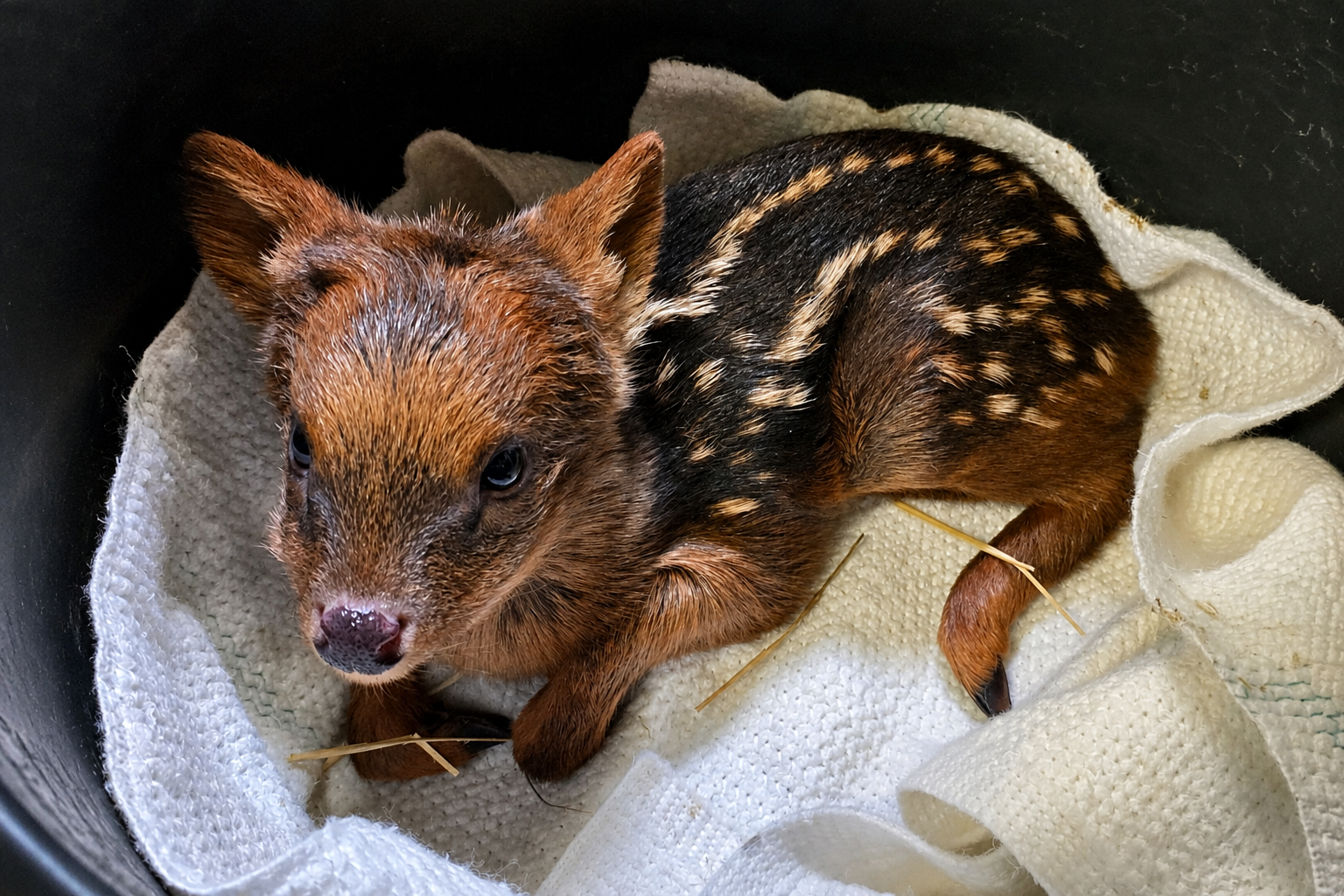
Let’s start with the world’s smallest deer species. The Leipzig southern pudus (not to be confused with a now-retired rock band!) have had their first offspring. Mum Mette (3) gave birth to a female calf. According to the zoo, the little one is developing well, now weighs 1.13 kilograms and appears to be in good health. This breeding success is the result of intensive efforts by the animal keeper team and is a source of great joy for those in charge.
Mette and her mate Benjamin (3) have been living in Leipzig since 2024. Together with the capybaras and giant maras, they inhabit the Pantanal enclosure in the South America themed area. In the long term, the animals are set to move into an enclosure in the future Tierra del Fuego area. Mette and her daughter are not yet on display for visitors. The South Pudus are considered the world’s smallest deer species and are native to the temperate rainforests of Chile and Argentina.
As the species is classified as ‘Potentially Endangered’ by the International Union for Conservation of Nature (IUCN) and is under pressure due to, amongst other things, habitat loss, every successful birth in zoos is of particular significance. It helps to secure the long-term survival of the species as part of coordinated conservation breeding programmes.
Hannibal has to do everything on his own
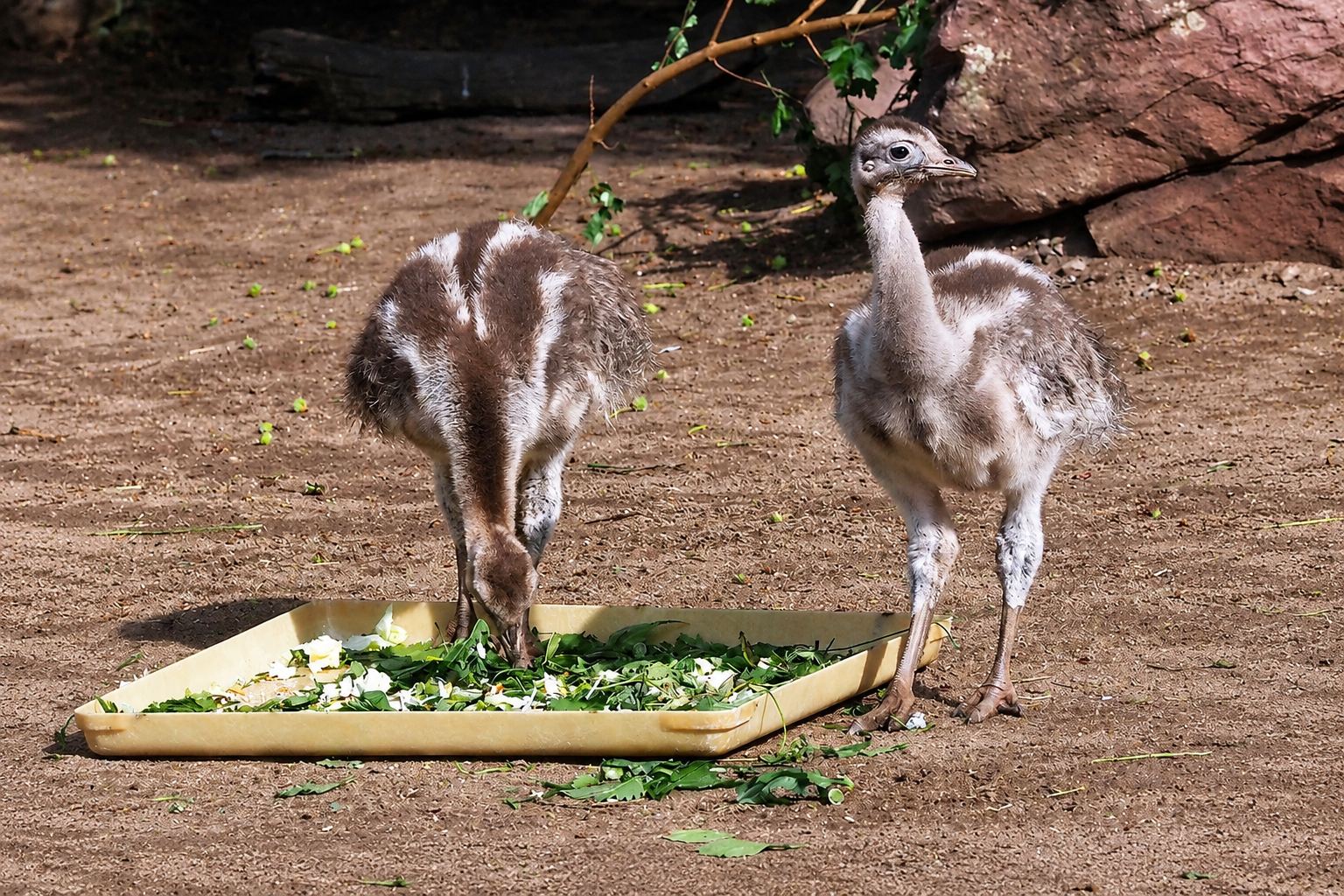
Also in the South America enclosure, Hannibal the male Darwin’s rhea (8) is currently strutting across the meadow with his chicks. The nimble chicks hardly ever stray from the side of the male Darwin’s rhea. In Darwin’s rheas (Rhea pennata), the male alone takes on the role of brooding. The male incubates the eggs and looks after the chicks on his own – a behaviour typical of South American ratites.
Darwin’s rheas live in the open steppes, grasslands and scrublands of Patagonia, as well as in parts of Argentina, Chile and Peru. The birds feed mainly on grasses, herbs, leaves, seeds and fruits, but their diet also includes insects and other small invertebrates. Like the pudus, this species is classified as ‘Potentially Endangered’ by the International Union for Conservation of Nature (IUCN). The main causes of this are habitat loss, hunting and disturbance in breeding areas.
In the wild, Darwin’s rheas usually live to be around ten to 15 years old, whilst in zoos, under good husbandry conditions, they can live to be 20 years or older. The successful rearing of the chicks is therefore also regarded as an important contribution to the long-term conservation of this bird species.
Sipiwe’s son is stretching his neck
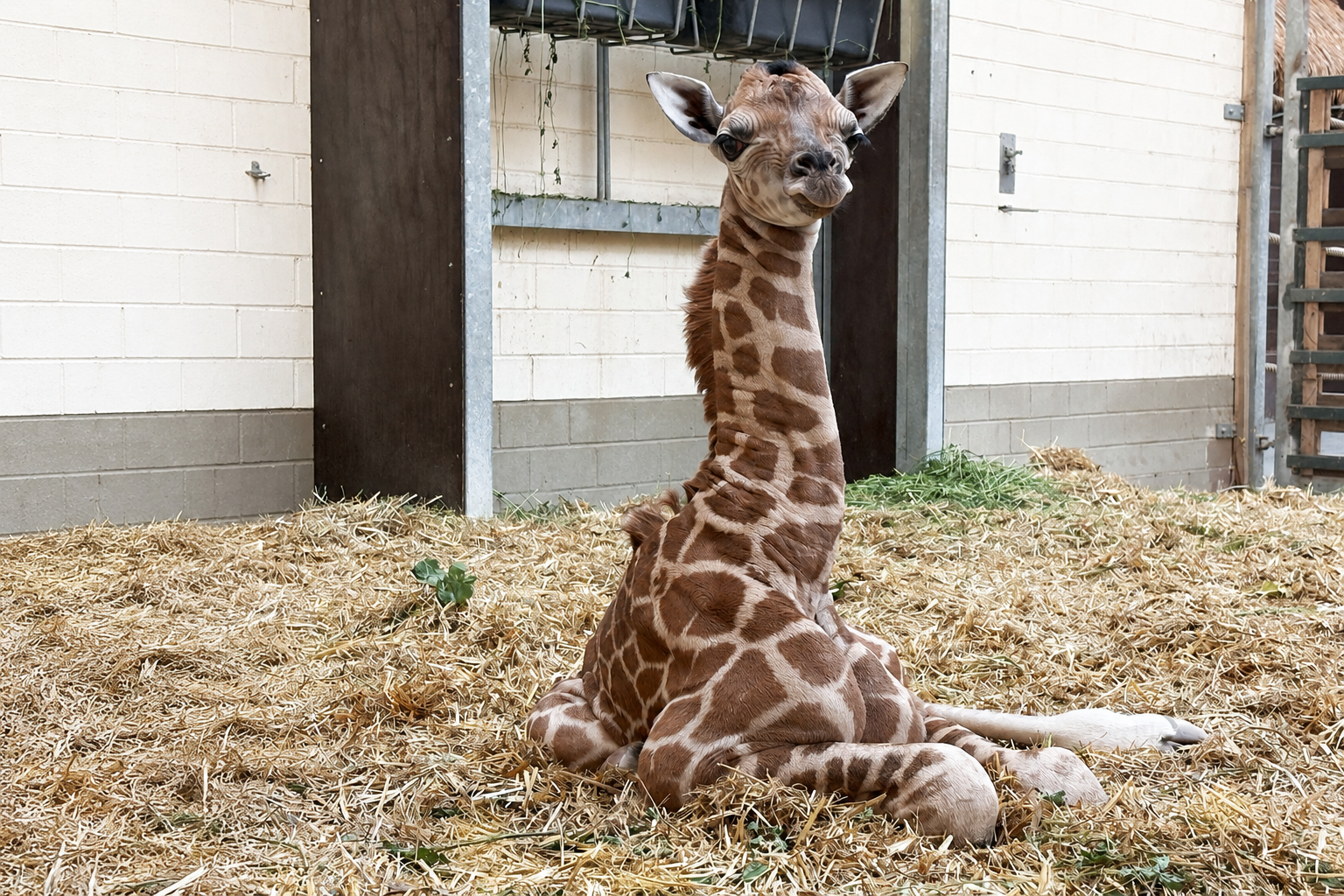
We’re switching continents and are delighted to report on the Rothschild’s giraffes in the African Kiwara Savannah, where Sipiwe (8) has given birth to a male calf during the night leading up to Tuesday. When the keepers started their shift, they found the calf already dry and licked clean beside its mother in the enclosure specially prepared for the birth.
“It couldn’t have gone better: the calf was born without complications and surprised us this morning. We’d been expecting the birth for days and had already separated Sipiwe from the herd to give her space and peace. According to the zoo vet, who carried out the newborn’s initial check-up this morning, the calf appears healthy and strong; it is feeding regularly and is being looked after exceptionally well by Sipiwe,” explains Curator Ruben Holland in a statement from the Zoological Gardens.
For Sipiwe, this is already her second calf since her arrival from Aalborg in 2022. The father of the little long-legged calf is the seven-year-old bull Matyas. Over the coming days, the mother and calf will initially remain separated from the herd, though they will maintain visual contact with the other animals. This is intended to strengthen the bond between them before they are gradually reintegrated into the group.
Visitors are in luck and can observe both the herd and Sipiwe with her baby in the giraffe enclosure. Rothschild’s giraffes (Giraffa camelopardalis rothschildi) are native to the savannahs of East Africa, particularly Uganda and Kenya. This subspecies is one of the most critically endangered giraffe species in the world. Although populations have recently stabilised thanks to intensive conservation measures, their range remains limited to a few protected areas. In the wild, Rothschild giraffes usually live to around 20 to 25 years of age, whilst in zoos they often live to be more than 30 years old.
There’s a squeak coming from Kamala’s den
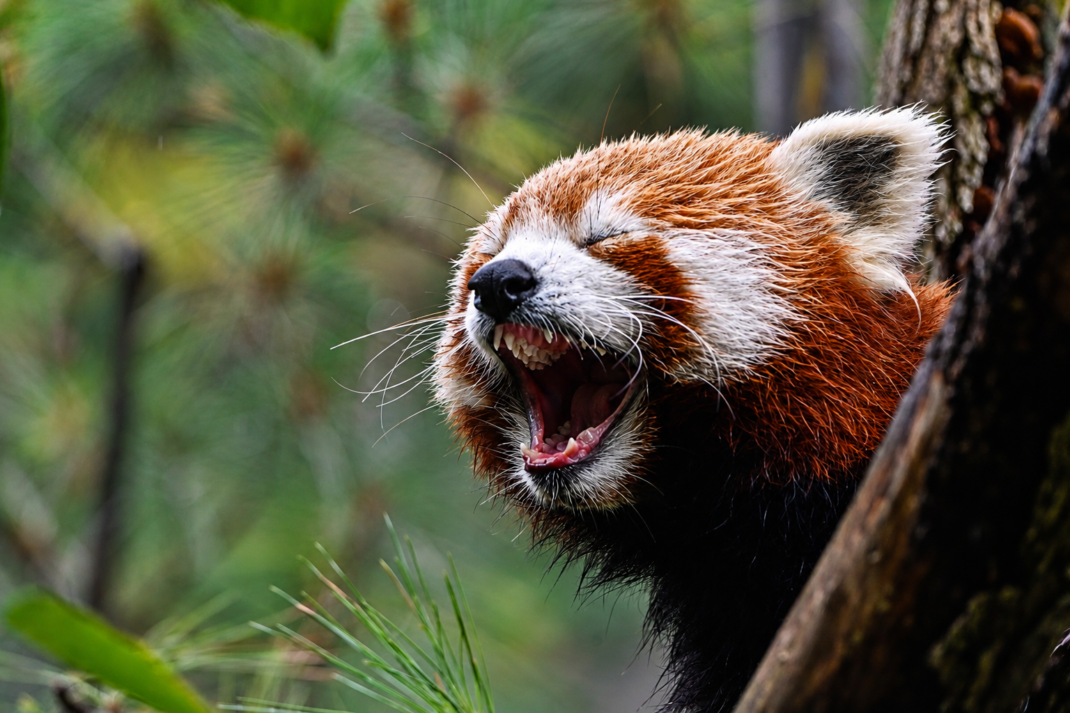
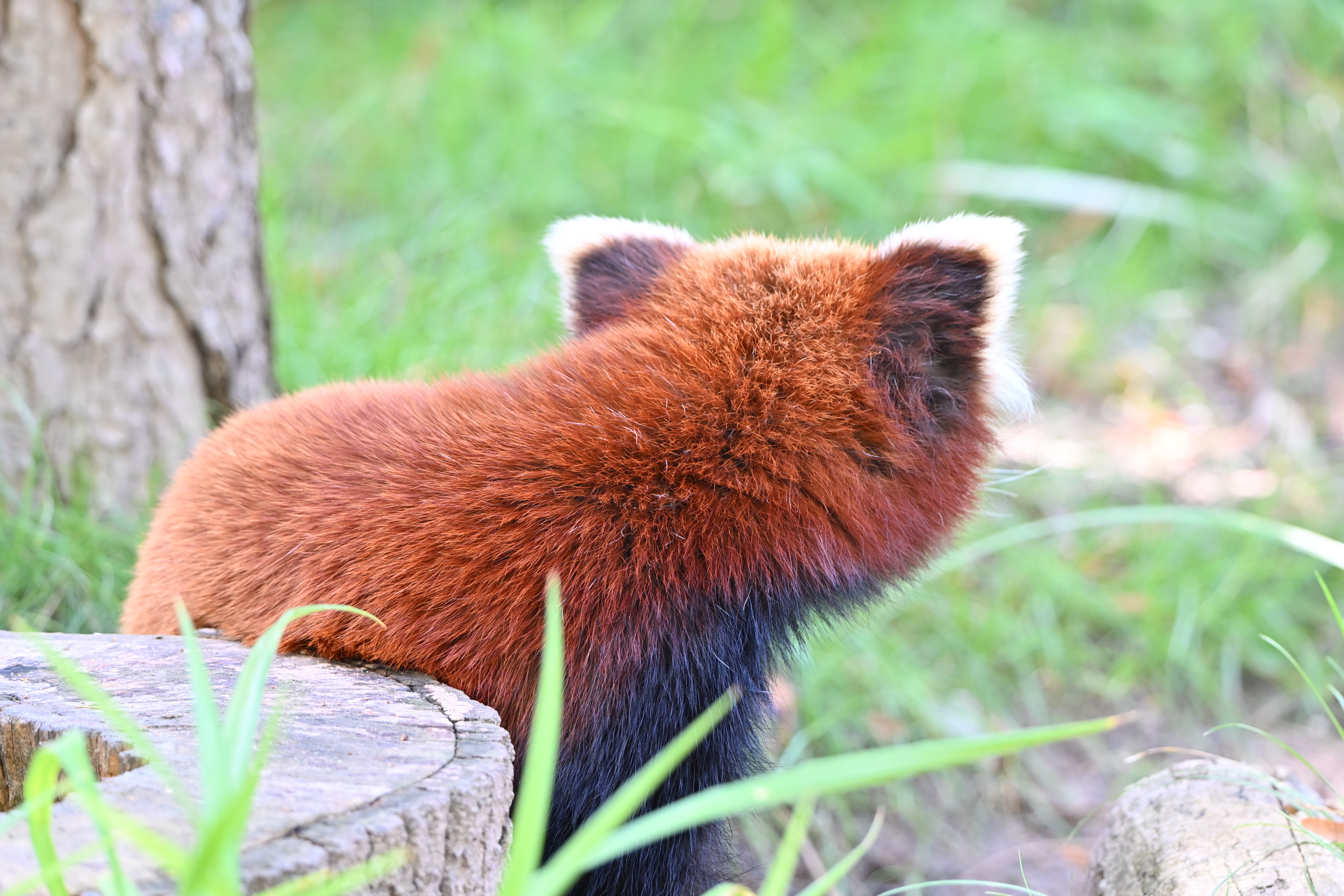
Further east, in the heights of the Himalayas, the red pandas are at home. In Leipzig, Kamala and Asa live in a specially designed enclosure, right next to the Gondwanaland Tropical House. The zoo and its visitors have long been hoping for a new addition to the family of these fluffy little bears, which, scientifically speaking, aren’t bears at all.
The red panda (Ailurus fulgens) occupies a special place in the animal kingdom. Although it combines physical characteristics of various groups of carnivores, it belongs neither to the bears nor to the cats. For decades, its taxonomic classification was the subject of scientific debate, as researchers suspected it was related to raccoons, martens and bears. It was only modern genetic analyses that provided clarity: the red panda is the last surviving member of the distinct family Ailuridae. It thus forms a unique lineage within the order of carnivores.
At the start of the month, mum Kamala gave birth to cubs. The keepers first became aware of the new addition to the family through soft whimpering coming from a sheltered crevice in the rocks. The young mother had chosen this sheltered spot as a nursery. The keepers have since managed to catch a brief first glimpse of the offspring, which are thought to be two cubs. Kamala, who is raising her first litter, is, according to the zoo, looking after her cubs in an exemplary manner.
However, it will be some time yet before visitors can see the young red pandas in the outdoor enclosure for the first time. Red pandas are native not only to the mountain forests of the Himalayas but also to other mountainous regions in Nepal, India, Bhutan, Myanmar and China. They are predominantly solitary and spend much of their lives in trees, where they climb skilfully and rest. The animals feed mainly on bamboo, fruit, berries, roots, eggs and, occasionally, insects.
The International Union for Conservation of Nature (IUCN) classifies the red panda as critically endangered. The main causes of the decline in their population are the destruction and fragmentation of their habitat, as well as poaching. In the wild, red pandas usually live to be between eight and ten years old, whilst in zoos they often live to be 15 years or older.
Leipzig Zoo is open every day. Summer opening hours are currently from 9 am to 7 pm. During the summer season, day tickets cost 25 euros for adults and 17 euros for children aged six to 16; children under six are admitted free of charge. The zoo is easily accessible by public transport. Tram line 12 stops right outside the main entrance. Day tickets purchased online also entitle you to travel to and from the zoo within Leipzig on public transport. A car park for cars and bicycles is located directly opposite the main entrance. It’s best to plan your visit ONLINE.
Empfohlen auf LZ


So können Sie die Berichterstattung der Leipziger Zeitung unterstützen:




There is one comment