Trial begins in multi-million internet fraud case; the Regional Court expects the proceedings to last thirty days! The university choir is kicking off the centenary celebrations at the very place where it was founded. In the west of Leipzig, a state-of-the-art kettle is being connected to the mains – and at the Südfriedhof this afternoon, the victims of the 1953 popular uprising will be commemorated.
Hot water just like from a thermos flask
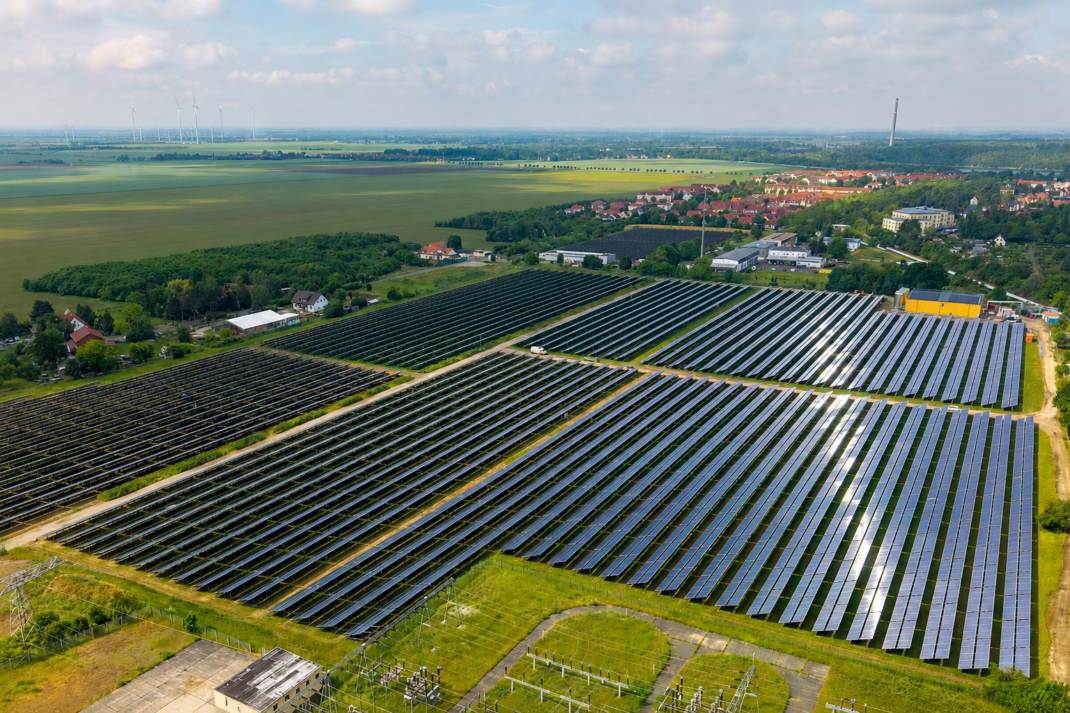
Things are heating up from today! Leipzig’s municipal utilities are commissioning what they claim is Germany’s largest solar thermal plant. On the site of the Leipzig-West combined heat and power plant, 13,200 vacuum-tube collectors with a total collector area of 65,208 square metres have been installed.
The principle behind the plant is relatively simple: the sun’s energy heats water in special tubes. These are particularly well insulated by a vacuum and work in a similar way to a thermos flask, meaning very little heat is lost. Depending on the intensity of the sunlight, the water is channelled through the plant at a faster or slower rate. In this way, it can be heated to temperatures of up to around 110 degrees. The heat is then fed directly into Leipzig’s district heating network. The technical operator, ‘Ritter XL Solar’, specifies a maximum feed-in temperature of 108 °C.
In addition to energy generation, the ecological design of the site also plays a role. The collectors are being erected with a planned lower edge of 90 centimetres – higher than usual – so that plants and animals can continue to use the area. Plans include flowering meadows, fruit trees, hedges and perennials, as well as habitats for insects, birds and small mammals. Sheep are also to be used to maintain the site. According to the municipal utilities, essentially only the technical building – or pump house – will be permanently sealed.
The total area of the site covers 14 hectares. A total of 40 million euros has been invested in Leipzig’s ‘sparkling kettle’, 16 million of which came from grant funding.

Leipzig commemorates the victims of 17 June 1953
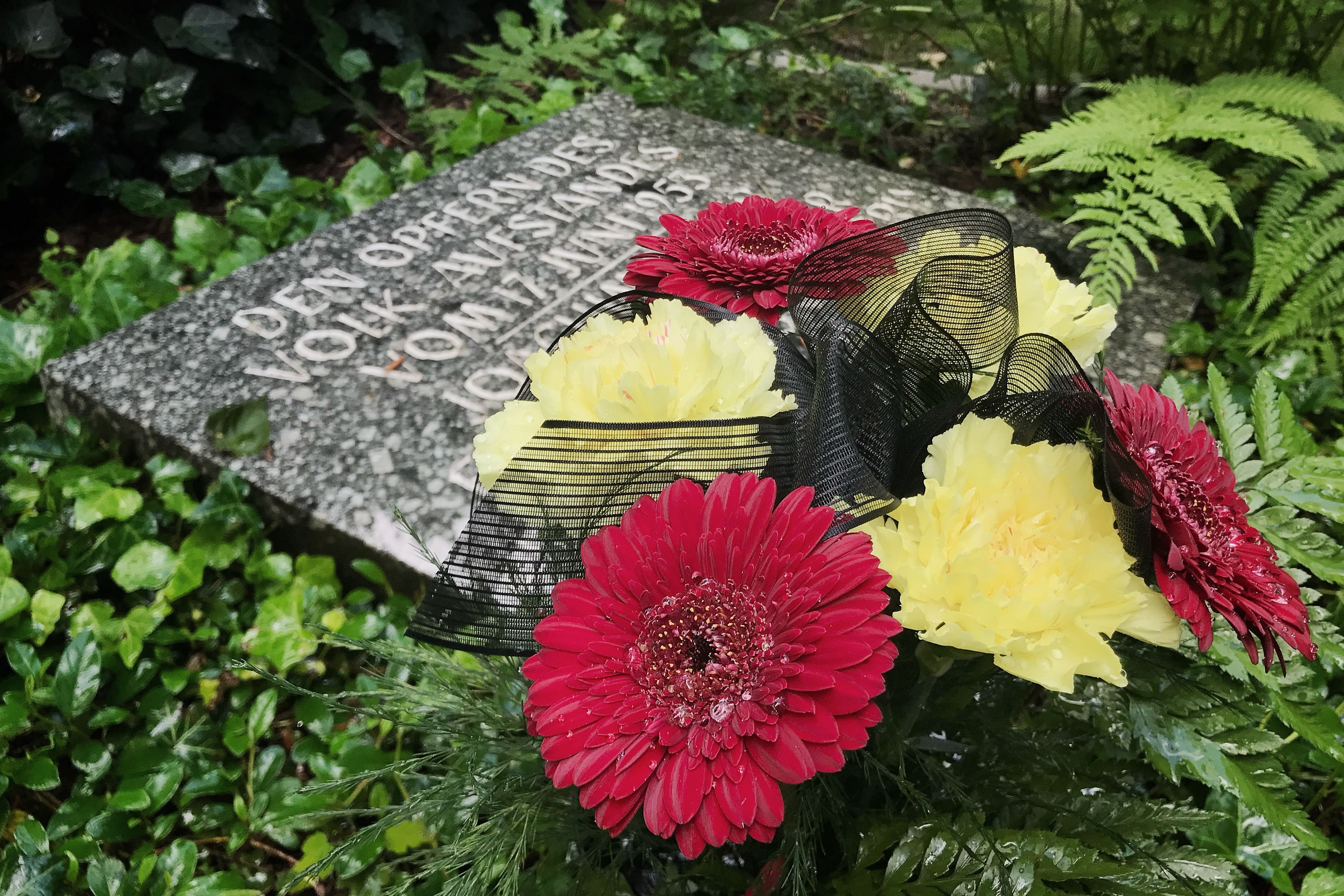
They wanted freedom, but violence and arbitrary justice buried their dream. Today, the Leipzig Citizens’ Committee (Bürgerkomitee Leipzig e.V.), the Association of Victims of Stalinism (VOS), other associations representing victims of persecution and the City of Leipzig are commemorating the victims of the suppression of the popular uprising of 17 June 1953. To mark the 73rd anniversary, a commemorative ceremony with a wreath-laying and a minute’s silence will take place at 4 pm at the Leipzig South Cemetery, at the gravesite and memorial for the victims of tyranny from 1945 to 1989.
The commemorative address will be delivered by the President of the Saxon State Parliament, Alexander Dierks. As an eyewitness, Brigitte Dienst will recount her experiences during the events of 17 June 1953; she is the sister of the youngest person to lose their life in the uprising. The popular uprising is regarded as one of the most significant events in the history of German democracy. At that time, more than a million people took to the streets in almost 700 towns and municipalities across the GDR to demand freedom, democracy and German unity.
In Leipzig on 17 June, around 27,000 workers from more than 80 workplaces took part in work stoppages; later, over 40,000 people demonstrated. The protests were violently suppressed by the intervention of the Soviet occupying forces. In the Leipzig district alone, nine people lost their lives, including 15-year-old Paul Ochsenbauer; at least 95 others were injured. Even today, the organisers regard the commemoration of the uprising as an important symbol of the value of freedom, civil rights and the democratic rule of law.
A century of the University Choir
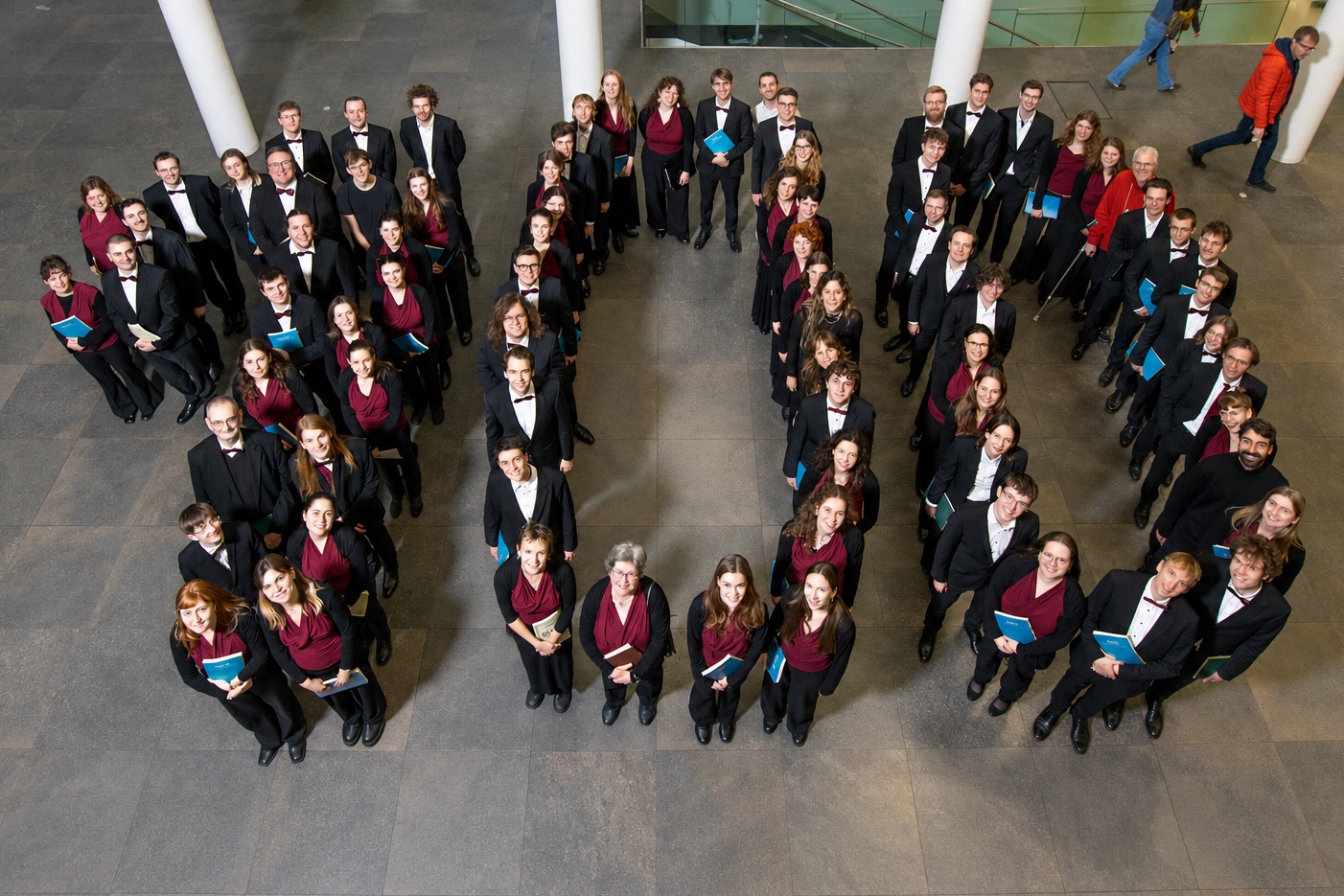
This year, the Leipzig University Choir is celebrating its 100th anniversary. Today, it is commemorating its founding at the very place where it all began: at 7 pm, the choir invites you to Moschelesstraße 11, where the ‘Leipzig Students’ Madrigal Circle’ first met on 17 June 1926. Under the title ‘How It All Began’, directors Teresa Martin and Marlene Pawlak have created a musical and theatrical journey through the choir’s early years, featuring music, stories and opportunities for the audience to sing along.
Another highlight of the anniversary year will be a grand gala concert at St Thomas’s Church in Leipzig on 27 June at 7 pm. Former choir members will also be taking part. The programme includes Psalm 100 by Max Reger, the Jazz Mass by Prof. David Timm and a world premiere by Meike Senker. Together with the Staatskapelle Halle, the choir will thus bridge the musical past and present.
At the start of the concert, the Saxon State Government will present the Leipzig University Choir with the ‘Zelter Plaque’, one of the highest state honours for amateur choirs in Germany. It is endowed by the Federal President and awarded to choirs that have rendered outstanding services to choral music and cultural life over a period of at least 100 years. The award is named after the composer, music educator and choir director Carl Friedrich Zelter.
Tickets cost 20 euros in advance, 10 euros (concession), 25 euros on the door, and 15 euros (concession). Further dates and practical information can be found at www.unichor.uni-leipzig.de.
Mammoth trial over fraud worth millions
A trial concerning alleged large-scale, commercial gang fraud begins today before the 15th Criminal Division of the Regional Court. The defendant is a woman born on 7 October 1995. The Dresden Public Prosecutor’s Office accuses her of 685 counts of concurrent offences. The defendant is alleged to have, from January 2019 onwards, as an employee of the brand provider ‘PumaTS’, provided and managed technology for the operators of at least 425 online investment fraud platforms in return for payment.
According to the indictment, the technology distributed by the defendant was, with her knowledge, used for systematic fraudulent activities both within and outside the EU. Victims are alleged to have been persuaded via online platforms and call centres to invest their money in what were purported to be profitable schemes. In reality, however, the criminal group’s aim is said to have been to secure the highest possible deposits, mostly into foreign accounts. The money was then allegedly removed from the victims’ reach via a complex, globally established money-laundering network and distributed within the group.
The 685 victims named in the indictment are said to have suffered total losses of 40,305,760.39 euros. The defendant is alleged to have gained an estimated 460,000 USD, equivalent to 368,000 EUR, from the offences. The Regional Court has announced 29 further hearings for the trial. Our reporter Lucas Böhme is covering the trial.
Empfohlen auf LZ


So können Sie die Berichterstattung der Leipziger Zeitung unterstützen:




There is one comment