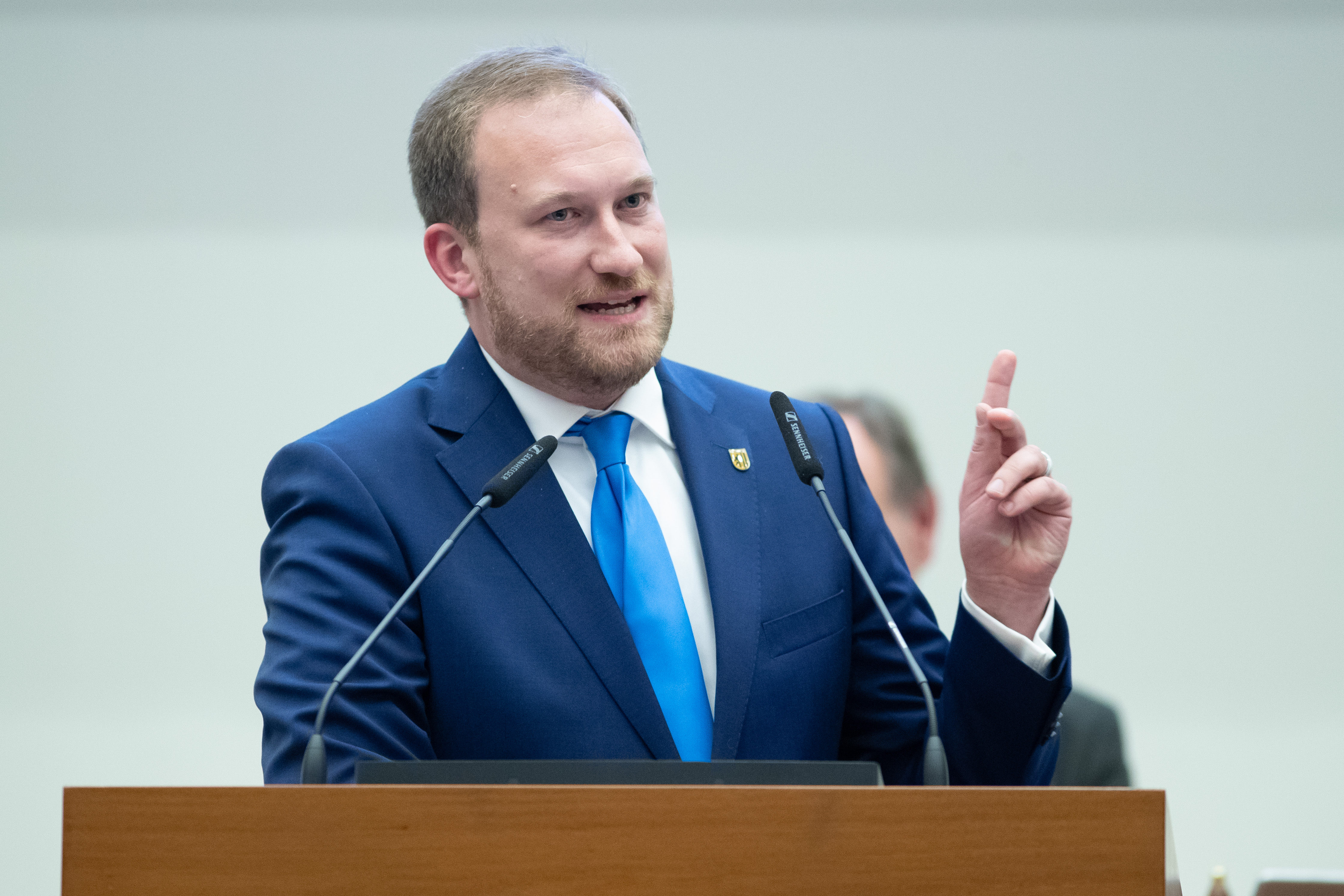
On 28 October, the Leipzig City Council kicked off its budget deliberations. As is well known, the City Council intends to adopt the new 2027/2028 biennial budget as early as December, so that the debate over money does not coincide with the mayoral election campaign. After all, Leipzig will be electing a new Lord Mayor in the spring, who will then have to operate with a city budget that is effectively unusable. And following the debate on 28 October, it is also clear that Leipzig even risks ending up with no budget at all that can be approved.
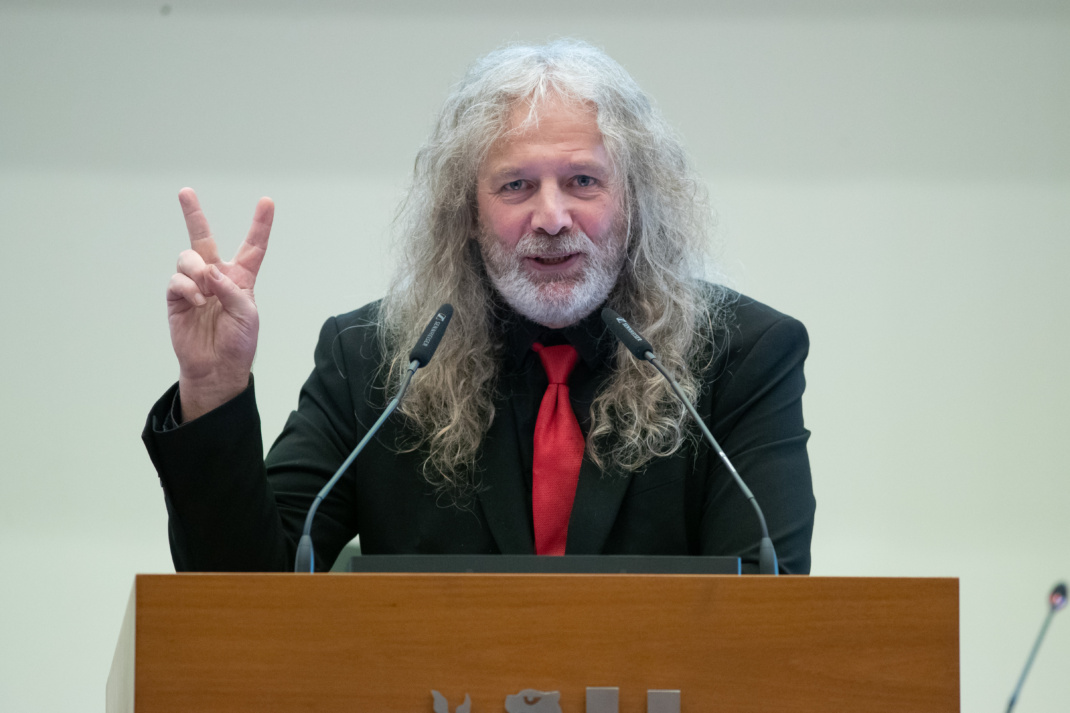
Not even if the completely unrestrained AfD, CDU and BSW parliamentary groups were to get their way with their radical cutback plans. From the AfD’s point of view – as its spokesperson Tobias Keller repeated over and over again like a refrain – Leipzig has, after all, been living ‘beyond its means’ for years.
The man probably really does believe that such a claim becomes true if one simply repeats it often enough. Nor was the argument put forward by the previous speaker, CDU parliamentary group leader Michael Weickert, any better; it essentially followed the same line of reasoning and even went so far as to declare massive cuts and job losses to be a panacea. His motto: ‘We don’t have too little money.’ It’s just being spent on things “we can no longer afford.”
And there you have it: appeals to the federal and state governments would be out of place.
Really?
1 billion euros for unfunded statutory duties
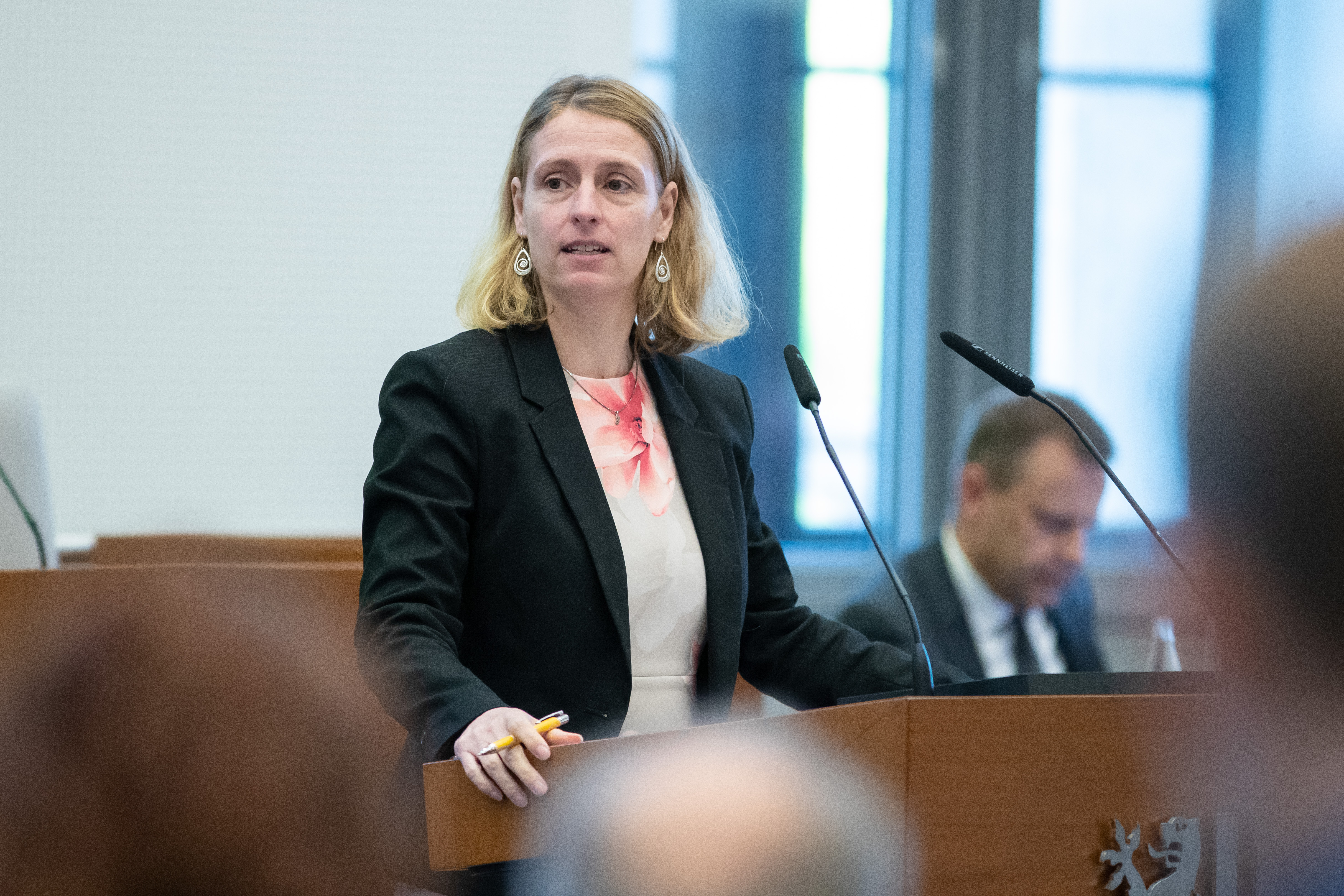
In fact, Franziska Riekewald, speaking on behalf of the Left Party group, has said everything there is left to say about these final, token budget negotiations. After all, the City Council can no longer shape anything. After her speech, the entire City Council could have stood up and, with a minute’s silence, acknowledged that local authority’s decision-making power over its own budget has been buried by federal policy.
It’s not just in Leipzig. The Federal Statistical Office has now also confirmed this: “According to a model calculation by the federal and state statistical offices, the debts of local authorities and local authority associations, including their holdings in the non-public sector, rose by 9.9 per cent at the end of 2025 compared with the start of the year.”
Towns and local authorities across the country are sliding ever deeper into debt. And this is not because they are ‘living beyond their means’, but because for years now they have not received sufficient funding to cover the statutory duties delegated to them by the federal government. And since last week, it has now been officially confirmed what the Left Party parliamentary group has been persistently asking the Leipzig Finance Councillor about for the past year and a half: the total amount of statutory duties no longer fully funded by the federal and state governments now actually stands at 1 billion euros.
Torsten Bonew, the city’s finance councillor, has presented a comprehensive breakdown of this.
And what does this mean for Leipzig? It means that even if the city were to cut all – and I mean all – of its discretionary tasks, it would still run up debts running into the hundreds of millions, as Franziska Riekewald pointed out. Even the slight increases in funding from the Free State do nothing to help. This 1 billion euros cannot be offset.
They have ensured that Leipzig’s debt has now quadrupled from just under 500 million euros to 2 billion euros. And the federal government doesn’t even bat an eyelid, allowing local authorities across the country to run up ever-increasing debts without a second thought. Leipzig’s budget is now expected to show 3 billion euros in debt by 2030. This is not just down to the investment budget – which Leipzig’s administration has already slashed by 30 per cent – but above all due to the city’s standard operating budget, where the federal government’s mandatory tasks come into play.
How cuts divide an urban community
And the fact that the AfD, CDU and BSW are exploiting this crisis to now propose massive cuts to climate action, democracy, social inclusion, civic participation, culture and municipal staff speaks volumes. As Thomas Kumbernuß rightly pointed out on behalf of the Free Faction, these are all proposals designed to divide the city and further exacerbate social divisions. Because then citizens will simply realise that their city no longer functions, that their city is no longer there for them, and that services for citizens are getting worse and worse. They will then become even more alienated from politics and local government.
This is also a dilemma for Kumbernuß, who does approve of some of the spending proposals put forward by the Left and the Greens, but at the same time realises that they cannot be financed. Not even through the accompanying proposals for offsetting funding. This was already the case with the last biennial budget: the state directorate responsible for oversight simply did not approve these ‘additional expenditure’ items.
And so it looks set to happen again this time, even though the Saxon state government has graciously allowed its local authorities to adopt new budgets involving new debt. Somehow, under the mistaken assumption that the local authorities’ current financial difficulties are a temporary phenomenon.
And certainly not a nationwide structural problem.
‘Maths geniuses’, to quote Kumbernuß once again. It is the disastrous tax policy at federal level that has ensured that all public budgets are sliding ever deeper into the red, because the revenue side is not being put back in order.
It is the taxes on the rich and the super-rich that have been cut further and further over decades, so that this group contributes less and less to the financing of the community. The tax burden has been shifted onto low and middle-income earners.
But ‘don’t you dare touch it’, as CDU city councillor Michael Weickert put it on 28 October.
What’s the best way to run a city into the ground?
But this debt-driven policy is now dividing Western society as a whole and giving a boost to far-right forces, as they profit from this tension and from people’s sense that all their efforts are no longer worthwhile, whilst the country is falling apart before their very eyes.
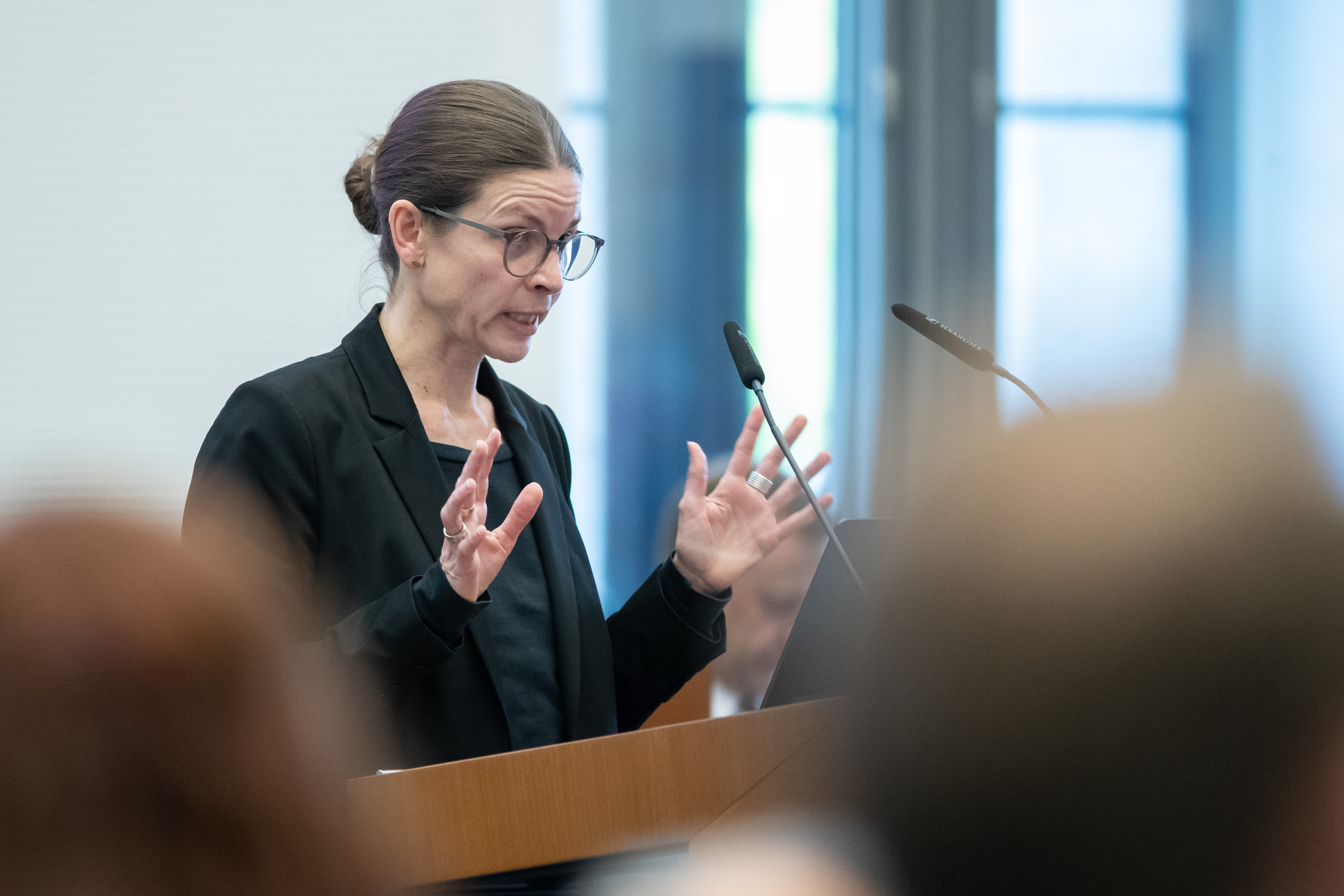
Or their local authority. That’s where it gets real. And this was pointed out on 28 October not only by the Greens’ parliamentary group leader, Kristina Weyh: Leipzig is still suffering today from the massive investment cuts of the noughties and is facing a huge backlog of renovation work. And now the right-wing parties are once again calling for investment cuts? And for the heating transition and climate protection to be scrapped as well?
The debate was only the start of the budget negotiations. And these are likely to be very intense, as Mayor Burkhard Jung also fears. Last time, too, some parliamentary groups played a game of chance and refused to approve the budget compromise.
Some of the speeches on 28 October suggest that the positions have hardened even further. Even though everyone knows that a city without an approved budget can, more than ever, only afford the bare essentials. Meanwhile, the federal government’s unfunded statutory obligations continue to drive debt to unaffordable heights.
Empfohlen auf LZ


So können Sie die Berichterstattung der Leipziger Zeitung unterstützen:





There is one comment