Dieser Artikel ist auch in deutscher Sprache verfügbar: Zum deutschen Artikel.
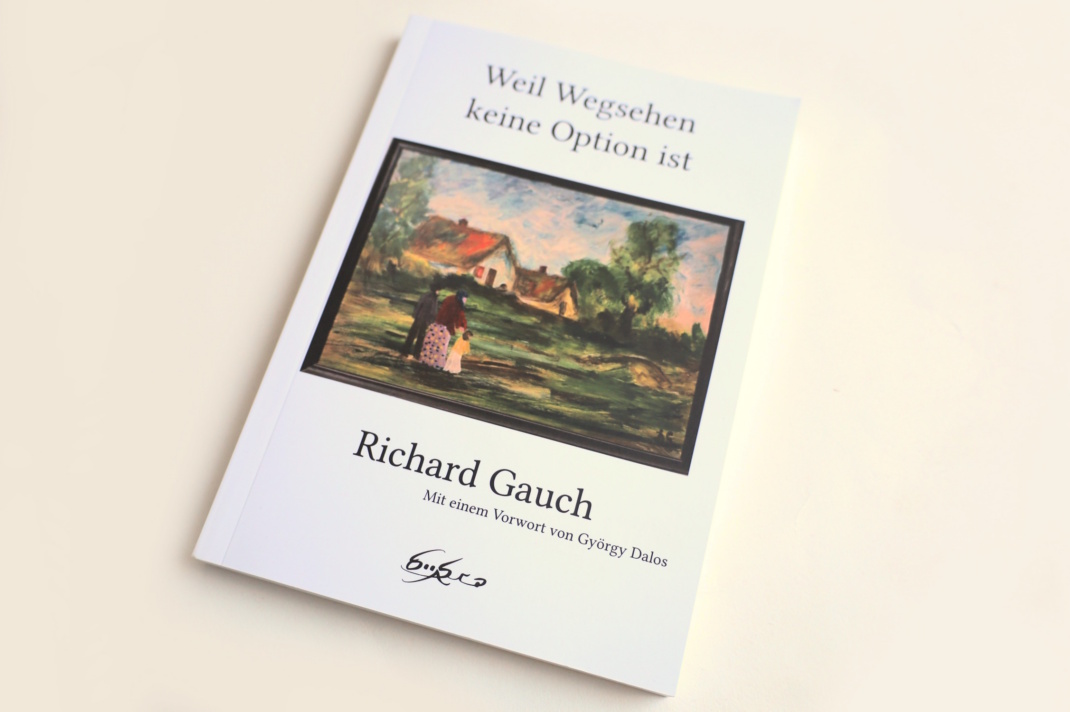
When is it time to take stock? To talk about one’s life and what really matters? What has truly given this life meaning? Actually, one might think, Richard Gauch would still have had plenty of time. Actually, he isn’t quite at the age for writing his memoirs yet. But he has led an exciting life, one that has now taken its toll.
For whilst most people in Leipzig prefer to grumble about their lives, the times, politics and the demands placed upon them, Gauch told himself straight after the Peaceful Revolution: ‘You’re not going to shy away from this. You get involved. So that this becomes a more humane city.’
And by now, he is known above all to those in Leipzig who are committed to humanity. He has built up a whole network of fellow campaigners and helpers. And sometimes he also gets involved in city politics when neither the administration nor the city council are willing to understand what is at stake when it comes to respect for those at the very bottom.
Those who cannot defend themselves when bureaucrats turn them down, when their tenancy is terminated, or when they’re caught ‘fare-dodging’ because they don’t even have the money for a tram fare.
It’s about courage
It’s about very simple human courage. Being there when you’re needed and can help. In short: humanity. Something Richard Gauch all too often finds lacking in the actions of Leipzig’s authorities, because case workers stick to dead letter laws but refuse to see the fates of the people whose lives they’re deciding on. Gauch briefly touches on the milestones in his life that led him to get involved. Friendly, persistent, tireless.
Because there’s one thing he learnt early on: no one can make a difference on their own. You have to convince people; you have to seek out supporters. Just as he did in 2006–2007, when ticket and season ticket prices set by the Leipzig Transport Authority (LVB) began to rise ever more sharply. So sharply, in fact, that the incomes of Leipzig’s poorer residents – and particularly those on social security – could no longer keep up.
“Leipzig needs a social ticket!” was the name of the campaign through which the city council was gradually persuaded that a reduced-fare season ticket was urgently needed for those affected. This is now in place, even though the city council has to fight hard with the administration to ensure that the Leipzig-Pass Mobilcard remains affordable.
But it is not only through such campaigns that Gauch made a name for himself. For anyone who does not suppress their sense of humanity will not remain unmoved by Leipzig’s patchy culture of remembrance. And so Richard Gauch was always to be seen taking the lead when it came to organising memorial marches for the forced labourers in Leipzig, creating a visible memorial site for them, or commemorating the persecution of the Sinti and Roma, who were caught up in the Nazis’ machinery of extermination just as much as the Jews.
The metal suitcase at Leipzig Central Station , which commemorates the deportation of Leipzig’s Jewish men and women to the Nazis’ extermination camps and the role played by the Reichsbahn, was created on his initiative.
Do not look away
For inhumanity begins with forgetting. And with looking away. And so readers also learn about one aspect of Gauch’s commitment, which, whilst finding many supporters in Leipzig, manifested itself in Hungary and the Balkan states, where Gauch and his fellow campaigners addressed the plight of today’s Roma, who are still discriminated against in those countries or – as in Hungary, for example – treated like lepers on the fringes of society.
It was, of course, inevitable that two invitations from Leipzig to high-ranking Hungarian representatives to the Festivals of Lights in 2012 and 2014 would deeply disturb him. How can one invite representatives of a government that has so severely undermined democracy and was responsible for the discrimination against an entire ethnic group? Did those issuing the invitations not give this any thought? In any case, the protest was clear.
Nor did Gauch remain idle when, from 2015 onwards, the Federal Republic of Germany and Leipzig were faced with a task that truly required a great deal of humanity, as war refugees from Syria, Iraq and Afghanistan arrived in Germany in large numbers and needed accommodation and support. Not everyone was granted a residence permit. In some cases, Leipzig’s immigration authorities acted cold-heartedly and mercilessly, even though there were ample grounds to grant these individuals a residence permit.
Richard Gauch has no mincing of words when it comes to this behaviour. For it was mostly those who were unable to defend themselves who were affected – women, children, but also people who had long since been integrated into work and training. The second part of the book recounts the stories of these people, whom Richard Gauch quite naturally helped, often directly, by offering them shelter, organising access to hospital treatment, and accompanying them himself to the jobcentre, the immigration office and the professional associations.
Many of those threatened with deportation had solid vocational training. They simply did not have the certificates recognised in Germany. Often, they first had to learn the language. And Gauch does not present this as a ‘one-man’ story. After all, you cannot really achieve much that way. He also tells of the friends and fellow campaigners who supported him during this time.
And of a politician like Juliane Nagel, who used her influence and contacts as a city councillor and member of the state parliament to help as a matter of course. This included persuading stubborn officials that ‘strict adherence to the rules’ is an inhumane option.
A vulnerable life
Some of the stories Gauch recounts are deeply tragic. This does not leave the helper unscathed either. For anyone who helps in this way also builds personal relationships and suffers along with those affected when, in the end, things do not turn out well after all; when all the administrative procedures prove fruitless and a previously highly motivated person nevertheless loses all courage and returns to a country where they no longer have a future.
Here and there, Richard Gauch also chips away at the glossy public image of the city of Leipzig and its Lord Mayor, who are so keen to present themselves as cosmopolitan and helpful, whilst – unseen by the public – people fail in their dealings with the authorities, coming up against callous case workers and the Free State of Saxony’s deportation practices.
Anyone who gets so deeply involved, is always approachable and helps without hesitation is not exactly leading a healthy life. It was three heart attacks that ultimately reminded Richard Gauch just how fragile life is. But it is precisely this contradiction in which we all live. For we only experience true friendship, trust and closeness when we get involved, help where we can, and actually see the people around us as human beings and treat them as such.
This places demands on us – on our emotions just as much as on our hearts. And the stories Richard Gauch tells also show just how deeply he was emotionally invested in every instance of helping others: he shared in their excitement, sympathised with their suffering, but was also able to rejoice uncontrollably when a situation took a turn for the better.
A fundamental question
In one of the final chapters, he then addresses the fundamental question of our time, namely: How do we actually experience democracy? And what happens to our society when citizens repeatedly find that their requests are rejected, forgotten or simply faffed about with by the authorities? When the sentiment takes hold: ‘We can’t change anything anyway’?
His starting point is the interfaith and intercultural memorial site at the Südfriedhof, approved by the city council in 2020, which still does not exist today because someone at the town hall cannot be bothered to implement it. “Democracy thrives on decisions having an impact,” he quotes his friend Jonas as saying. “If resolutions remain without consequence, then people learn something dangerous.” And that is, quite simply, “that participation achieves nothing”.
Ultimately, Gauch is simply asking perfectly valid questions: “What is the point of a resolution that isn’t implemented? What is the point of democracy if its outcomes vanish from everyday life? And what happens to a society that realises words are no longer followed by deeds?”
All burning questions. Questions posed, in this case, by someone who has never relied on politics and its institutions, who decided early on that humanity begins with getting involved oneself and helping wherever one can. Someone who doesn’t just say that “looking the other way is not an option”, but knows that a society only truly functions when its members get involved and contribute whatever little they can.
Who are simply there when someone is needed to lend a hand, to comfort or to offer advice. Or who take part in commemorative marches or clean the Stolpersteine in Leipzig on 9 November. It is often very small acts which, when added together, amount to something great. And above all, they convey a message: that we are not condemned to inaction.
That is what some people would like. It would suit them just fine if everyone kept quiet and did not disrupt official procedures. But with his book, Gauch ultimately shows that democracy thrives precisely because people help and speak out. And they also give city councillors and local authorities a hard time when things are heading in the wrong direction. An encouraging book, even if it makes you realise just how gruelling such a life is when someone simply cannot rest, knowing that their help is urgently needed.
Richard Gauch, *Weil Wegsehen keine Option ist* (Because Looking Away Is Not an Option), bookra Verlag, Leipzig 2026, 20 euros.
The book launch, featuring Petra Pau, Aladár Horvath and Jakob Springfeld, will take place on 9 October at 6.00 pm at Galerie KUB.
Empfohlen auf LZ


So können Sie die Berichterstattung der Leipziger Zeitung unterstützen:




There is one comment