Dieser Artikel ist auch in deutscher Sprache verfügbar: Zum deutschen Artikel.
The Elbe also features in the story. It’s very peaceful. It’s still quite narrow here in its upper reaches in the Sudeten Mountains, where the little town of Hostinné is situated. Nina has no inkling yet that Hostinné might have something to do with her breakdown following the death of her mother, Irma, when she loses her voice on stage. Of all times, it happens during rehearsals for *Macbeth*. At last she has a major role again. Even the director is convinced by her and her talent. And then this happens. And it all feels so familiar. This is how one’s own family history catches up with you when you least expect it.
In her novel, Claudia Rikl succeeds in portraying something that requires a great deal of tact. Very few authors actually manage to describe so vividly what happens when a family’s trauma suddenly rears its head in the midst of everyday life, with full force and severe emotional and physical consequences. Usually in situations where you wouldn’t believe anything bad could possibly happen now.
Something that has been rumbling away in the background all along. And now – as if it had been waiting for this moment – it strikes. It leaves Nina not only speechless.
And yet she should finally be free by now. For years she has looked after Irma, devoting an hour to her every day. Trying to talk to her. But Irma never said a word. Certainly not about the past. And many families will recognise this all too well. We are all ‘emotional heirs’,
as Sven Rhode has shown in his book of the same name.
The traumatic experiences of our parents – and even our grandparents – continue to affect us. Especially when they never spoke of the terrible things they went through. Couldn’t bring themselves to speak of them. Just like Irma. Who perhaps wanted to protect her own children in this way.
The Silence
No, this is not one of those superficial novels that publishers tout with phrases like ‘family secrets’ and ‘unexpected discoveries’. That is precisely what is so unsettling about these deeply hidden stories: everyone senses that they are there. Even Nina’s father, who stood by Irma’s side for so long. Until he could no longer bear this silence. For it destroys partners too. And the children, of course, who often do not even understand why they act irrationally time and again in their own lives. Or why they are so incapable of finding a lifelong partner.
And yet Nina is being courted by the much younger Kai. In fact, she is not just the star of the theatre; she is a person who receives love and affection – and yet still fends it off. She practically shuts herself off because she has a deep-seated fear of disappointing others if she lets them get close. And that doesn’t just apply to her colleagues at the theatre and Kai. It also applies to her sister Katja, with whom she’s been at loggerheads for years. Even though there’s no specific reason for the rift. Except perhaps Katja’s unexpected departure from the family, back when she was on the verge of messing up her A-levels.
Ever since then, a certain feeling has been particularly present in Katja, even though she doesn’t really know how to put it into words. She is only able to do so when, after the turbulent days she experiences following Irma’s funeral, she simply decides to travel to the place where it all might have begun. In Irma’s birthplace, Hostinné – which was still called Arnau back then, when Irma spent her sheltered childhood there in the villa of the factory owner Winkler, happy with her little brother Lutz, though worried.
For, in the very last year of the war, her father was conscripted into the Wehrmacht. No news came from him. Day after day, Irma’s mother walked to the market square, where the names of the town’s sons reported as ‘killed in action’ were posted. But her father’s name was not among them.
Fragments of a childhood
Nor will it appear later on. The war devours the men, the sons, the fathers. And Irma is – as Nina later learns from Irma’s former childhood friend – a daddy’s girl. That in itself is something that can change, distort and cast a shadow over a life forever, when a father simply vanishes into the darkness of war. And things got even worse. What Nina had until then only been able to sense becomes tangible when, in Hostinné, she meets not only Irma’s childhood friend but also a helpful museum director who assists her in finding traces of her past and her family.
And, at least in fragments, what Irma experienced as a child becomes not only visible but palpable. A story that is loosely based on her own family history, as Claudia Rikl explains in the acknowledgements. For her grandmother Helene, too, had to pack her belongings within an hour in June 1945 and leave her home with her three small children, only to be transported to Germany in a coal wagon. In this case, to Saxony. To a devastated country.
Perhaps it is truly only the granddaughters who can tell these stories – those who, whilst feeling the emotional strain within themselves and always carrying that sense of inadequacy, may also be the first generation to have the strength to endure the old stories and face them head-on. Even if the actual events then come as a shock. Just as they do for Nina. And not just for her.
For in Hostinné she realises that her sister Katja, too, had been struggling with this silence all along. And her father as well, who in the end could only escape the relationship if he didn’t want to be broken. A family trip to Bohemia in 1987 seems to be the knot in which everything became tangled and hopelessly entangled. And at the same time, it was the moment when Nina herself saw what was churning inside her mother, but which refused to be spoken.
The shadows of the past
Nina’s thoughts then sum it up in the midst of a heated phone call with her father: “Nina’s anger recedes, giving way to a deep sense of despondency. What you kept hidden, Mum, is still there. It’s always been there. It was poison.”
By now we’re well into the second part of the novel, in which Nina summons all her strength to unravel the story of her mother and her family of origin. The first part of the novel is even more unsettling, because it begins so peacefully, even though her mother’s unexpected death initially throws Nina’s life off course.
But that’s exactly what she’s learnt: to carry on functioning whenever the unexpected throws all her plans into disarray. She doesn’t want Katja’s help either with clearing out the flat and organising the funeral. She finds a few clues from her mother’s childhood – clues that point to the small town of Hostinné.
Claudia Rikl recounts in minute detail how the deep-seated trauma within Nina makes itself felt, first robbing her of her voice and then causing her to break down completely at the funeral service.
And this is likely a story that many families in this country could relate to. Perhaps they have even experienced it themselves, without realising how the shadows of the past were intruding right into their children’s lives. Shadows that usually do not fit with the parents’ sanitised accounts. That is, if the parents ever did tell their children what they had to go through as children. And did not – like Irma – keep it all bottled up inside.
Without even realising that this is precisely the way to pass on one’s own trauma to one’s children: a tangle of misunderstood feelings of inadequacy, of alienation, of being lost in a world that never seemed to fit with one’s own emotions.
Hard work, discipline and a sense of duty…
That is precisely what makes this novel so deeply moving. And perhaps even so relevant today, for what actually happens to a society that never addresses its deep-seated traumas, but instead prefers to keep them secret and hidden, donning a hard shell of diligence, discipline and a sense of duty? Just as the Germans did after the war, which ended so disastrously. In both East and West. They turned a blind eye, ploughed on and ‘built something new’. That crazy belief that one simply had to forget the past and, ‘looking to the future’, just knuckle down and build prosperity. Then everything would be all right.
But stories like the one Nina experiences are likely to have been common in many families. Perhaps without the conciliatory outcome that Nina finds, because she decides on the spur of the moment to travel to Hostinné. How many families have been torn apart by this, worn down by silence and the excessive demands placed on the children?
One can at least sense it when accompanying Nina on her search for the truth. And one realises how deeply she is moved by everything she experiences on this journey into the unknown. And, above all, how it breaks down the armour with which she has so bravely held out for so long. All the whilst faithfully fulfilling her duties, yet still harbouring the paralysing feeling that she was let down by more than just her sister Katja.
It is probably high time that this subject was told in such a vivid and empathetic way. And perhaps only her granddaughters can do this – for they are able to read between the lines in a way that the overwhelmed children often could not: to feel compassion for their seemingly so closed-off grandparents, who believed they were sparing the children by locking the traumatic experiences of the past deep within themselves.
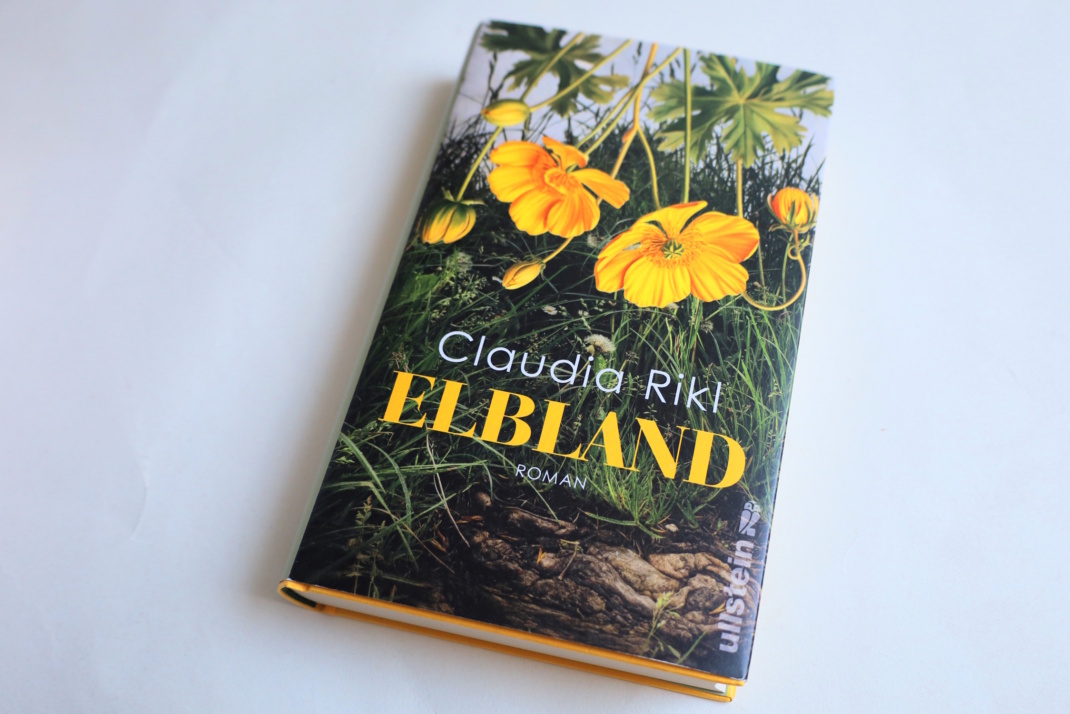
Claudia Rikl, *Elbland* , Ullstein, Berlin 2026, 23.99 euros.
Empfohlen auf LZ


So können Sie die Berichterstattung der Leipziger Zeitung unterstützen:





There is one comment