
Dieser Artikel ist auch in deutscher Sprache verfügbar: Zum deutschen Artikel.
Will 14 become a lucky number? Transport planners and tram passengers are likely to think so, from today at the latest. Hidden treasures could be unearthed at GRASSI today – and this afternoon, the Administrative Committee will discuss where further funding for education can be found. This evening, there’ll be a cultural-historical event tracing the history of the punk movement against the backdrop of the division of Germany.
Tram line 14 is
even more out of the ordinary today
For the ‘14’, Tuesday the 14th is a bit like Friday the 13th – but only for 12 hours.. Passengers on tram line 14, who have already been severely affected by construction work, must put up with additional restrictions today. Due to construction work on Wittenberger Straße, the Leipzig Transport Authority (LVB) is diverting trams heading towards St. Georg Hospital between 8 am and 8 pm. Four stops will not be served during this time. The measure affects a route that was only extended back to Eutritzsch just under eleven months ago, following a 17-year hiatus.
According to the LVB, trams departing from the main station, platform E, will leave their regular route and travel via Wilhelm-Liebknecht-Platz, Chausseehaus and Delitzscher Straße to the Eutritzsch Zentrum stop. They will use the stops for line 16 at Wilhelm-Liebknecht-Platz and in Eutritzsch. The stops at Wittenberger Straße, Apelstraße, Dessauer Straße and Theresienstraße will not be served in the affected direction. This additional diversion coincides with a period of extensive works on Leipzig’s tram network.
Since Monday, 12 October, Line 14 has been operating on an altered route due to track works on Georgiring, Augustusplatz and at the main railway station. Between Westplatz and the main railway station (west side), its route runs via Gottschedstraße and Goerdelerring. The works in the city centre are expected to last until November. In addition, utility works on Karl-Heine-Straße are affecting the western section of the line. There, the tram terminates early at Angerbrücke; a rail replacement service has been put in place for the Plagwitz area.
These restrictions affect a relatively new direct service. It was only on 24 November 2025 that the transport authority extended Line 14 back to Eutritzsch after a 17-year hiatus. Since then, it has complemented Line 16 on the route between the city centre and St. Georg Hospital. This was intended, in particular, to provide passengers from the west of Leipzig and the city centre with additional direct travel options to the north. On school days, the combined service of both lines enables a five-minute frequency on parts of the route.
However, during the current autumn half-term, a special timetable is in force, under which additional school services are cancelled. According to the latest announcement from LVB, the short-term change on Wittenberger Straße is limited to today, Wednesday. The additional diversion is due to end at 8 pm. The longer-term restrictions on the rest of the route remain unaffected. The transport authority provides information on the current traffic situation at him.l.de/disruptions.html and in its timetable enquiries service.
Discussions on increased funding for schools
There is no money available – yet it still has to be spent. And urgently, which is why the City of Leipzig’s Administrative Committee is today discussing additional expenditure on technical equipment for local schools. The meeting begins at 5 pm in the Council Chamber of the New Town Hall. Under discussion is a financial proposal entitled ‘Extra-budgetary expenditure for 2026 pursuant to Section 79(1) of the Saxon Municipal Code (SächsGemO) for the maintenance of IT equipment and decentralised data processing for local schools’.
This concerns funding required, in addition to the existing budgetary allocations, for the operation and maintenance of school information technology and decentralised data processing. In addition to school IT, other municipal financial and administrative matters are on the agenda. These include management services in facilities run by the Office for Youth and Family Affairs. These items will be discussed in a public session.
The City Council’s website, which publishes the meeting dates and agendas of local authority committees, also lists further agenda items that will be discussed in a closed session, the details of which are not specified in the available overview.
The legal basis for the planned deliberations is Section 79(1) of the Saxon Municipal Code. This provision sets out the conditions under which local authorities may incur expenditure or make payments that are not included in the budget or are outside the budget. Key factors in this regard include an urgent need, the need to secure funding or the unavoidable nature of the expenditure, as well as the relevant budgetary requirements.

Life as a punk during the era of the Berlin Wall
Flashy, colourful and ragged – the punk movement, which emerged in the mid-1970s, shaped entire generations, and not even the political division of the world into East and West could stop it. ‘No Future’ (taken from a Sex Pistols song) became the movement’s defining slogan and, thanks to the unstoppable influx into this subculture, somehow rendered itself obsolete.
How differently the punk scene developed in East and West Germany, and what similarities existed despite the division, is the subject of an event taking place today at 7 pm at the Zeitgeschichtliches Forum Leipzig (Grimmaische Straße). Under the title “Waste Your Youth! – 50 Years of Punk in the FRG and GDR”, musician and author Henryk Gericke and Tocotronic bassist Jan Müller will discuss 50 years of music, youth and protest culture. The discussion, moderated by Ulrich Gutmair, is part of the Leipzig Literary Autumn. Admission is free.
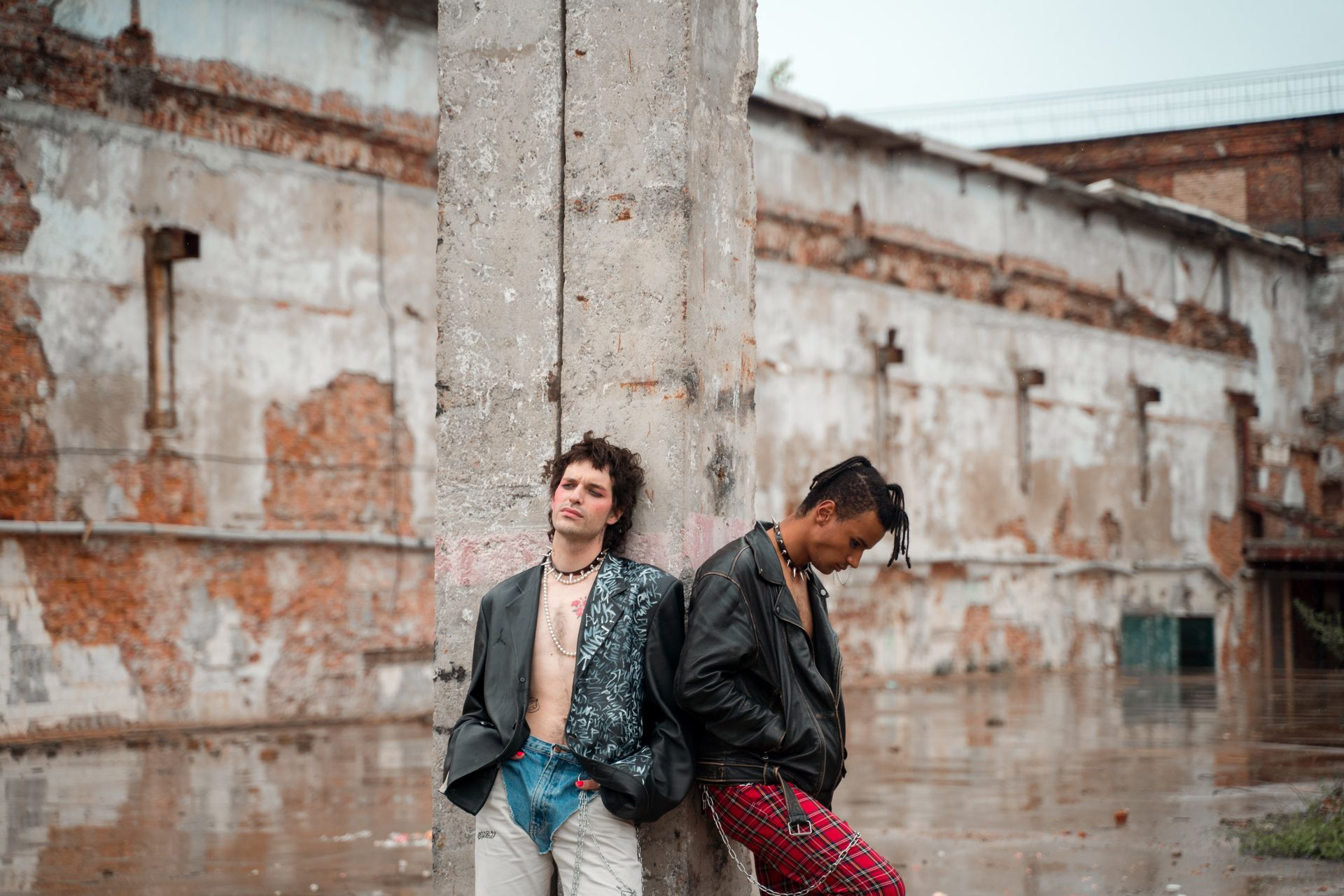
The event explores the development of punk since the 1970s against the backdrop of the differing political and social conditions in the GDR and the Federal Republic of Germany. It examines musical influences, state repression, social conflicts and cultural links between the two scenes, whose histories are often presented separately. The title is a reference to Jürgen Teipel’s book *Verschwende deine Jugend* (*Waste Your Youth*), published in 2001, which deals with the German punk and new wave movement.
Henryk Gericke brings personal experiences from the GDR punk scene to the discussion. He sang with the East Berlin band The Leistungsleichen in 1981 and 1982 and published the book *Tanz den Kommunismus – Punkrock DDR 1980–1989* in 2024. In it, he describes a youth culture that developed outside state-controlled cultural offerings and was subject to political repression.
Jan Müller, meanwhile, hails from the Hamburg punk scene; he is one of the founding members of Tocotronic and plays bass in the band. He also runs the interview podcast “Reflektor”, in which musicians and other cultural figures have their say.
Presenter Ulrich Gutmair works as a culture editor for the “taz” and covers pop culture and contemporary history both as a journalist and as an author. The evening combines personal memories with historical context and explores the question of what lasting impact the punk movement has had to this day.
Further information on events during the current Literature Week is available at www.literarischer-herbst.com.

GRASSI experts appreciate collectables
Is it just trinkets from a fairground stall, or a fine, valuable gemstone that a distant great-great-uncle brought back from his last trading voyage overseas? Anyone unsure whether the items they’ve accumulated over the years are junk or treasures can find out today at the GRASSI Museum of Applied Arts. From 4 pm to 7 pm, the event ‘Junk or Treasure?’ will take place in the Pfeilerhalle at Johannisplatz 5–11.
Experts from the museum and external art dealers will examine items brought along and provide information on their age, origin, material, craftsmanship, condition and potential value. Participation costs 3 euros; no prior registration is required. A maximum of three items may be presented per person. Items to be assessed include jewellery, silver cutlery, ceramics, porcelain, glass, furniture, books, prints, textiles, woodwork and metalwork, as well as Asian art objects.
Anyone wishing to have a large piece of furniture or another item that is difficult to transport assessed may bring along clear photographs. Coins, musical instruments, weapons and ethnological objects are excluded. The event is aimed in particular at people who would like to find out more about family heirlooms, antiques or seemingly unremarkable objects.
The focus is not solely on potential market prices, but also on art-historical contexts, distinctive craftsmanship and the classification of the items according to the period in which they were created. However, such a verbal assessment does not replace a written, legally binding valuation report.
According to the museum, the event is held regularly twice a year, in spring and autumn. Incidentally, the ‘TRÖDELPROFIS’ at the GRASSI have been around since the late 1990s. This means the format has a significantly longer tradition than its TV counterpart ‘Bares für Rares’ (2013), featuring Horst Lichter with his twirled moustache.
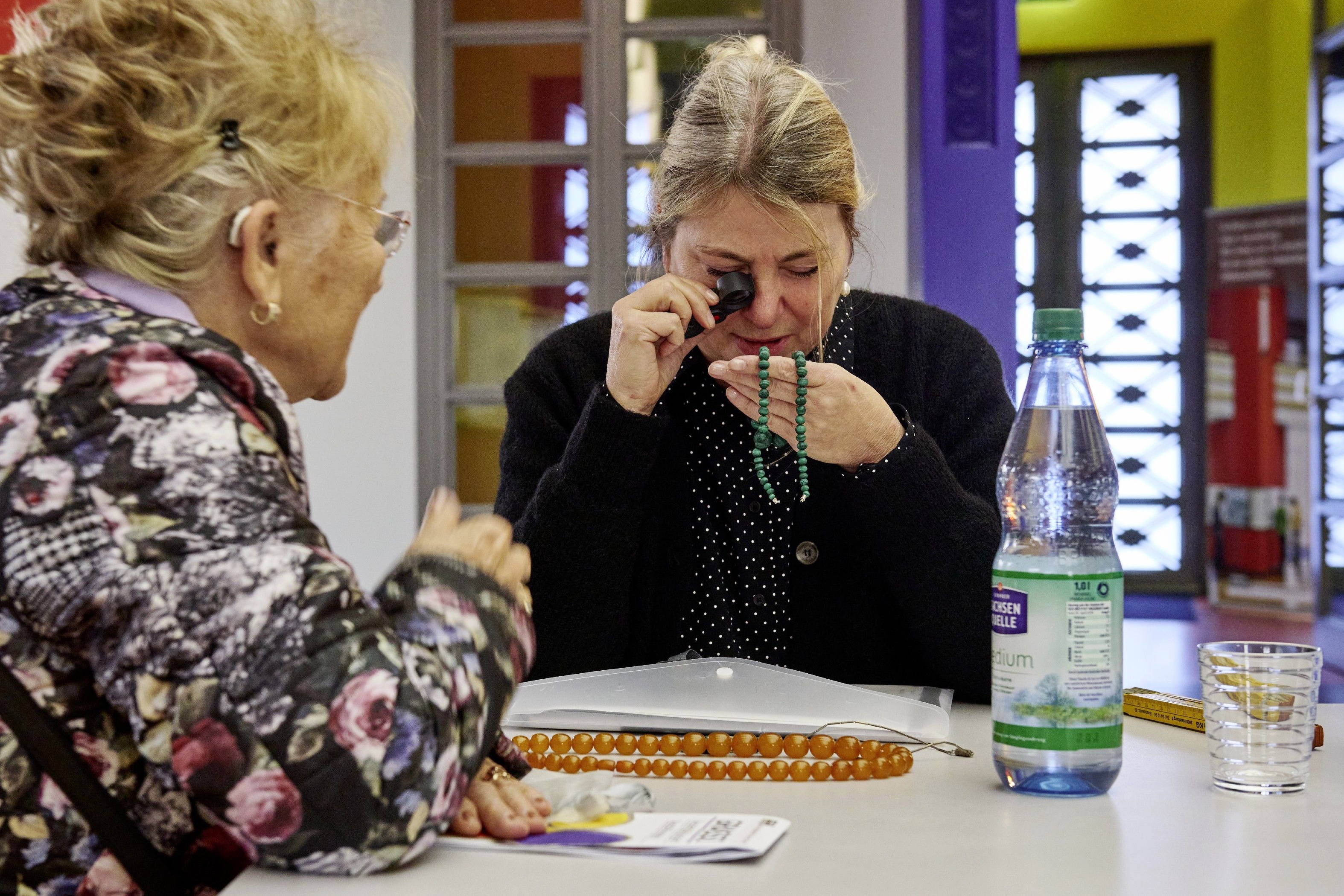
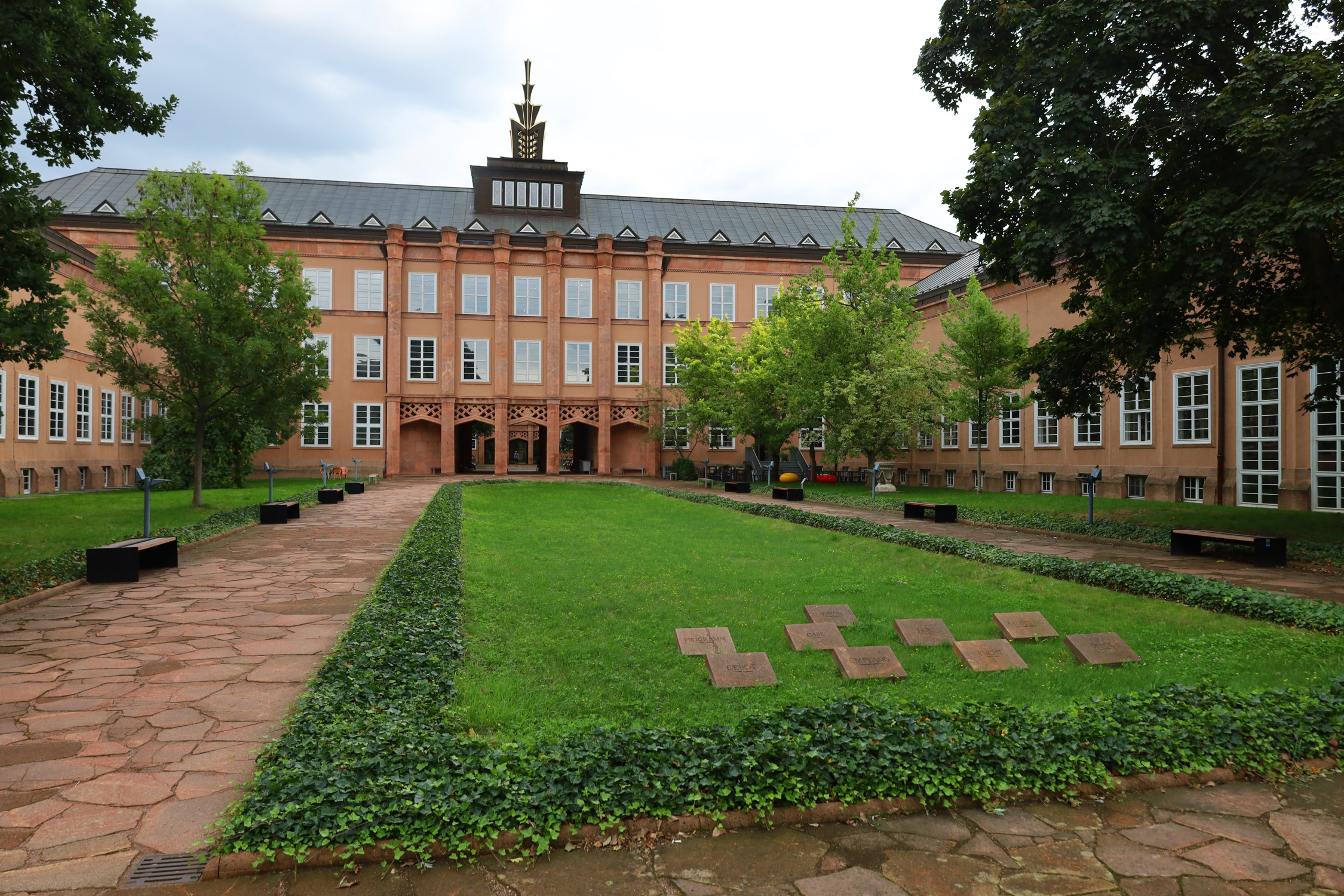
What is now the GRASSI Museum of Applied Arts was founded in 1873 by citizens of Leipzig as a museum of decorative arts and opened in 1874. It was the second museum of decorative arts in Germany and can therefore look back on a history spanning 153 years since its foundation, or 152 years since its opening. The museum complex owes its name to the Leipzig merchant Franz Dominic Grassi (1801–1880), whose bequest made the construction of the first Grassi Museum possible. This was built between 1892 and 1895 on what is now Wilhelm-Leuschner-Platz and now houses the Leipzig City Library. The museum building on Johannisplatz was constructed between 1925 and 1929 and, with its distinctive Art Deco architecture, ranks among the city’s most significant museum buildings.
Empfohlen auf LZ


So können Sie die Berichterstattung der Leipziger Zeitung unterstützen:





There is one comment