Dieser Artikel ist auch in deutscher Sprache verfügbar: Zum deutschen Artikel.
In the north, local residents are delighted at the official opening of their new Parthe Bridge, which links the sports facilities and the residential area. In the south, a new 30 km/h zone ensures a safer journey to school, with plans to introduce a further one. Two events look back at history, focusing on music and the everyday lives of lesbian women in the former GDR.
New bridge for the north
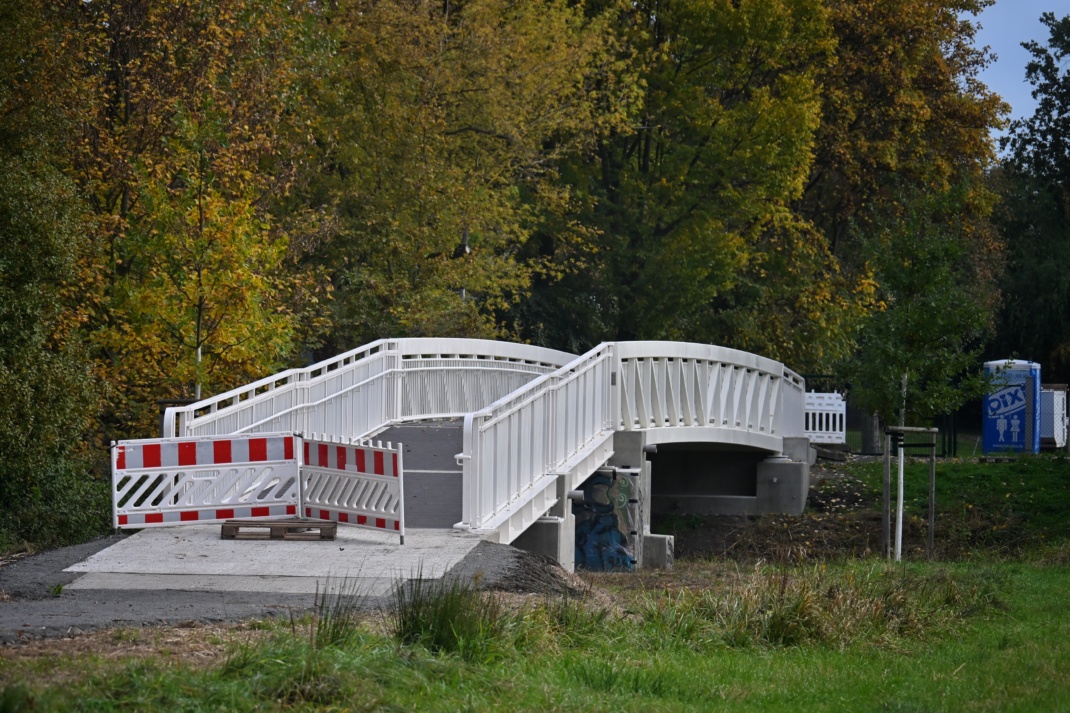
Although it did not span a raging river, but merely the gently babbling Parthe, it was an important link: the cycle and footbridge between Mockau and Abtnaundorf. Having stood the test of time, it had become so dilapidated that a new structure was needed. Today, after around a year of construction, it is being opened for use. This means the Parthe-Mulde cycle path between Leipzig city centre and the north-east is once again fully accessible.
The crossing is also important for the residents of Mockau, particularly when they wish to use the sports facilities on the other side of the Parthe. The new, three-metre-wide aluminium bridge replaces the steel structure dating from the 1970s, which, due to its poor condition, had recently been accessible only to a limited extent. The bridge deck is also made of aluminium, which is designed to better withstand the stresses caused by its proximity to the water.
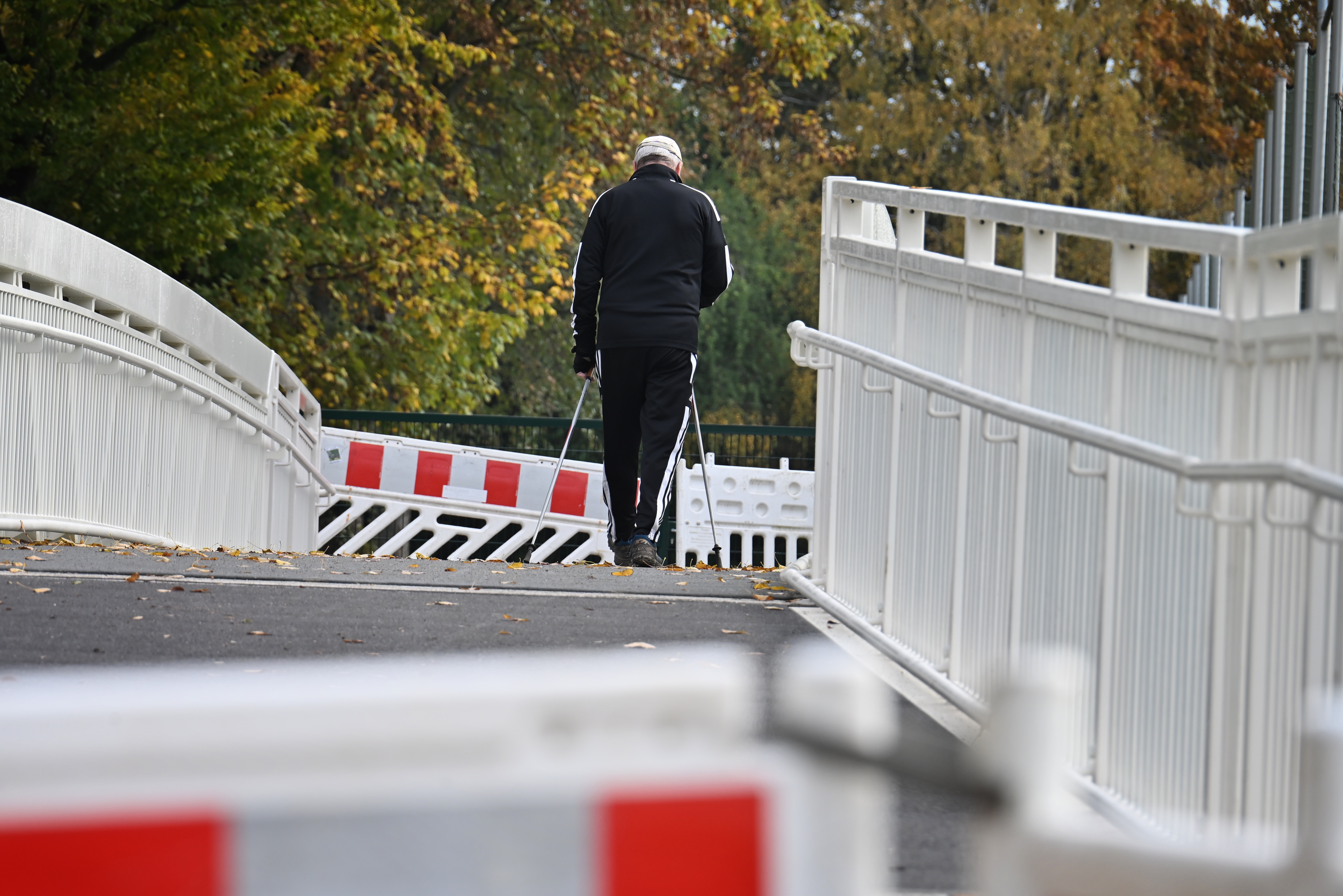
On the west side, the previous steep staircase has been replaced by a steel ramp. This means the crossing is now accessible to people with reduced mobility, families with pushchairs and cyclists. With the opening of the bridge, the previous detour via Beuthstraße and Volbedingstraße is no longer necessary. At the same time, it improves the connection between the Schönefeld summer lido and the north-east of Leipzig. The new structure forms part of the city’s 2030 Cycling Development Plan. The construction work was particularly complex due to the site’s location within a landscape conservation area.
The total cost amounts to around 2.1 million euros. Of this, the federal government is contributing 1.6 million euros from the ‘Stadt und Land’ funding programme. The 18.4-metre-long bridge weighs 7 tonnes and, if necessary, can also support service vehicles weighing up to 12 tonnes. Incidentally, it was manufactured by the Lithuanian company ‘DR VERSLAS Alu Brücken’. This is already the company’s second contract from Leipzig. The new Schlossweg Bridge in Lützschena was also manufactured by the firm, which was founded in 2009.
Leipzig hits the brakes for greater safety
In the south of Leipzig, speed is a double focus today. Whilst the city is introducing a 30 km/h speed limit on a section of Chemnitzer Straße in Meusdorf, the South District Advisory Board is considering a request regarding Windscheidstraße.
On Chemnitzer Straße, the new speed limit applies to the section between Höltystraße and Pahlenweg. According to the city’s Mobility and Civil Engineering Office, signage has been in place since Monday and will be finalised later this week. The city estimates the cost at around 1,300 euros. The main reason for this is the safety of schoolchildren. This section of road forms part of a heavily used route to school for pupils at the Heinrich-Mann Primary School and the Höltystraße School.
Furthermore, with the development of Parkstadt Dösen to the west of Chemnitzer Straße, a new residential neighbourhood has been created where many families live. In particular, the crossing at the central island near the Pahlenweg bus stop is set to become safer thanks to the lower speed limit. The School Route Safety Working Group had investigated the situation following reports from residents and recommended a 30 km/h speed limit.
Meanwhile, the 30 km/h speed limit is also on the agenda of the South District Advisory Board. The committee will meet from 6 pm in the café on the ground floor of the Haus der Demokratie (Bernhard-Göring-Straße 152). The agenda includes a question regarding a 30 km/h speed limit on Windscheidstraße. The meeting is open to the public; residents may ask questions. Both developments show that the speed of motor traffic in the south of Leipzig remains an issue.
Whilst the city is already implementing a specific measure to improve school route safety on Chemnitzer Straße, discussions regarding Windscheidstraße are to take place first.

Two looks back
Two events today are focusing on the history of the GDR. At 6 pm, the Moritzbastei will host the discussion event ‘TALK & MUSIC: Music Journalism in the GDR and the Post-Reunification Era’. The evening forms part of the programme for the 50th Leipzig Jazz Days and is dedicated to the working conditions of music journalists before and after the Peaceful Revolution.
Moderated by Julia Hemmerling (MDR Kultur), the discussion will cover, amongst other things, the role of radio, access to Western music, journalistic freedom and state restrictions. The changes to the East German music and media landscape after 1989 will also be discussed. Personal memories, anecdotes and musical pieces will complement the discussion.
An hour later, at 7 pm, the workshop discussion ‘Fighting Spirit, Creativity and Personal Ads: Lesbian Life in the GDR’ begins at the Zeitgeschichtliches Forum Leipzig, Grimmaische Straße 6. Lisa Leticia Weitzmann will present the findings of her state examination thesis from the Department of History at the University of Leipzig. She has investigated how lesbian women lived in the GDR, what social difficulties they had to overcome, and how they built up networks and communities.
Although female homosexuality was not explicitly a criminal offence in the GDR, lesbian women faced social exclusion and state repression. Personal ads, private meetings and informal networks offered opportunities to get to know other women. Later, organised groups also emerged under the umbrella of the Protestant Church. The workshop discussion is being organised in cooperation with the Department of History at the University of Leipzig.
Both evenings thus shed light on different experiences from the GDR: at the Moritzbastei, the focus is on music, the media and the conditions of journalistic work; at the Forum for Contemporary History, the focus is on the realities of lesbian life, social exclusion and self-assertion. Admission to both events is free.
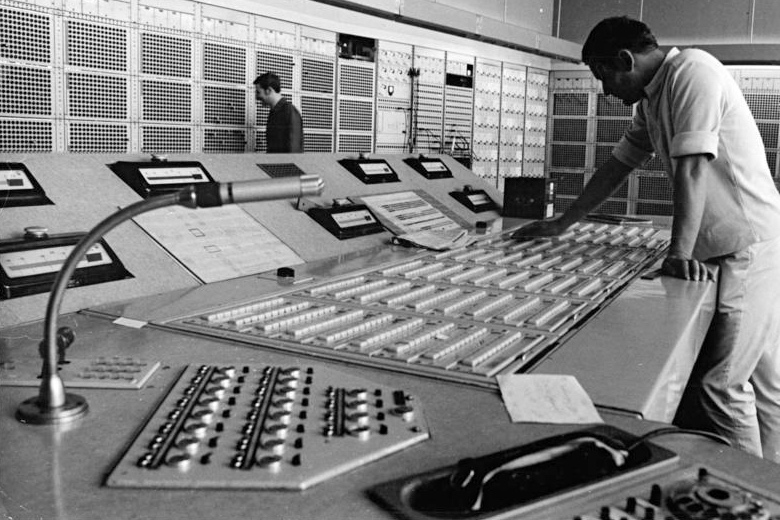
Licence notice: The image ‘GDR Radio control room’ was taken by Peter Heinz Junge and is made available for free use by the Federal Archives on Wikimedia Commons via this link. The photograph has been cropped slightly for publication on this page whilst retaining its meaning; otherwise, it has not been edited in any way.
Empfohlen auf LZ


So können Sie die Berichterstattung der Leipziger Zeitung unterstützen:


There is one comment