Dieser Artikel ist auch in deutscher Sprache verfügbar: Zum deutschen Artikel.
On Friday 3 July, there was finally a noticeable improvement in LVB’s tram services. For the first time, routes extending beyond the city centre ring were able to resume operation. The resumption of tram services following the record-breaking heat damage to the LVB’s track network is continuing to make progress, according to the LVB. After all, they had been struggling for a whole week with the damage caused to the track network by the extreme heat.
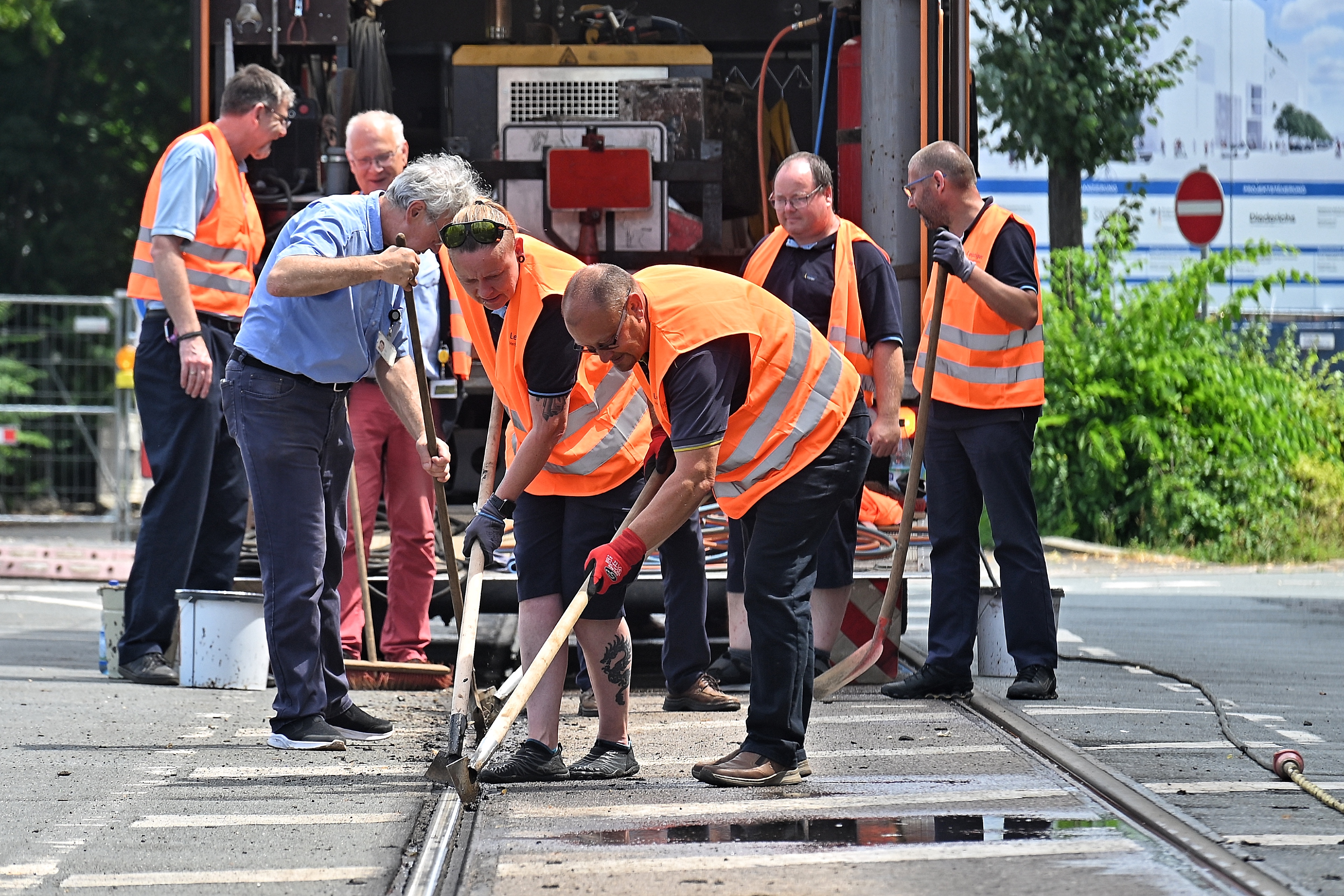
Since Saturday evening, 27 June, repair teams and many volunteers have been working flat out to repair the heat-related damage across the entire track network, so that the company can fully resume tram services as quickly as possible.
Every day, further sections of the network are now being brought back into service: seven tram lines are now at least partially running again – lines 1, 3, 7, 11, 14, 15 and 16.
According to the LVB, this means that all districts are once again connected – and, subject to a few minor restrictions, the announced network of service lines has been in place since Saturday 4 July. This has meant that the planned construction work, for example at the main station (west side) and at the junction of Georg-Schumann-Straße and Lindenthaler Straße, has been able to start as scheduled.
The LVB is providing regular updates on progress via www.L.de/v and on social media. Customers can also find a dynamic overview map here. Passengers can find all current services in the LeipzigMOVE app.
Trams under heat stress
However, it is not yet fully clear why the LVB, of all organisations, had to contend so severely with swollen joint fillings, jammed points and the resulting water spray on the trams. This still needs to be clarified.
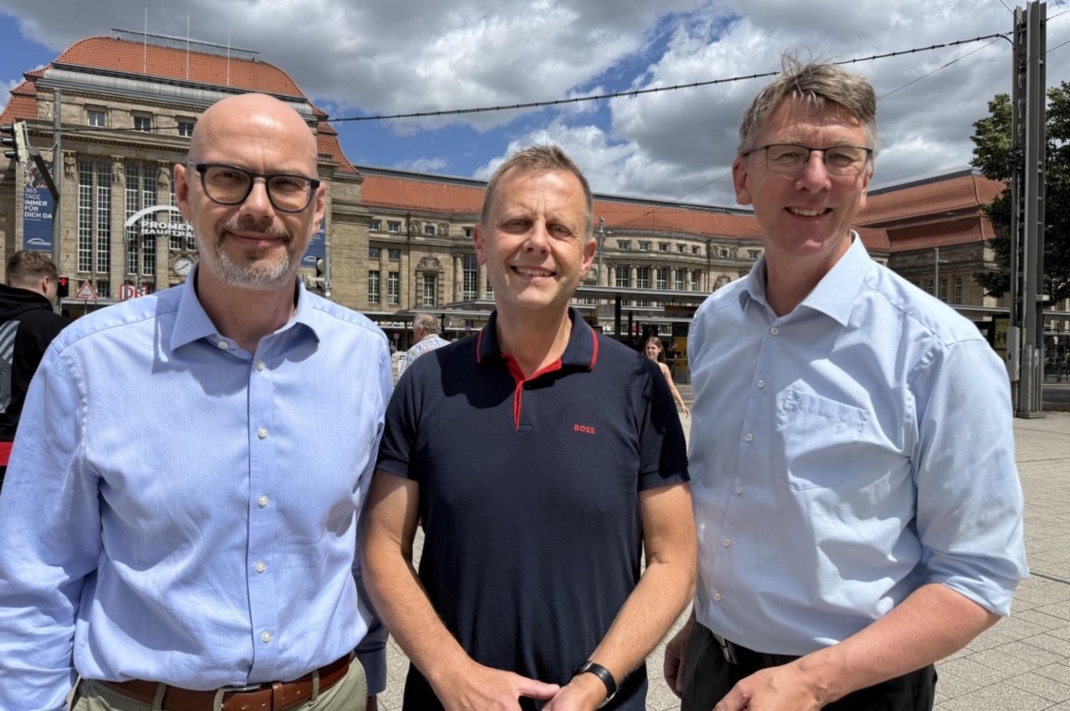
Torsten Bonew, Leipzig’s Finance Councillor and Chairman of the LVB Supervisory Board, visited the main station on Thursday – where four tracks remain closed to tram traffic – to assess the situation and thanked everyone who had actively lent a hand, particularly the LVB team.
“It has been an extraordinary incident, which we deeply regret,” said Bonew. “The decision to take trams off the network was not an easy one for us. But we have also seen how the people of Leipzig have shown understanding – and many are actively helping out. This spirit of working together is, for me, typical of Leipzig. Now we can see trams running in our city again. For that, I would like to express my heartfelt thanks. I am very grateful to the LVB and its supporters that I am able to travel to ‘Klassik airleben’ with my family today.”
“It is a matter close to our hearts to thank the people of Leipzig for their understanding, their patience and also their active support. The tremendous willingness to help shown by so many volunteers is a testament to the spirit of community in our city. Thanks to the joint efforts of our experts, drivers and office staff, we are making excellent progress on the network. This is what solidarity in Leipzig looks like,” explained Ulf Middelberg, Managing Director of LVB, on this occasion.
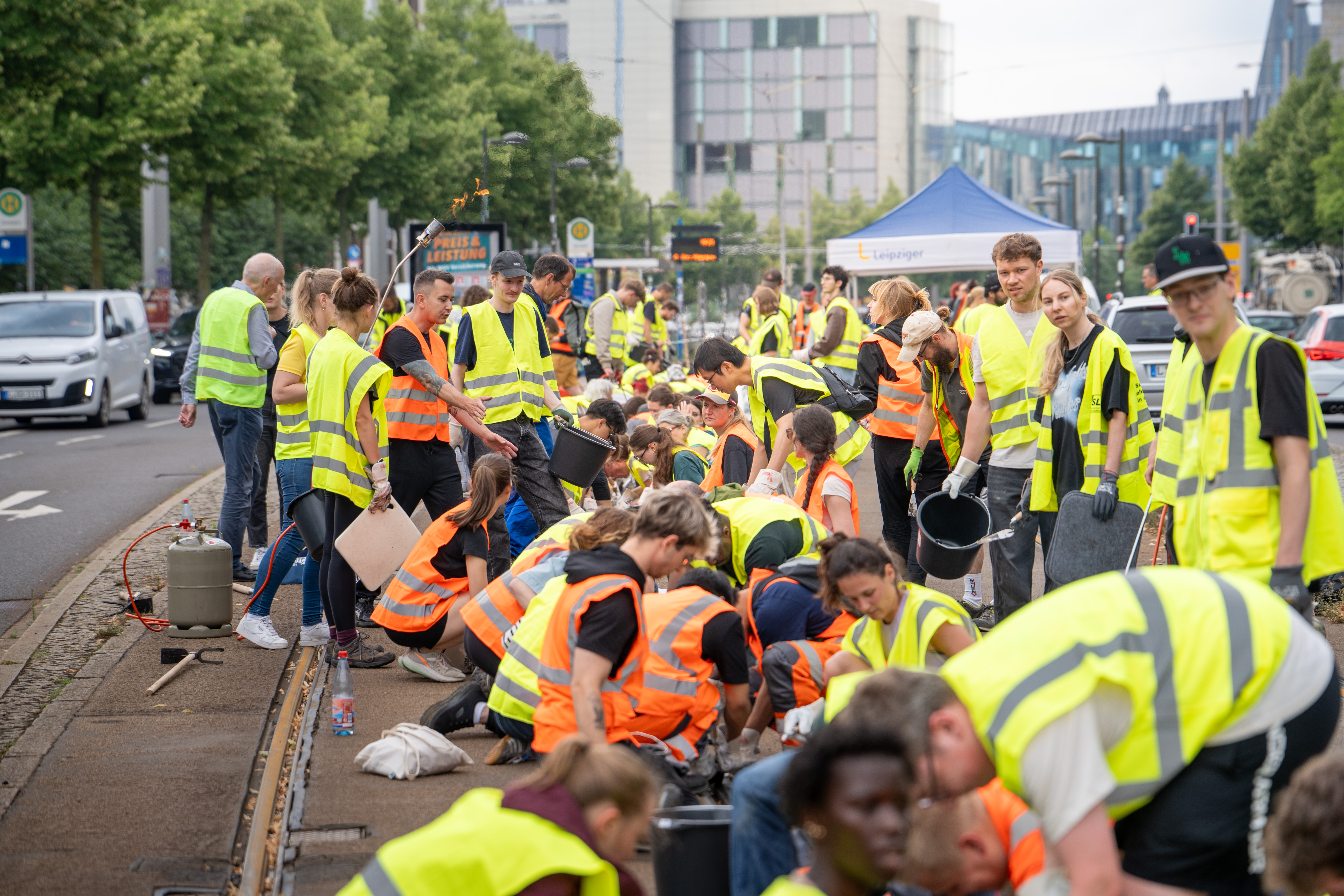
There was also a third and final volunteer shift on Saturday from 10 am to 6 pm. The focus here was on the Leibnizstraße and Wintergartenstraße stops.
Expert begins analysis
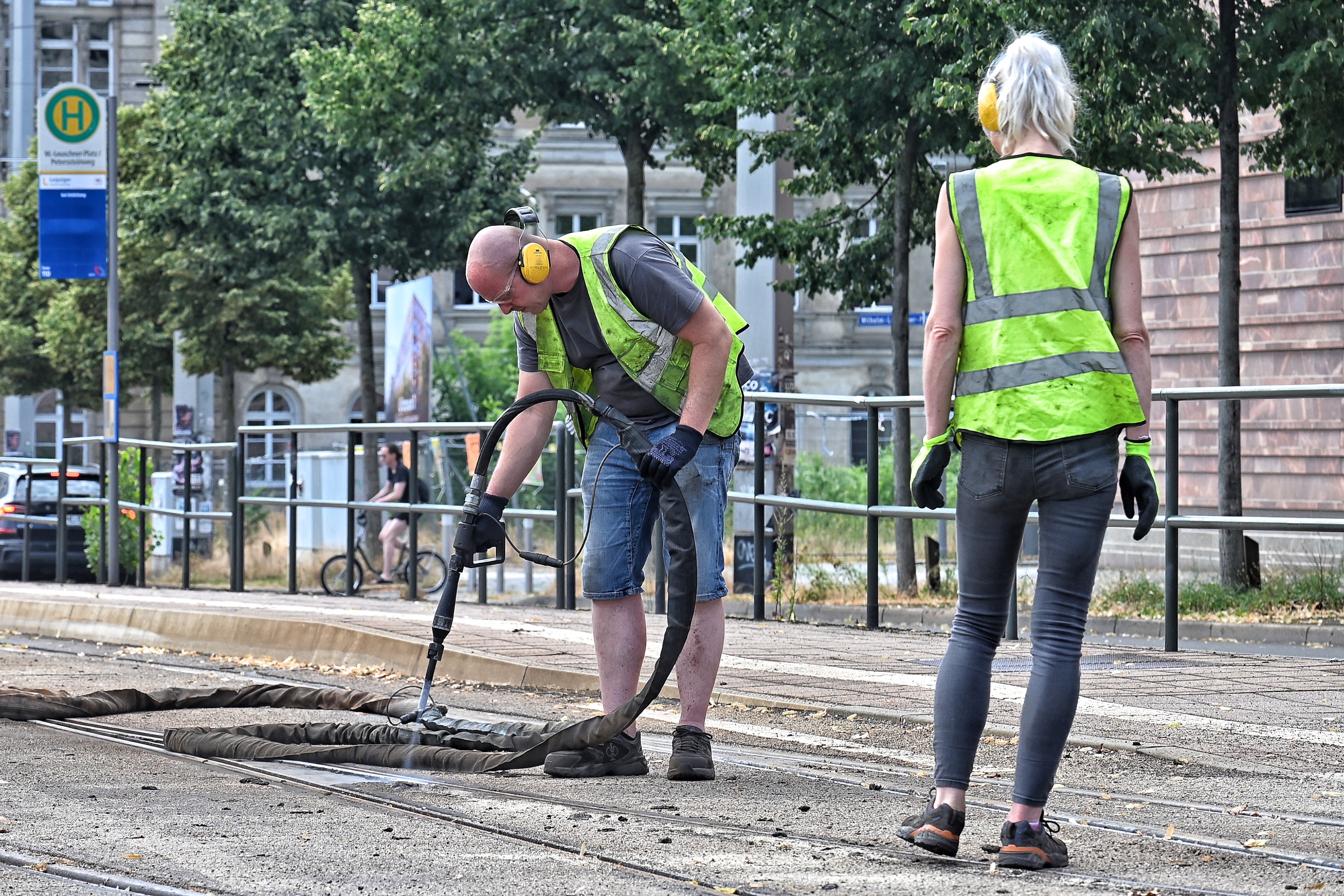
The external expert Ian Veigl, an assessor from TÜV Süd Rail, has now begun his work on behalf of the LVB management to determine the causes of the melting joint sealant.
“As part of a comprehensive survey, on Thursday I examined both sections of track that showed no damage and those sections of the track bed that had recently been damaged by heat,” Veigl explains his approach. “To obtain a complete picture of the condition of the track and the causes of the damage, our methodology is based on three key pillars: a visual on-site survey of the track and damage, a review of the planning and construction documents, and the subsequent laboratory analysis.””
A total of nine material samples were taken for the material analysis, according to Veigl. “Whilst three samples from undamaged reference areas serve as control values, six samples from the damaged zones are now being analysed in detail in the laboratory. Only once the findings from the document review and the results of the laboratory analyses have been evaluated can we make a well-founded assessment of the causes that led to these damage patterns.”
“Together with our expert, we are assessing the joint sealant from both the damaged and undamaged track sections with the necessary care,” emphasised Toralf Müller, Technical Director of LVB. “The installation of new joints has been suspended for four weeks, including on ongoing and newly started construction projects. This will not affect their start dates, as the joints are fitted at the end of the works. Until then, we are evaluating recognised technical solutions for joint grouting and the installation process, and are exchanging views on these with transport operators from across Europe.”
LVB intends to combine the expert’s findings with further insights. This will involve, for example, not only discussions with transport operators from other cities but also an internal analysis of operational procedures and reporting chains. Subsequently, the implications for urban design, track construction and operations will be assessed in collaboration with the City of Leipzig. This is because Leipzig will experience such extreme heatwaves even more frequently in future. The LVB cannot afford a similar disruption to happen again, but must instead make its network heat-resistant accordingly. From the LVB’s perspective, the consequences of climate change will ultimately require the industry as a whole to adopt adapted solutions.
Empfohlen auf LZ


So können Sie die Berichterstattung der Leipziger Zeitung unterstützen:



There is one comment